Portuguese
  Spanish


Brazil Achieves Unprecedented Access to India in 2025: National Oranges, Lemons, and Tangerines Reach the Largest Consumer Market on the Planet, Opening Billion-Dollar Route.
The year 2025 marks a strategic turning point in Brazil’s agricultural trade. After lengthy bilateral negotiations and health inspections, India has officially authorized the import of Brazilian oranges, lemons, and tangerines. This is the first time the Asian country, one of the largest global consumers of citrus fruits, has opened its doors to these domestic products.
This advancement is considered a historical milestone because India, with over 1.4 billion inhabitants, represents not only the largest consumer market on the planet but also a space with growing demand for fresh fruits due to urbanization, the rise of the middle class, and changing dietary patterns.
The Size of the Indian Market
India is already among the largest producers of citrus fruits, especially lemons and limes. However, domestic production does not meet consumption in certain regions, and opening up to Brazil reveals a search for diversification of suppliers.
-
Brazilian Scientists Develop World’s First Tropical Wheat for Biscuit Production, Yielding Up to 150 Bags per Hectare and Highly Resistant to Common Crop Disease

-
El Niño may boost corn and soybean harvests in Brazil and Argentina, offering potential relief for global food prices.

-
Japanese Wagyu Gains International Fame for Its Intense Marbling, Tender Cuts, and High Prices in Brazil
-
Brazilian Farmers with Basic Education Create Backyard Machines That Win National Invention Contest, Beating 242 Projects


For Brazil, this is a golden opportunity. The Indian fruit market alone generates billion-dollar revenues per year, with imports growing at double-digit rates. If the country captures just a small share of this market, shipments could generate hundreds of millions of dollars in annual revenue.
Orange, Lemon, and Tangerine: The Protagonists of the Opening
- Orange: Brazil is the world’s largest producer and exporter of orange juice, but now it will have the chance to export the fruit fresh to a country that has strong demand for fresh citrus.
- Tahiti Lemon: Brazilian lemon is already a champion of exports to Europe and the USA, and now it could gain ground in one of Asia’s most populous markets.
- Tangerine: Highly appreciated in Asia, this fruit can gain competitiveness in the Indian market with more accessible prices compared to other suppliers.
This citrus trio strengthens Brazil’s image as a reliable supplier of quality fruits, further expanding the diversity of markets served.
Impact on Brazilian Producers
Access to India in 2025 represents more than new shipments: it is an international quality seal. The Asian country is known for its strict sanitary and phytosanitary protocols, and the approval means that Brazilian production meets the required standards.
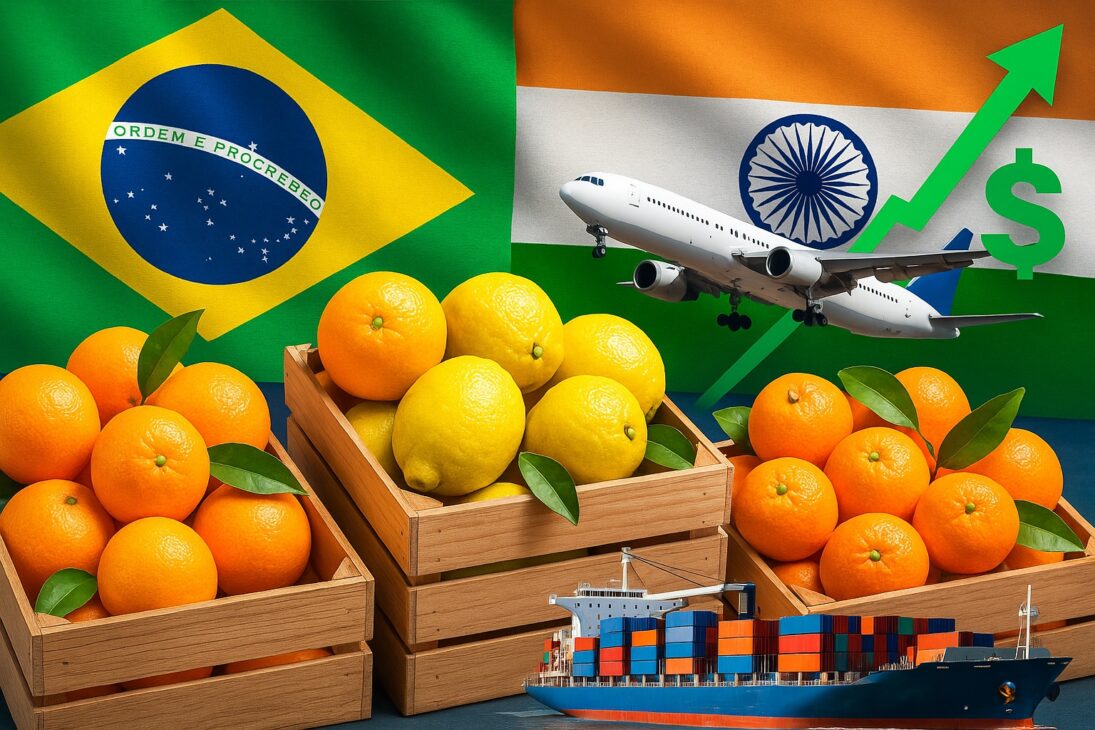
Producers from the Northeast, São Paulo, and Paraná, major citrus hubs, are already projecting revenue increases. It is estimated that, in the first year alone, exports to India could exceed US$ 50 million, with potential for rapid growth as logistics consolidates.
Moreover, the agreements could stimulate new investments in irrigation technology, traceability, and refrigerated logistics, key areas for maintaining competitiveness.
Logistics and Challenges to Overcome
Despite the optimism, logistical challenges cannot be ignored. The maritime route between Brazil and India demands efficient operations to preserve fruit quality. This means investing in cold storage, cutting-edge packaging, and international certifications.
Another challenge will be competition with countries that are already established in the Indian market, such as South Africa, Egypt, and Mediterranean countries. To stand out, Brazil will have to focus on production scale and its ability to supply consistent volumes throughout the year.
The Geopolitics of Orange and the Weight of Brazilian Agriculture
The opening of the Indian market to Brazilian citrus should be understood within a broader framework. India and Brazil, both members of the BRICS, have been strengthening trade ties. The agricultural agreement of 2025 reinforces this rapprochement and creates a strategic bridge between two emerging giants.
While Brazil seeks to diversify markets and reduce dependence on Europe and China, India looks to ensure food supply amid a population that continues to grow. This convergence makes the partnership a geopolitical movement with impacts beyond agriculture.
Growth Prospects for 2025 and Beyond
Experts project that by 2030, India could become one of the top five buyers of Brazilian citrus fruits. This movement could elevate total exports in the sector to unprecedented levels, contributing to Brazil surpassing the mark of US$ 2 billion in fruits exported per year.
The opening also paves the way for new products. Mango, papaya, and melon are already on the radar of negotiations and could be next to gain access to the Indian market.
A New Horizon for Brazilian Fruit Culture
India’s authorization in 2025 to import Brazilian oranges, lemons, and tangerines is more than a commercial achievement: it symbolizes that the country consolidates its position as a global supplier of fresh and quality food.
If the projections hold true, Brazil will not only open a new route for its citrus but also pave the way to transform India into one of its main trade partners in agriculture.
In the realm of international trade, each new opening means more than just numbers: it is another step toward consolidating Brazil as a food giant of the 21st century.