






 Portuguese
  Spanish
  4 min of reading
  0 comments


Billion-dollar project in Northeastern agribusiness drives new agricultural frontier with focus on international market and strategic logistical gains
Ceará is about to make a strategic leap in Brazilian agribusiness by heavily investing in grape production for export. With an estimated investment of around R$ 100 million, the State plans to significantly expand its presence in the international market starting in the second half of 2026. The initiative, led by Agrícola Famosa, promises to transform the Vale do Jaguaribe into a new hub for high-value fruit farming.
The information was released by Diário do Nordeste, based on an interview with Carlo Porro, founder and CEO of the company. According to him, the project is already underway and is expected to reach up to 600 hectares of cultivated area in Chapada do Apodi, consolidating a gradual expansion that began two years ago.
Strategic expansion targets Europe and leverages international trade agreement
Currently, the company already operates with an initial area of 20 hectares dedicated to fruit cultivation. However, the goal is ambitious: to expand to 600 hectares in the coming years, with an almost exclusive focus on exporting to the European market.
-
Low-Demand Brazilian Beef Offal Gains Popularity Abroad: Indonesia Purchases $19.5 Million, Boosting Revenue and Reducing Waste

-
Soy Expansion in Former Brazilian Savanna Sparks Water and Land Conflicts in Major Agricultural Frontier
-
Mexican Pest Threatens U.S. Cattle Herds at Historic Lows, Potentially Boosting Brazilian Beef Exports as Burger Prices Soar

-
Avocado Boom for European and U.S. Markets Fuels Water Crisis in Drought-Stricken Chilean Region


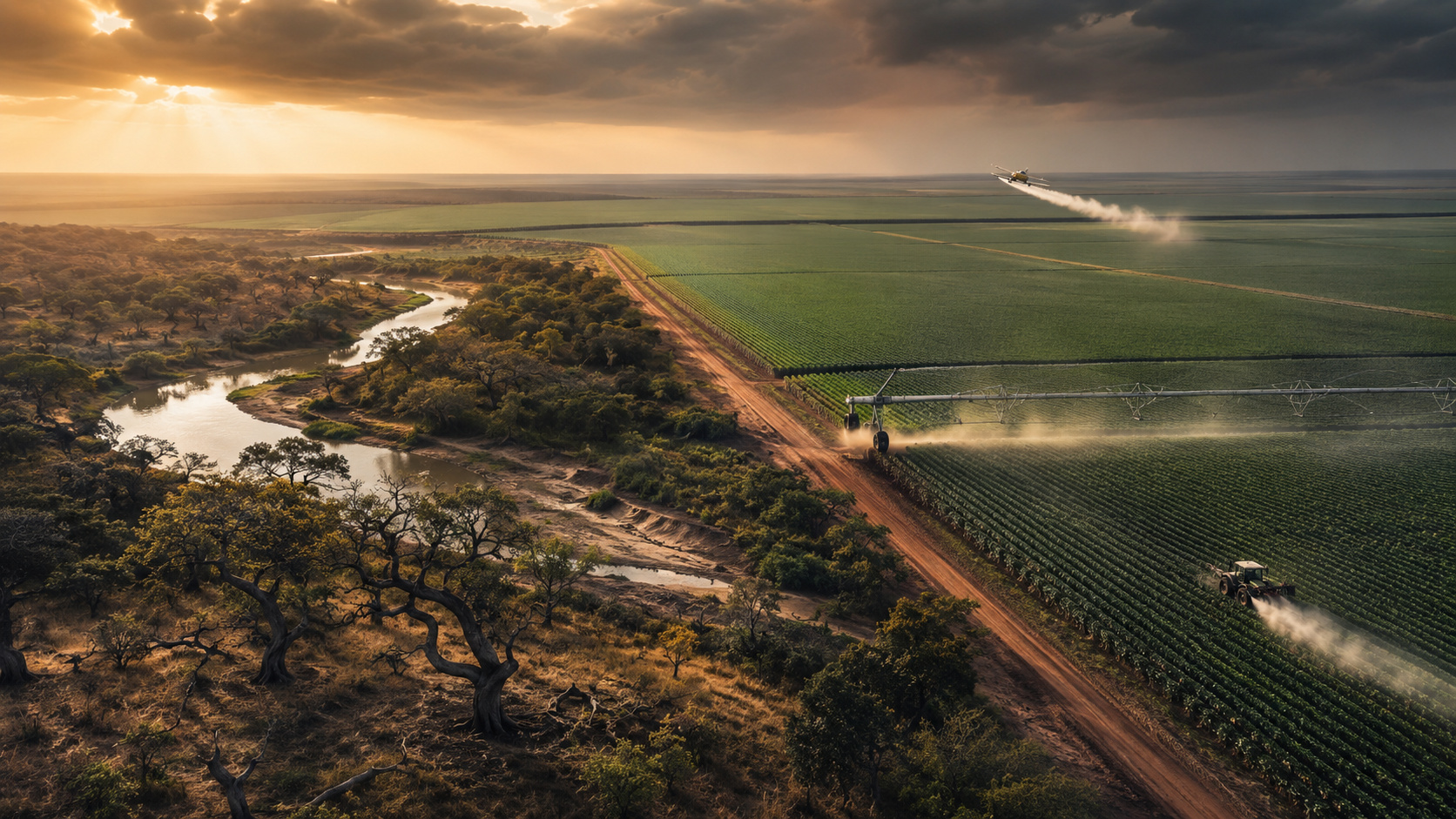


In this sense, the timing of the investment is no coincidence. Ceará’s grape production is directly aligned with the agreement between Mercosur and the European Union, which foresees the creation of a free trade zone. With entry into force expected soon, grapes will have zero export tax immediately, which considerably increases the competitiveness of the Brazilian product.
Furthermore, the Port of Pecém emerges as a relevant logistical differential, facilitating the outflow of production with greater efficiency and lower cost. “Ceará will certainly benefit. Grapes will have zero tax, and I see an immediate positive impact,” stated Carlo Porro.
Meanwhile, other fruits like melon will have a gradual reduction in taxes over the years, which further reinforces the prominence of grapes in this new commercial scenario.
Still modest production in the State reveals great growth potential
Despite the optimism surrounding the new project, current figures show that Ceará is still far from being among Brazil’s main grape producers. Data from the Municipal Agricultural Production (PAM), from the Brazilian Institute of Geography and Statistics, indicate that, in 2024, the State produced only 715 tons of the fruit — a 22.5% drop compared to the previous year.
This volume places Ceará only in 12th position in the national ranking. In contrast, states like Pernambuco lead with over 755 thousand tons produced, even surpassing the traditional hub of Rio Grande do Sul.
In Ceará’s territory, production is still concentrated in a few municipalities. Only nine cities cultivated grapes in 2024, with Jaguaruana standing out, followed by Ubajara and Sobral. Barbalha, which previously led, recorded a sharp drop in production.
Given this scenario, the new investment emerges as a concrete opportunity to reposition the State on the national fruit farming map.
Exports grow, but participation is still small in the international market
In foreign trade, grapes still occupy a modest position among products exported by Ceará. In 2024, only 0.34% of production — equivalent to 2.5 tons — was destined for the international market.
The data comes from the Secretariat of Economic Development of Ceará, based on the Comex Stat platform, from the Ministry of Development, Industry, Commerce and Services (MDIC). Currently, the fruit appears as the 14th most exported by the State.
However, recent signs indicate a change in trajectory. In the first three months of 2026, grape exports practically doubled compared to the same period of the previous year. 794 kilograms were sent abroad, raising the fruit to 10th position in the export ranking.
Another factor that stands out is the added value of the product. With an average price of R$ 4.67 per kilogram, grapes stand out as one of the most valued fresh fruits in Ceará’s exports, behind only a few specific categories.
New agribusiness cycle can transform regional economy
The combination of robust investment, logistical advantages, and international trade agreements creates a promising scenario for Ceará. Furthermore, Agrícola Famosa’s experience in exporting melon and watermelon reinforces confidence in the success of the new project.
In this context, the expectation is that production will gradually increase, accompanying the growth of European demand. “Our product will be more competitive,” projects Carlo Porro, highlighting the potential for sustainable expansion.
Therefore, more than a simple agricultural investment, the project represents a structural change in Ceará’s agribusiness — with direct impacts on job creation, increased exports, and the strengthening of the regional economy.
Do you believe that Ceará can truly transform into a new powerhouse in grape production and export to Europe, even starting from a still modest production and facing climatic challenges typical of the Northeastern semi-arid region?





Be the first to react!