Portuguese
  Spanish


Chernozem, considered the most fertile soil on the planet, covers 230 million hectares concentrated in Ukraine (65% of the territory), Russia, and Kazakhstan, with up to 16% organic matter and a depth of one meter, a fertility that has transformed these lands into a strategic asset comparable to oil.
The most fertile soil on the planet has a Russian name, a dark color, and an importance that most people are unaware of until the price of bread rises in the supermarket. Chernozem, a word derived from Russian “čjornyj” (black) and “zemlja” (earth), is a type of soil that covers approximately 230 million hectares worldwide and sustains the grain production that feeds billions of people, concentrated in a belt stretching from Ukraine and southern Russia to northern Kazakhstan, in the Great Plains of the United States and Canada, and in the Argentine Pampas. It was the Russian geologist Vasily Dokuchaev who, in 1883, scientifically described this soil in his work “Russian Chernozem,” establishing the basis of modern pedology by demonstrating that the black earth of the steppes was the product of thousands of years of organic matter accumulation under prairie vegetation.
Chernozem is not just a matter of agronomy: it is a geopolitical asset that weighs in conflicts and determines who feeds whom on the world stage. When the war between Russia and Ukraine interrupted Black Sea exports in 2022, the global price of wheat, corn, and barley soared, and import-dependent countries like Egypt, Nigeria, and Bangladesh felt the impact directly on food costs, a practical demonstration that the soil sustaining the harvests of these regions is a strategic resource as valuable as oil reserves. In a column published in Poder360 in 2022, agronomist Xico Graziano highlighted the covetousness for Ukrainian lands and estimated that 65% of the country’s territory is covered by chernozem, a proportion that explains why Ukraine has become one of the world’s largest exporters of sunflower oil and grains.
What makes this soil the most fertile on the planet

The composition of chernozem is rare in nature and practically impossible to reproduce artificially. The soil contains between 4% and 16% humus (decomposed organic matter), a concentration that slowly releases nutrients and acts like a sponge that retains water, in addition to high concentrations of phosphorus, ammonia compounds, calcium, and nitrogen with a near-neutral pH that facilitates nutrient absorption by plant roots. If most agricultural soils in the world are bank accounts that require constant input in the form of fertilizers, chernozem is a millennial savings account with a balance accumulated over thousands of years that allows for abundant harvests with minimal correction.
-
At 35, Lawyer Leaves Corporate Career to Turn 1-Hectare Farm into Organic Supplier for Schools in Southern Brazil

-
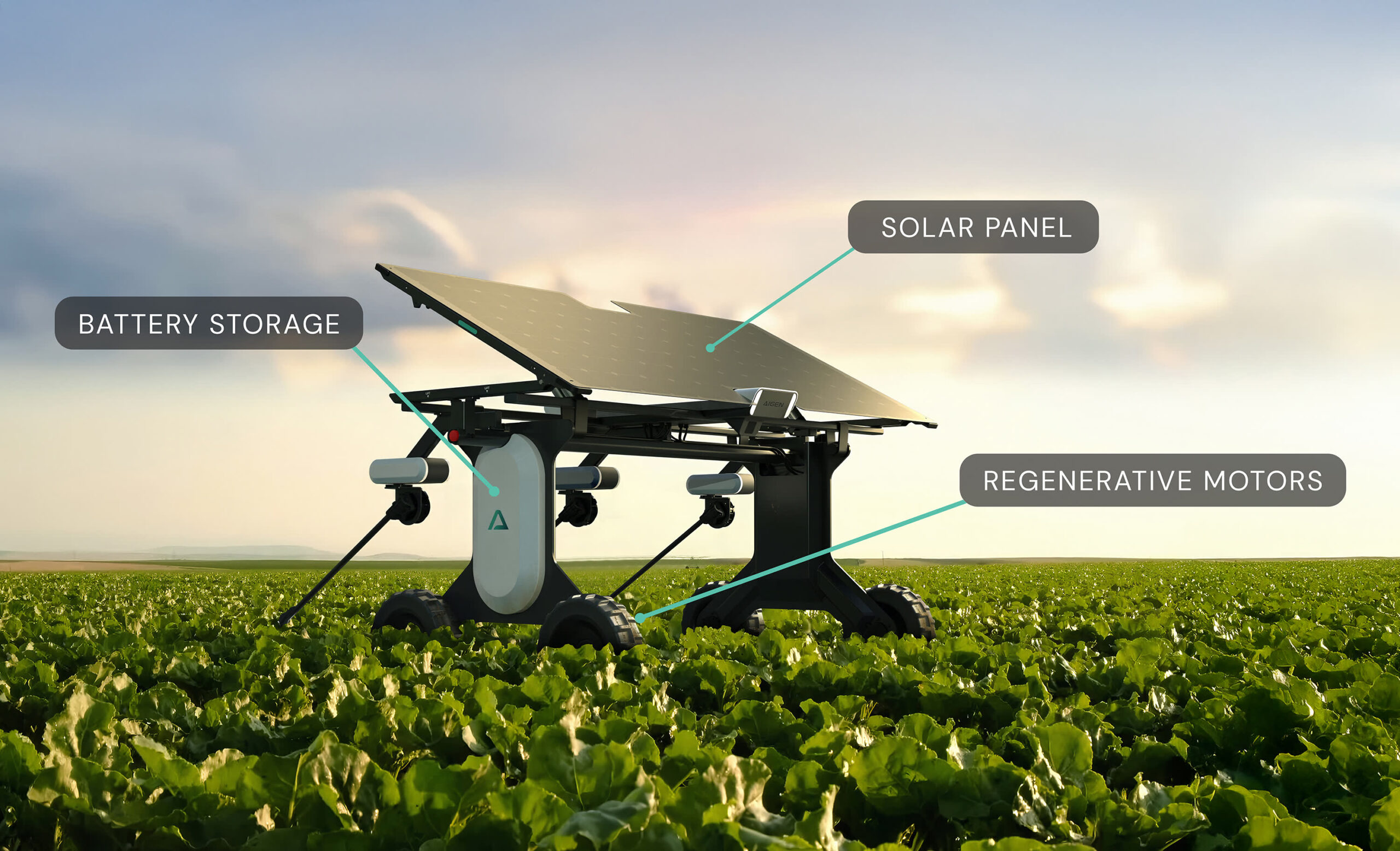
Solar-powered agricultural robots operate 24/7, remove weeds with 8mm precision, and aim to cut herbicide use without fuel consumption in the fields.

-
Brazilian Farmer Invents Low-Cost Tractor Using Motorcycle Parts, Efficiently Working 2 Acres on 1 Liter of Diesel

-
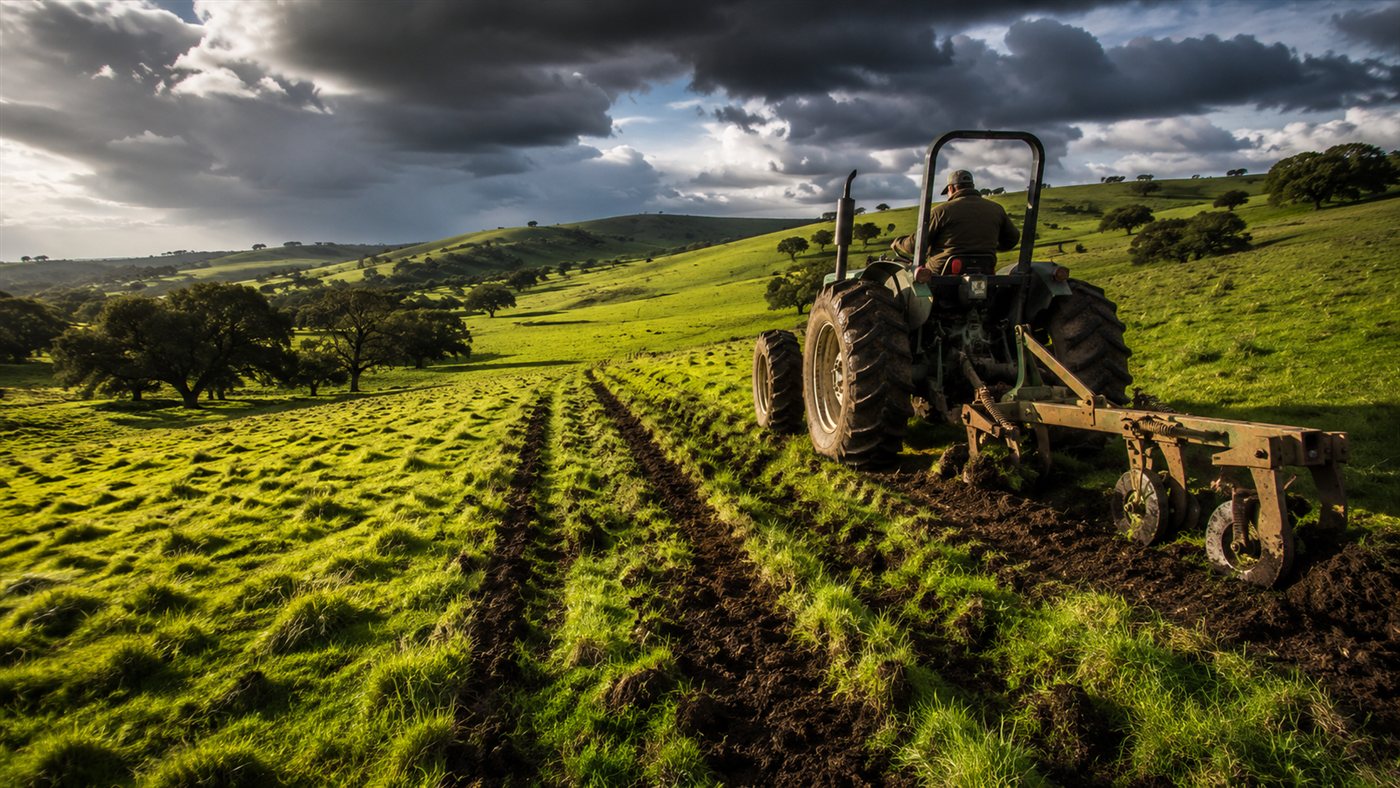
Regenerative Farmers Use Keyline Plow to Improve Pasture Hydration, Storing 1 Gallon of Water Every 30 Centimeters



The depth of the fertile layer differentiates chernozem from any other productive soil. In the richest varieties, the dark band of organic matter can reach one meter in thickness, a depth that guarantees a reserve of nutrients and water that tropical soils like Brazilian latosols simply do not naturally possess. The formation of this profile took thousands of years of cycles in which deep-rooted grasses grew, died, and slowly decomposed under a continental climate with cold winters and hot summers, a process that accumulated layers of organic matter at a rate of centimeters per century.
Where chernozem soil is distributed across the planet

Chernozem is concentrated in three major belts that coincide with the world’s most productive regions. The largest is the Eurasian belt, which extends from eastern Croatia, passes through Romania, Bulgaria, Moldova, and Hungary, crosses southern Ukraine and Russia, and reaches northern Kazakhstan, a continuous strip that forms the RUK block (Russia, Ukraine, and Kazakhstan) responsible for a significant portion of global wheat production. The second belt covers the Great Plains of the United States and Canada, where the soil sustains the production of corn, wheat, and soybeans that makes North America an agricultural powerhouse. The third extends through the Argentine Pampas, a region many are unaware of as a chernozem zone.
The unequal distribution of this soil across the planet creates dependencies that mirror the geopolitics of oil. Countries that do not have chernozem depend on food imports produced in nations that do, and when harvests fail or ports are blocked in these regions, the effect propagates in a chain to food markets across entire continents. In scientific classification, what the Russian/European system (WRB) calls chernozem corresponds to Mollisols in the American classification (USDA), different names for the same soil group that sustains global food security.
Why control of chernozem soil became a geopolitical issue


The war between Russia and Ukraine brought chernozem into the vocabulary of analysts who previously only spoke of oil and gas. Ukraine is one of the world’s largest exporters of wheat, corn, barley, and sunflower oil, production that stems directly from the fertility of the soil covering 65% of its territory, and when the conflict interrupted shipments through the Black Sea in 2022, the world discovered that the food security of dozens of countries depended on grains grown in soil that was literally under bombardment. The price of wheat on the international market soared, and governments of importing countries faced supply crises that generated social instability.
Global warming adds a variable that could redraw the chernozem map in the coming decades. Researchers estimate that up to 100 million hectares of fertile soil currently underutilized in frozen regions of Russian Siberia could become arable as the climate warms, an expansion that would reinforce Russia’s agricultural power and alter the global food power balance. Just as new oil reserves change the dynamics of the energy market, new frontiers of productive chernozem would change the dynamics of the food market, and Russia would once again be at the center of this transformation.
What Brazil has to do with the world’s most fertile soil
Brazil does not possess chernozem on a significant scale. The predominant soils in the country are tropical, such as latosols and argisols, naturally more acidic and with a lower organic matter content than the black soil of the Eurasian steppes, a reality that makes Brazilian agricultural productivity dependent on constant correction with liming, fertilization, and management technology developed by Embrapa over decades. The agricultural powerhouse that Brazil has become was not born from natural fertility as in chernozem regions: it was built with science and investment that compensate for what the soil does not offer freely.
The most interesting parallel between chernozem and Brazil is Amazonian Dark Earth (Terra Preta). This anthropogenic soil, created by pre-Columbian indigenous populations over centuries of intentional management, shares chemical and physical properties with chernozem, including high organic matter content and high fertility, although their origins are completely different: chernozem is a natural product of climate and vegetation, while terra preta is a product of human activity. The existence of terra preta demonstrates that ancient civilizations already understood the value of fertile soil and invested effort to create it, a lesson that reinforces the importance of preserving the chernozem that nature took millennia to form.
Why chernozem is a finite resource that humanity cannot manufacture
The formation of chernozem takes thousands of years, and its destruction can happen in decades. Intensive agriculture without crop rotation, extensive monoculture, erosion caused by deforestation, and climate changes that alter rainfall patterns are threats that reduce the organic matter content of the black soil and compromise the fertility that took centuries to accumulate. In Ukraine, mined and contaminated areas due to armed conflict represent additional damage that could take generations to repair, destruction that affects a resource that no technology can recreate on the scale at which nature produced it.
Recommended management for preserving chernozem includes practices that Brazil already adopts in its tropical soils. Crop rotation between cereals and legumes, no-till farming that avoids deep soil disturbance, cover crops that protect the surface against erosion, and reduced use of chemicals that degrade soil biology are measures that prolong the lifespan of chernozem but do not regenerate it at the speed at which it is being consumed. In a world of increasing food demand and competition for finite resources, chernozem has ceased to be a topic for agronomy classes to become a central piece of economic, climatic, and geopolitical strategies: like oil, it is abundant where it is, scarce where it is not, and no one can create more.
And you, did you know that the world’s most fertile soil weighs as much as oil in disputes between countries? Leave your opinion in the comments.