






 Portuguese
  Spanish


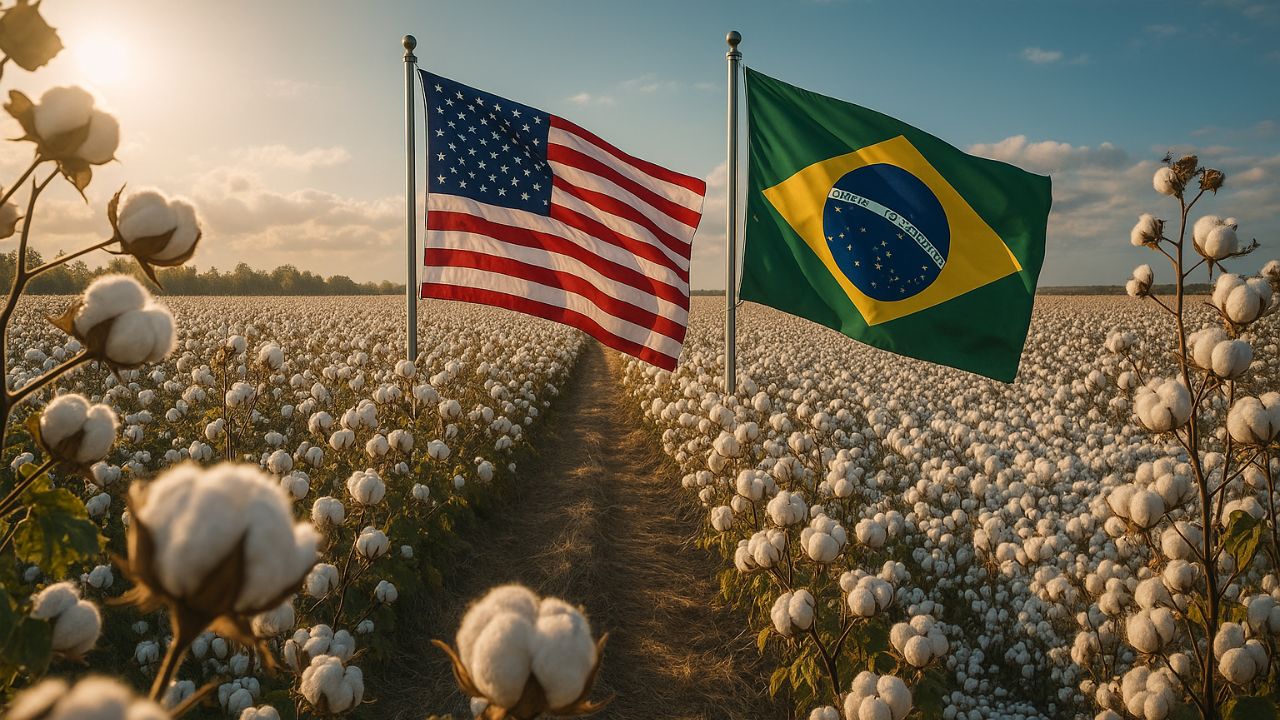


US Council Claims “Dramatic” Growth of National Production and Economic Impacts, While Brazilian Entities Argue Advancement is Due to Technology and Sustainability.
The National Cotton Council (NCC), an association of cotton producers in the United States, requested participation in a hearing regarding the Brazil investigation from the Office of the United States Trade Representative (USTR). The goal is to include Brazilian cotton in the scope of Section 301, claiming that the country’s advancement in the international market harms American producers.
Brazilian Leadership in the Global Cotton Market
The request from US producers comes at a significant time for Brazil. Last year, the country assumed the world leadership in cotton exports for the first time. According to the National Association of Cotton Exporters (ANEA), the first semester recorded the largest volume ever exported in that period, with 1.493 million tons. Brazil concluded the 2024/25 season with 2.875 million tons exported, consolidating its position as the largest global supplier. The projection for the 2025/26 harvest is 2.97 million tons, maintaining its leadership.
Brazil’s Response: Growth Based on Technology and Sustainability
For Brazilian entities, the US initiative is a reaction to the competitiveness of national cotton. The president of ANEA, Dawid Wajs, states that the growth is the result of decades of investment in “technology, professionalism, and the work of producers.” The Brazilian Association of Cotton Producers (Abrapa) emphasizes that Brazilian prominence does not arise from artificial policies, but from efficiency and social-environmental commitment. Brazilian productivity is more than double the American per hectare, with 92% of the cultivated area without irrigation. Additionally, 85% of national production has international certification, one of the highest rates in the world.
-
Brazil’s 2026 Tax Refund: Record 9.58 Million Filers in Largest Payout Ever, But a Key Detail on Priority Recipients Draws Nationwide Attention

-
Itaú Alters Hybrid Work Model, Increasing Office Days from 2028, Prompting Employees to Adjust to New Routine
-
Facing Labor Shortage, Japan Plans to Invest $34 Million to Attract Foreign Workers in Construction, Healthcare, Industry, and Commerce

-
Brazilian City Makes Remarkable Leap, Becomes 4th Wealthiest in the Country with GDP of R$ 134.1 Billion




Dispute History: Brazilian Victory at the WTO
The dispute between Brazil and the United States in the cotton market is not recent. In 2002, Brazil brought the World Trade Organization (WTO) against subsidies deemed improper to American producers. The WTO ruled in favor of Brazil and authorized the country to retaliate against the United States by up to US$ 295 million. The Brazilian argument was that the subsidies, which amounted to about US$ 3 billion annually, artificially maintained the US position as the second-largest producer in the world.
The Scenario of National Production and Market Diversification
The success of Brazilian cotton is led by Mato Grosso, responsible for over 70% of national production, followed by Bahia, with about 20%. The product is destined for markets such as Vietnam, Pakistan, China, Bangladesh, and Turkey. China’s share in Brazilian exports fell from over 50% to around 17%, indicating greater diversification and commercial stability, a result of initiatives such as the Cotton Brazil program.
Appeal for Unity for Natural Fibers Against Synthetic Pollution
Brazilian representatives argue that the moment should be one of unity, not division. Abrapa and ANEA highlight the need to increase global consumption of sustainable fibers, such as cotton. They point out that synthetic fibers, derived from petroleum, are linked to microplastic pollution and negative health impacts. The message is clear: collaboration among cotton producers is essential to tackle the environmental crisis and promote a healthier solution for consumers and the planet.








