Portuguese
  Spanish


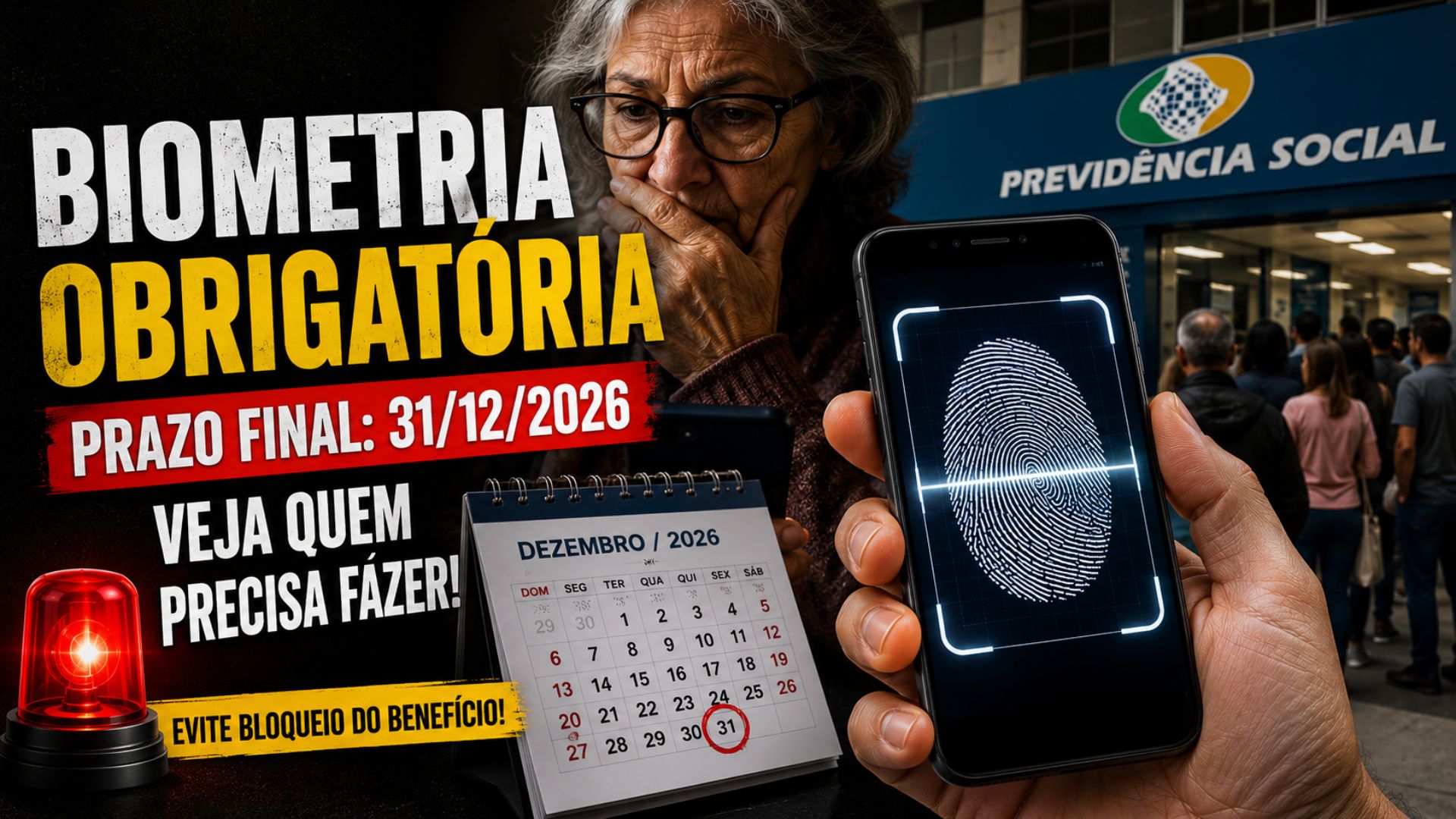

The INSS and the MGI set December 31, 2026, as the deadline related to mandatory biometrics for social benefits. Those who receive BPC and make new requests need to comply, those without fingerprints will have to issue the CIN, and regular pensions will not be immediately blocked.
The INSS and the Ministry of Management and Innovation in Public Services (MGI) defined December 31, 2026, as a key date for the mandatory biometric registration of those receiving social benefits. The measure, formalized by ordinance, is part of the federal government’s plan to combat fraud in Social Security and social assistance.
But the rule does not apply equally to everyone. The schedule is staggered: the focus is on welfare benefits, such as the BPC, and new requests, while regular pensions and pensions already paid do not have immediate blocking. Those who do not have fingerprints registered in any document will need to issue the new National Identity Card (CIN).
Who needs to do the mandatory INSS biometrics

The priority of the INSS inspection is on welfare benefits and new requests, where the rates of registration inconsistency tend to be higher. In practice, fingerprint collection and facial recognition are mandatory for maintaining the BPC (Continuous Cash Benefit), paid to low-income elderly and people with disabilities. Programs like Bolsa Família also fall under this validation logic.
-
Brazil’s 2026 Tax Refund: Record 9.58 Million Filers in Largest Payout Ever, But a Key Detail on Priority Recipients Draws Nationwide Attention

-
Itaú Alters Hybrid Work Model, Increasing Office Days from 2028, Prompting Employees to Adjust to New Routine
-
Facing Labor Shortage, Japan Plans to Invest $34 Million to Attract Foreign Workers in Construction, Healthcare, Industry, and Commerce

-
Brazilian City Makes Remarkable Leap, Becomes 4th Wealthiest in the Country with GDP of R$ 134.1 Billion




The calendar still progresses in stages. From January 2027, the rules for renewing disability benefits and death pensions will also require facial validation. Those making a new request to the INSS already find biometrics as part of the process, precisely to block the entry of irregular registrations into the system’s network.
Who is exempt or already has valid biometrics
According to information from the NSC portal, a large part of the insured will not need to repeat anything now. Those who already have biometric data registered in official databases, such as the Voter Registration (TSE), the National Driver’s License (CNH), or the passport, can continue using these records, which remain valid for the INSS. These registrations are accepted as long as they were collected by the deadline of December 31, 2026.
There is also a group formally exempt from mandatory biometrics. Exemptions apply to seniors over 80 years old, people with medically proven mobility restrictions, insured individuals living abroad, and communities in hard-to-reach areas. Important: retirements and pensions that are already active and being paid regularly have no immediate deadline or scheduled block, and the government uses automated data cross-checking to maintain the 24.3 million active retirements.
Deadlines, the new CIN, and how to proceed
For those who have no biometrics in any document, the path is to issue the CIN. According to the schedule, these people must obtain the new card starting in January 2027 to continue receiving or applying for benefits. Those who already have biometrics in the TSE, CNH, or passport have more time: for this group, the CIN only becomes mandatory in January 2028, the date scheduled for the end of the transition, when the new card should become the only document accepted by Social Security.
The new CIN acts as the central base of this security system and is already in the hands of 49.8 million Brazilians, while the Gov.br platform has more than 175 million users. For those summoned, the submission of images for facial recognition can be done through the official apps Meu INSS and Gov.br, as well as in-person service at the Social Assistance Reference Centers (CRAS) in assistance cases. The general rules are in Ordinance SGD/MGI nº 2.907/2026.
Why the INSS adopted biometrics and the size of the payroll
The official justification from the INSS is to increase security in the release and maintenance of payments. The digitization of identification serves to block the action of illegal intermediaries, prevent duplicate payments, and stop unauthorized withdrawals in the name of deceased insured individuals. The agency states that the model was designed not to overload the agencies or force seniors into unnecessary travel, focusing the effort on the network of new requests and assistance reviews.
The numbers show the scale of the challenge: the INSS payroll serves about 40.7 million monthly benefits and moves more than R$ 47 billion per cycle, of which 6.3 million are assistance benefits. A word of caution: the concrete application to each type of benefit still depends on complementary acts from the INSS and the Ministry of Development and Social Assistance. Therefore, beneficiaries should only follow official channels and be wary of messages that charge fees or ask for passwords to perform biometrics, a common scam during periods of rule changes.
Between fighting fraud and the fear of losing benefits, the new mandatory INSS biometrics affects millions of Brazilians, from the BPC to pensions.
Tell us in the comments if you have already registered or still need to, if you managed to navigate through Meu INSS or Gov.br, and what questions you still have about the CIN.