Portuguese
 Spanish


Radar Capex survey shows the scale of announced investment in corn ethanol in Brazil. Mato Grosso leads the list, while some projects are still in permitting, financing or announcement stages.
Corn ethanol expansion is driving billions of reais in investment across Brazil, but projects are not all moving forward at the same pace. A Radar Capex survey lists R$27.5 billion in announced investments, across 24 records for new plants and industrial expansions in seven states.
The figure stands out, particularly because many projects are not yet listed as under construction. Of the 24 records tracked, 14 are classified as being in stages before construction begins, while eight are listed as having started work and two as operating facilities.
The data come from a list updated on November 17, 2026. The survey covers different stages of the projects, but also includes duplicate records for some plants, so the total investment figure should be interpreted with care.
-
ANAC Approves New Rules for Sustainable Aviation Fuel with R$750 Penalty for Unreduced Metric Ton of CO₂ Starting 2027

-
Minas Gerais to get new plant capable of turning 500,000 tons of corn and sorghum into 225 million liters of ethanol a year
-
A R$258 million investment launches Pernambuco plant producing 108,000 cubic meters of biomethane a day from waste

-
D8 engine running on biofuel helps transform agribusiness by replacing fossil diesel without major modifications, preserving energy efficiency and reducing reliance on petroleum


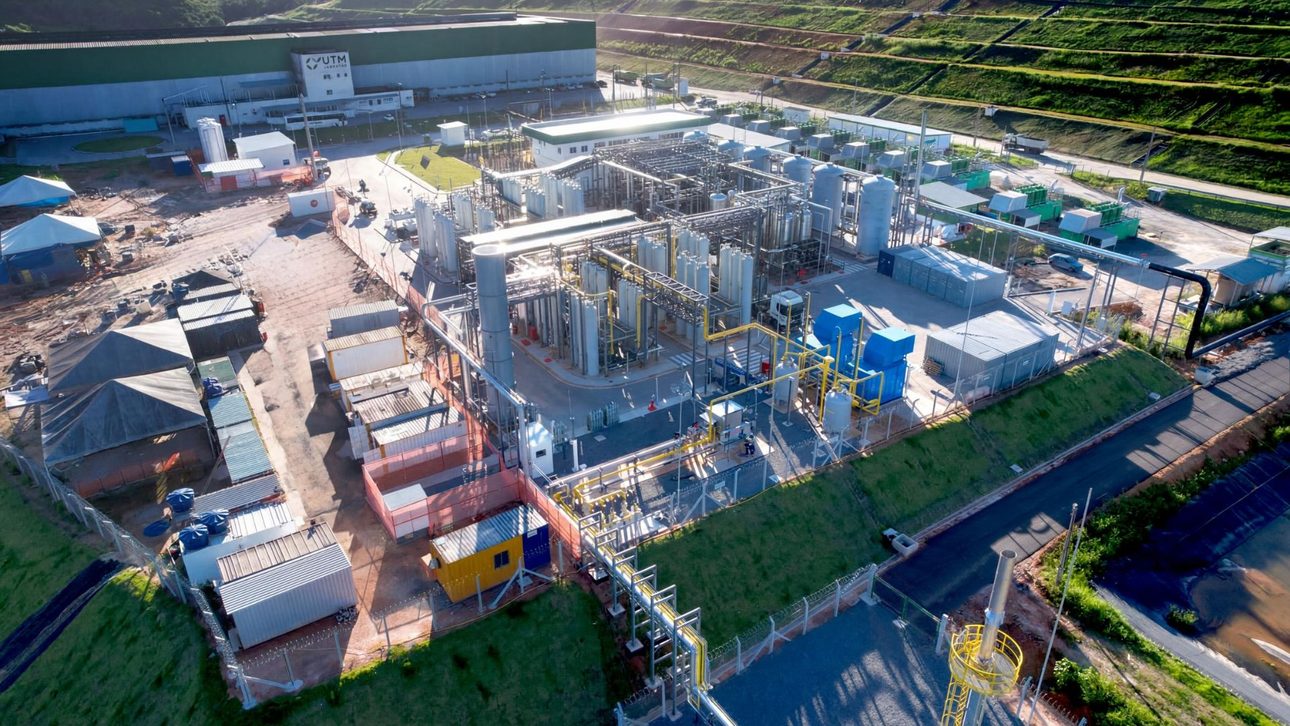

Mato Grosso has 10 records and leads corn ethanol investment
The largest concentration is in Mato Grosso, where Radar Capex counts 10 records and approximately R$11.1 billion in announced investment.
The state is home to projects by companies including Inpasa, FS, RRP Energia and ALD Bioenergia, spread across municipalities with strong ties to agricultural production.
Among the largest projects is Inpasa’s new plant in Rondonópolis, with R$2.77 billion in announced investment. The survey also lists FS’s facility in Campo Novo do Parecis, estimated at R$2.07 billion, and another company plant in Querência, projected to cost R$2 billion.
Goiás ranks next, with five records totaling R$6.7 billion. Projects include Inpasa’s plant in Rio Verde and corn ethanol production projects in Cristalina, Formosa and Chapadão do Céu.
Paraná has three records totaling R$4.9 billion, including Coamo’s new industrial plant in Campo Mourão and Grupo Potencial’s project in Lapa.
Mato Grosso do Sul also has three records, including Atvos’s plant in Nova Alvorada do Sul. Bahia, Minas Gerais and Piauí round out the list, with one record each.
This distribution shows how corn ethanol expansion is tied to regions that produce the grain. Building plants close to farms allows some of the agricultural output to be turned into fuel and ingredients used by other industries.

Eight records show construction underway, while 14 others remain at earlier stages
The billions of reais announced do not mean that all the plants are being built right now. The Capex Radar’s own classification reveals an important distinction between projects that have already mobilized workers and equipment and those that still depend on further steps.
The eight records with construction underway include projects by FS, Inpasa, Atvos and Coamo. They involve grain receiving facilities, distilleries, industrial tanks, boilers and processing equipment.
In Paraná, Coamo offers a concrete example of this progress. In September 2026, the cooperative said that more than 60% of construction on its corn ethanol plant in Campo Mourão had been completed.

The planned investment is R$1.7 billion, with capacity to process 1,700 metric tons of corn per day and produce about 765,000 liters of hydrous ethanol daily. The company has said it expects to begin operations in March 2027.
The situation is different in other locations. Grupo Potencial, for example, is listed at the announcement stage for its future plant in Lapa, while projects in Goiás and Mato Grosso do Sul are listed as undergoing permitting or having secured financing approval.
These classifications do not necessarily mean construction has stopped. A project can make progress on permitting, order equipment or secure funding before construction begins.
The status may also have changed since the last update used in the survey. So the absence of an indication that construction is underway should not be taken as confirmation that nothing is happening at the site.
Repeated records call for caution when totaling R$27.5 billion
The investment portfolio includes another detail that could affect how the figures are interpreted. Some plants were included more than once, with information tied to different announcements or financial transactions related to the same project.
That is the case with RRP Energia in Tapurah, Mato Grosso, which appears in two records associated with the R$1 billion financing approved by the Brazilian Development Bank (BNDES).
The bank confirmed the transaction in March 2026. The loan accounts for 62.2% of the total investment planned for the facility, which is designed to produce up to 459 million liters of hydrated ethanol a year.
A similar situation appears in the expansion of ALD Bioenergia in Nova Marilândia. Radar Capex lists three records for the expansion of the same industrial facility.
In April, BNDES announced R$575.3 million in financial support for the company, split between R$359.5 million from Finem and the Climate Fund and R$215.8 million from a credit line for purchasing machinery and services.
Because the R$359.5 million is part of the R$575.3 million, the two figures do not represent separate investments that can simply be added together.
In addition to duplicate entries, the survey combines total project costs with approved financing amounts. These are different types of information: securing a loan to build or expand a plant does not mean the entire investment has been disbursed or carried out.
Thus, the R$27.5 billion represents the aggregate value reported by Radar Capex, not an independently verified total of distinct investments.
New plants expand corn use and coproduct production
Growing interest in corn ethanol is not driven solely by fuel production. Plants also turn components of the grain into animal feed ingredients and, in some cases, corn oil.
During processing, starch is converted into sugars, which are fermented to produce alcohol. Some of the remaining components can be used to make DDG or DDGS, nutrient-rich ingredients used in animal feed formulations.
This combination allows a single industrial facility to supply both the biofuels market and the animal nutrition industry.
In the ALD Bioenergia expansion, for example, the project financed by BNDES is expected to increase processing capacity from 335,000 to 900,000 metric tons of corn a year. Ethanol production is expected to rise from 150 million to as much as 400 million liters a year, alongside an increase in coproduct output.
The projects also create demand for industrial equipment, civil works, grain storage and energy infrastructure. The scale of these opportunities, however, depends on each investment being carried out.
To track the expansion of new plants, the implementation stage remains as relevant as the announced investment amount. The Radar Capex list provides the municipalities, identified companies, reported amounts and the stage assigned to each record, distinguishing plants already in operation from projects still awaiting further steps.