






 Portuguese
  Spanish
  3 min of reading
  0 comments


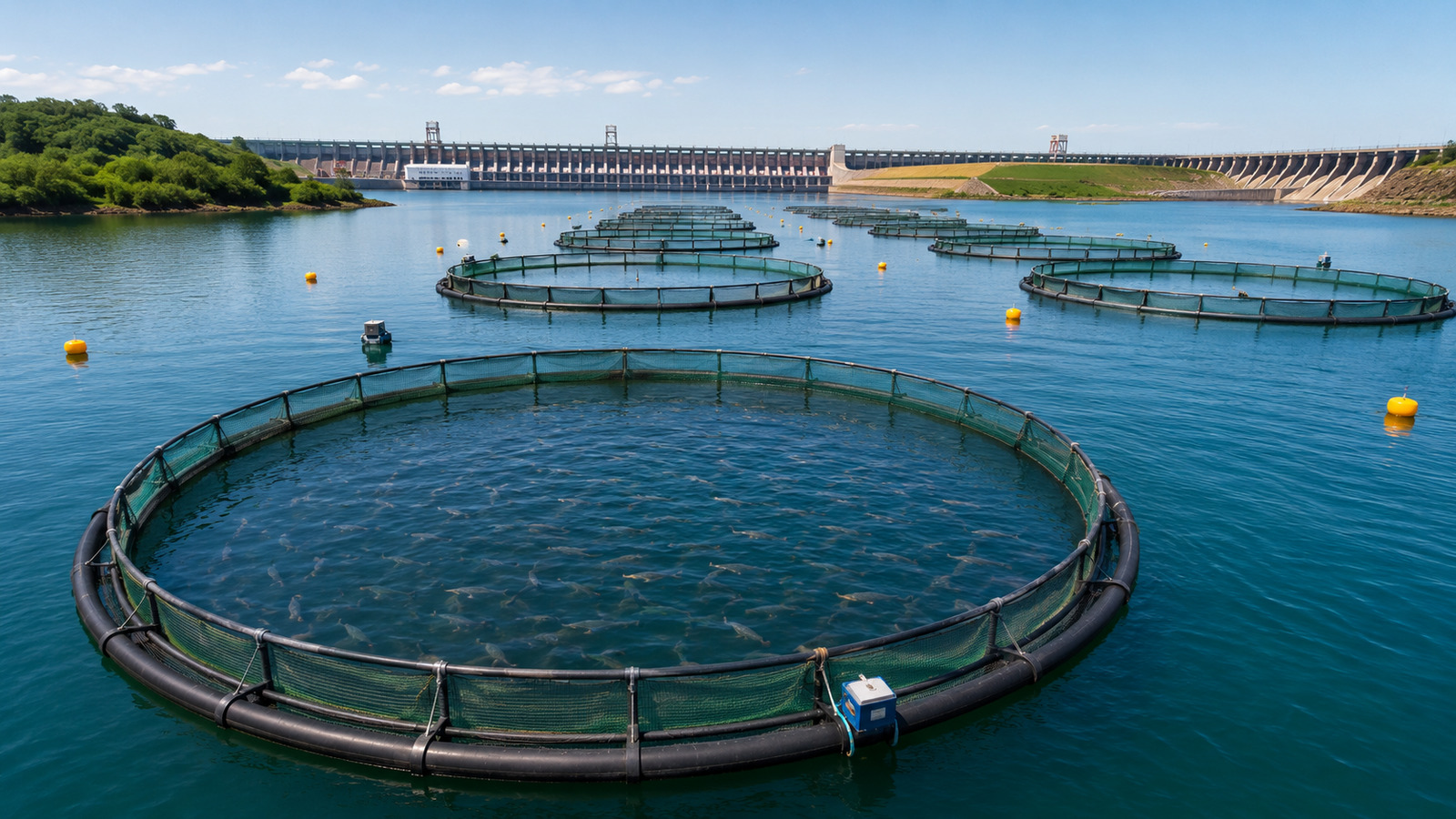
Project evaluates tilapia farming in net-pens in the Itaipu reservoir, with a potential of 400 thousand tons and direct impact on employment, income, food security, and the economy of bordering municipalities
Tilapia production in net-pens in the Itaipu reservoir could reach 400 thousand tons, according to initial studies evaluated this week by representatives from Brazil, Paraguay, Itaipu, and bordering municipalities. More details at Itaipu.gov.

Net-pens in the Itaipu lake
The proposal foresees raising tilapia in the Itaipu Binacional lake, with structures installed directly in the water. The model was observed in the interior of São Paulo, during a tour conducted between Thursday and Friday (8).
The delegation visited Rifaina and Votuporanga, where they learned about leading companies in large-scale production.
-
Brazilian Joins Homeownership Consortium, Faces Decade of Dual Payments Totaling $141,000, Surpassing Traditional Mortgage

-
Land Rover to Halt Production in July, Putting 371 Jobs at Risk, as Chinese Automaker Negotiates to Convert Factory to 100,000 Vehicles Annually by 2027

-
Mexican Pest Threatens U.S. Cattle Herds at Historic Lows, Potentially Boosting Brazilian Beef Exports as Burger Prices Soar

-
Brazilian Freight Bill Progresses in Congress with $5,000 Minimum Wage, 70% Advance Payment, and Fines Up to $1 Million, as Agriculture and Industry Warn of Rising Costs and Legal Uncertainty


The structures observed were considered similar to the format that may be adopted in the reservoir in the future.
The group brings together Brazilian and Paraguayan authorities, Itaipu representatives, mayors, and institutions linked to fishing and the environment. The goal is to define environmental, biosecurity, and sustainable production criteria.
Potential of 400 thousand tons
Data from the Peixe BR 2026 Yearbook show that Brazil produced 707 thousand tons of tilapia. Initial studies indicate that the Itaipu reservoir would have the potential to produce up to 400 thousand tons of the fish.
For Itaipu Binacional’s Coordination Director, Carlos Carboni, even partial utilization of this volume would represent significant growth for national production.
Minister Édipo Araújo Cruz stated that the project could expand employment, income, and food security. He highlighted the role of fish in supply and economic development.
Technical visits in two stages
The agenda in São Paulo was the second stage of the group’s technical visits. In March, the delegation was in Paraná to learn about the production chain of CVale, owner of Latin America’s largest fish processing plant.
In Paraná, the analyzed system was based on excavated ponds. In São Paulo, the focus was on in-water structures, aimed at fish farming in net-pens and industrial production.
During the tour, participants observed experiences related to export and processing. Fider Pescados, part of the MCassab Group, processes approximately 800 tons of fish per month.
Expanding market
The director of Fider Pescados, Juliano Kubitza, assessed that the tilapia market continues to expand. For him, Brazil has favorable natural conditions to become one of the largest producers in the world.
From Paraguay, Adam Leguizamón, Director of Fisheries and Aquaculture at the Ministry of Environment and Sustainable Development, stated that the visits helped deepen studies on biosecurity and large-scale production.
Bordering cities see local impact
Mayors near the reservoir expressed optimism about the implementation of the activity. The mayor of Guaíra, Gileade Osti, highlighted the quality of the water in the region.
The mayor of Medianeira, Antônio França Benjamin, stated that tilapia production could expand employment and boost the economy of bordering municipalities.
The proposal still depends on the definition of technical and environmental criteria.
The evaluation brought together perspectives on export, biosecurity, and productive capacity. The intention is to build a viable model, with sustainable production and utilization of the Itaipu binational reservoir.
With information from Portal da Cidade.





Be the first to react!