Estonia christened and launched EUROGUARD on November 19 at the Baltic Workboats shipyard in Nasva, on the island of Saaremaa: a 45-metre vessel that is the largest warship built in the country since it regained independence.
The ship is a full-scale prototype for a European research and development project. It brings together 10 European countries and 27 industrial companies, with Estonia in the lead.
According to Naval News, the vessel was christened by Estonia’s president, Ülle Madise. It is described as the largest experimental warship ever built in Estonia and the first of its kind in Europe.
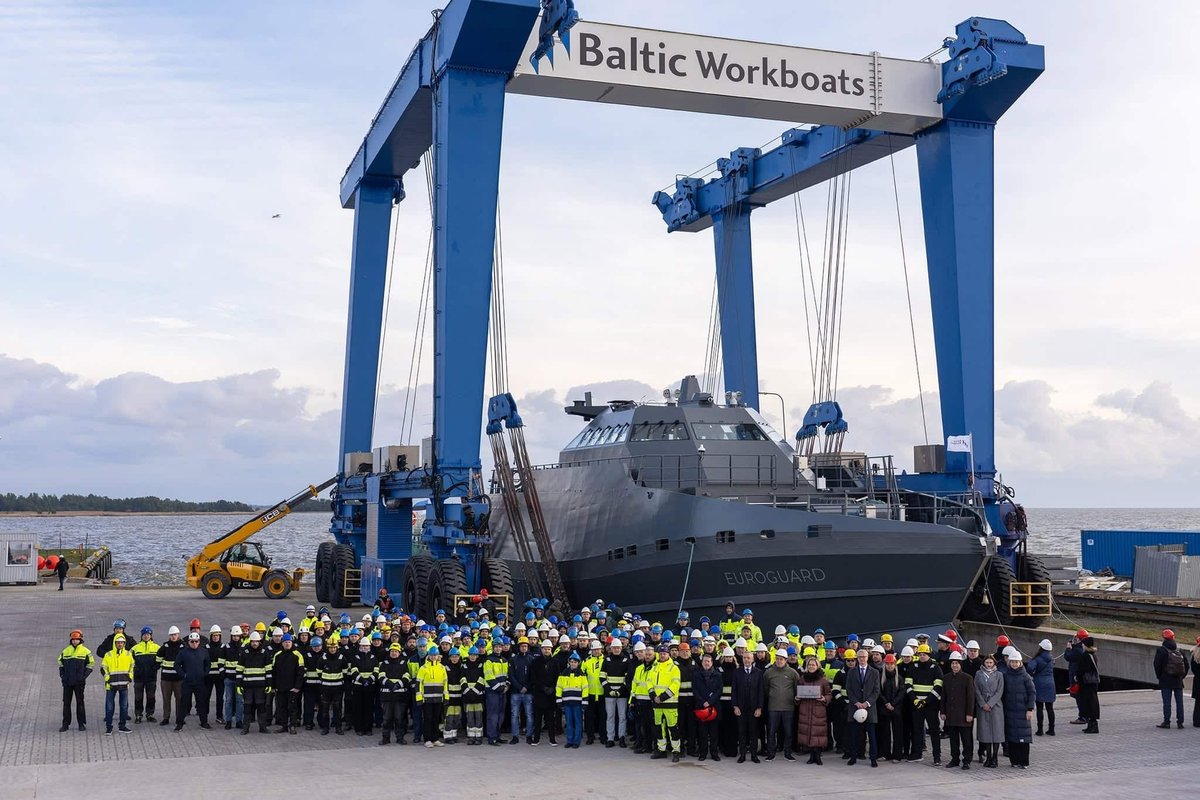
‘We can now build warships ourselves’
“Ships have been built in Estonia and sold abroad for centuries. Warships, however, we have ordered from abroad, relying instead on the experience of our allies,” said Margus Vanaselja, chairman of the management board of Baltic Workboats.
-
Newcastle University student Elise Zallu found a 7 cm Roman gold chain on the first day of her first dig, one of the treasures 52 first-year archaeology students unearthed in Redesdale, Northumberland.

-
Queensland heritage officer Celeste Jordan called it remarkable luck that a navy team found HMCS Spitfire, the 19-metre gunboat that was Australia’s first home-built warship, 128 years to the day after it sank.
-
Hai Long chief Tim Kittelhake marked the moment all 73 turbines of Asia’s largest single offshore wind project, 45 to 70 km off Taiwan, went live on the grid with more than 1 GW for over a million homes
-
Archaeologist Artur Obłuski and a Sudanese-Polish team reached the original floor of the Great Church of Jesus in Old Dongola, a medieval cathedral 47 metres wide and about 21 metres tall that he says was bigger than the White House



“EUROGUARD, a 45-metre modular vessel prototype and the first of its kind in Europe, shows that we can now build warships ourselves,” he said. “This is a new level in the history of Estonian shipbuilding.”
A €95 million project
The project has a budget of around €95 million, of which €65 million comes from the European Defence Fund. The fund gave Estonia the lead on the project in 2024.
The consortium includes some of Europe’s best-known defence names, among them Thales, Leonardo, Naval Group, Navantia, Kongsberg and Damen.
“It was us who were given the lead on such a large-scale project, even though the consortium includes several of Europe’s top defence companies,” said Ahto Pärl, director of the EUROGUARD consortium. “Today’s launch proves that we have lived up to that trust.”
Who does what
Estonia leads at both government and industry level. The Estonian Centre for Defence Investments coordinates the participating countries, while Baltic Workboats heads the industrial consortium.
The partners say working together helps them share know-how, make their systems work with each other and build long-term ties inside Europe’s defence industry.
20 knots and 2,000 nautical miles
EUROGUARD has a design speed of at least 20 knots and a range of at least 2,000 nautical miles. It is designed to stay at sea for 10 days.
Although it is an experimental vessel, Naval News says it is a fully engineered ship built for military missions, so new systems can be tested in real conditions at sea.
Built to be steered from shore
The vessel will be used to develop autonomous navigation and remote control from land. Its modular design means it can be reconfigured for different jobs.
Those include maritime surveillance, mine warfare, protection of the seabed and critical undersea infrastructure, search and rescue, and launching and controlling unmanned systems.
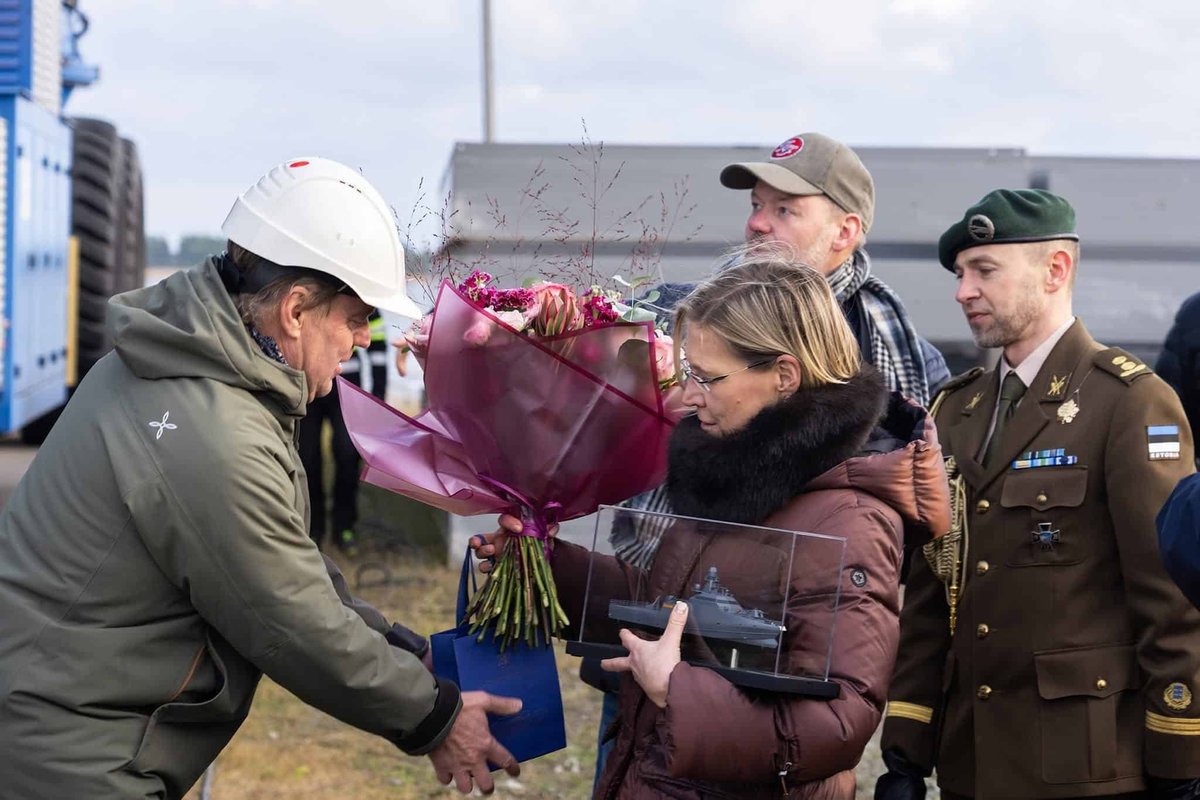
GENSA, the common blueprint
The project team says the ship is only the most visible result. Just as important, they argue, is GENSA, a common system architecture for European naval vessels developed within the project.
“It provides a framework for integrating technologies from different manufacturers into complete solutions and for reusing the development work in future ship projects,” said Jüri Saska, the EUROGUARD project manager.
“This means future warships can be designed and built faster, more flexibly and more efficiently,” Saska said. “The vessel launched today is where we can put these solutions to the test in real sea conditions for the first time.”
‘Smaller allies’ with a bigger role
Vanaselja said the project shows that small countries can do more than buy equipment from larger partners.
“This project proves that smaller allies, too, can make a truly decisive contribution to developing the defence capability of the European community,” he said.
Baltic Workboats says the experience has strengthened its readiness to design and build new warships for Estonia’s own needs together with partners.
Sea trials in 2027
The launch is a milestone, not the finish line. Work now moves on to outfitting the ship, integrating its systems and testing them.
The vessel and the solutions developed on board are scheduled to be tested and demonstrated in 2027. Representatives of the European Commission, the member states and the consortium attended the ceremony.
If a 45-metre prototype built by 27 companies can be steered from shore, how long do you think it will be before Europe’s navies send uncrewed ships of this size on real patrols?