





 Portuguese
  English
  Spanish
  5 min of reading
  0 comments


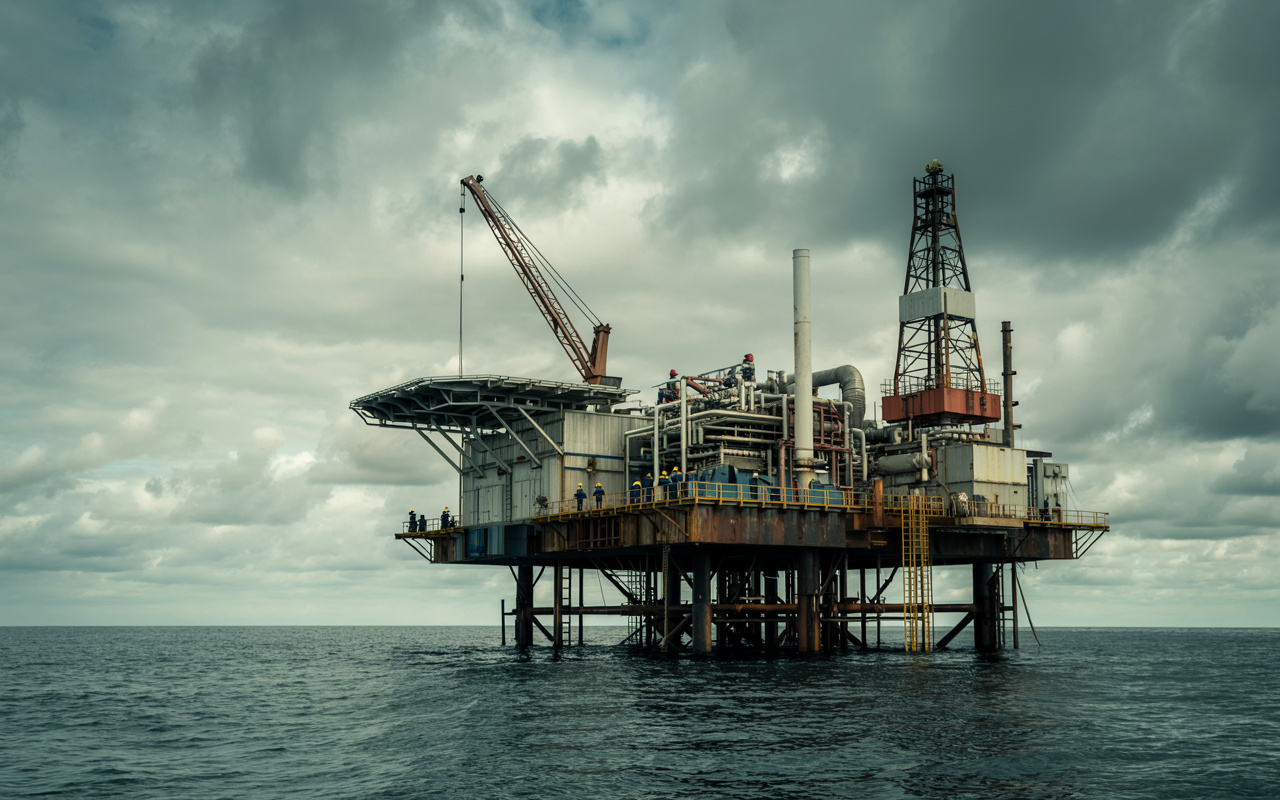
Equatorial Margin, the “New Pre-Salt” of Brazil, Faces Stalemate: Delay by Ibama in License Costs R$ 4 Million Per Day to Petrobras and Hinders Oil Exploration Progress.
The dispute over oil exploration in the Equatorial Margin, a region regarded as the “new pre-salt” of Brazil, has reached a decisive and tense chapter. The Unique Federation of Oil Workers (FUP) reported that the delay by Ibama in granting authorization for the Pre-Operational Assessment (APO) – the final stage of environmental licensing – is causing a daily loss of R$ 4 million to Petrobras, due to the cost of renting a rig that has been idle off the coast of Pará for over 20 days.
At the center of the stalemate is block FZA-M-59, considered strategic for both the company and the country. Petrobras insists that exploration in the Equatorial Margin is vital for ensuring oil self-sufficiency in the next decade. Meanwhile, Ibama claims it is adhering to the schedule of August 12 for the meeting regarding the APO, stating that “numerous preparatory activities” need to be completed first.
Equatorial Margin: The New Brazilian Pre-Salt and the License Dispute
The Equatorial Margin has gained prominence in recent years following oil discoveries in neighboring waters, off the coasts of Guyana, Suriname, and French Guiana.
-
China has just discovered oil in rock layers that no one thought could be explored at the bottom of the South China Sea, and the field with over 100 million tons could change the balance of energy power in Asia.

-
Petrobras finds oil on the seabed in the Campos Basin, hundreds of kilometers off the coast of Rio, and the discovery in a deep area raises curiosity about what else may be hidden in the pre-salt and how much this new area could surprise Brazil in the coming years.

-
Petrobras announces a new discovery in the pre-salt layer of the Campos Basin in block C-M-477, 201 km off the coast of Rio and at a depth of 2,984 m, following indications from electrical profiles, gas, and samples collected during drilling.

-
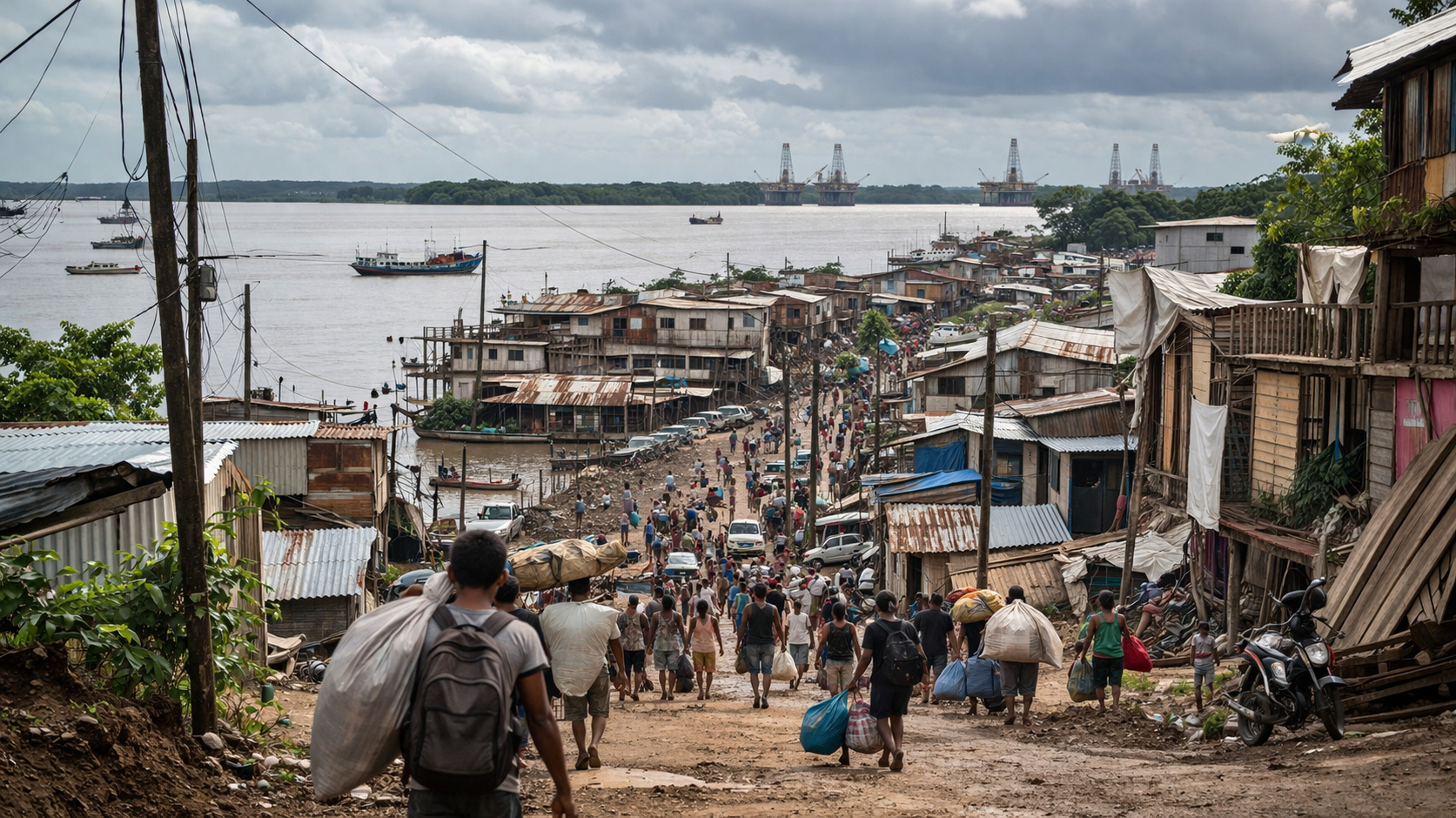
Even before the first drilling on the Brazilian Equatorial Margin, a wave of migrants is pressuring Oiapoque, expanding precarious occupations and transforming the city of Amapá into the new epicenter of the oil rush in the Amazon.
The geological potential has attracted sector attention, being seen as the most promising frontier since the pre-salt. In Brazil, the area extends from Rio Grande do Norte to Amapá and may house reserves capable of maintaining national production at elevated levels, reducing dependence on imports.


Petrobras already has authorized wells off the Potiguar coast but seeks to expand exploration to blocks in Amapá, an area that concentrates environmental and political debates. In 2023, Ibama denied the license for drilling in part of the Amazon River Mouth Basin, requiring further studies and protective measures. Since then, the state-owned company has been trying to reverse the decision, reinforcing commitments to safety standards.
Delay in Oil Exploration: Million-Dollar Costs and Rising Pressure
The postponement of the APO has become an expensive problem. According to FUP, the rig contracted for the emergency simulation is idle along the coast of Pará, costing over R$ 4 million per day. “What is the reason for Ibama’s delay?” questioned Deyvid Bacelar, the federation’s general coordinator, criticizing the holdup and asking for the meeting to be advanced.
For Bacelar, the postponement of the meeting – which could occur “still this week” – causes losses not only for Petrobras but for the country itself, which loses time in a strategic sector. At the same time, he acknowledged the crucial role of the agency: “Ibama is important, with a serious and competent technical body,” he noted, trying to tone down the conflict.
FUP, Ibama, and Petrobras: Interests and Tensions at Stake
Ibama, for its part, responded that Petrobras had requested the meeting to be advanced but maintained the date of August 12, citing the need to finalize preparations for the APO. The agency reiterated that licensing must adhere to strict technical and procedural rigors, especially since it involves a sensitive area like the Amazon River Mouth.
Petrobras argues that exploration in the Equatorial Margin is strategic. In October 2024, the director of Exploration and Production, Sylvia Anjos, stated that the prolonged wait raises operational costs and delays investments. The state-owned company also defends that the wells are 540 km from the mouth of the Amazon River, and not in an area with direct impact on the ecosystem.
Environmental Issues and the Energy Transition
While oil workers push for speed, environmentalists warn of the risks of drilling in an area with a fragile ecosystem. Organizations and experts see a contradiction between the pursuit of new fossil fuel fields and the energy transition, which requires more investment in renewable sources.
Ibama, aligned with the Ministry of the Environment, adopts a cautious stance. The agency demands safety measures such as animal treatment centers in case of an oil spill, one of which is already installed in Oiapoque (AP). The tension between environmental preservation and economic exploitation is at the core of the debate.
Environmental License: History of Disputes and Negotiations
The attempt to obtain the license for block FZA-M-59 dates back to 2013, when the British company BP won the area. In 2021, the company transferred the concession to Petrobras, which has been trying to move forward with the work since then. In 2023, Ibama blocked the license in other areas of the basin, requiring adjustments.
Even without authorization to drill in the Amapá region, ANP held an auction for new exploratory blocks in the Amazon River Mouth in June, showing market interest and pressure for licensing to move forward.
Petrobras Licenses, Ibama Evaluates: The Stalemate That Costs a Fortune
The current clash shows how bureaucracy and environmental caution can incur heavy costs. With the rig idle, Petrobras is incurring losses that already exceed tens of millions of reais, and FUP warns that each day of inactivity represents over R$ 4 million in losses.
For the oil workers, the postponement lacks technical justification. Meanwhile, Ibama reaffirms that it is committed to “contributing to the efficient progress of licensing,” but without compromising on rigor. The challenge lies in finding a balance between agility and environmental responsibility.
Equatorial Margin: A Billion-Dollar Future at Stake
Expectations surrounding the Equatorial Margin are high. If the potential is confirmed, Brazil could usher in a new era of oil exploration, as significant as the pre-salt. Petrobras believes that the fields in the region can sustain national production and generate billion-dollar revenues.
However, the road to that point is filled with obstacles. The case of the idle rig shows that without a license, progress is stalled – and expensive. The next step will be the meeting scheduled for August 12, which should determine whether Petrobras can finally carry out the APO and advance in licensing.
The wait for Ibama’s authorization for the Pre-Operational Assessment in the Equatorial Margin is a test of patience for Petrobras, but each day of inactivity weighs heavily.
With daily costs of R$ 4 million and political, environmental, and economic pressures, this episode lays bare Brazil’s dilemmas: how to balance the quest for new underground riches with environmental responsibility and the transition to a future with less reliance on fossil fuels.








-

Uma pessoa reagiu a isso.