






 Portuguese
  Spanish
  3 min of reading
  0 comments


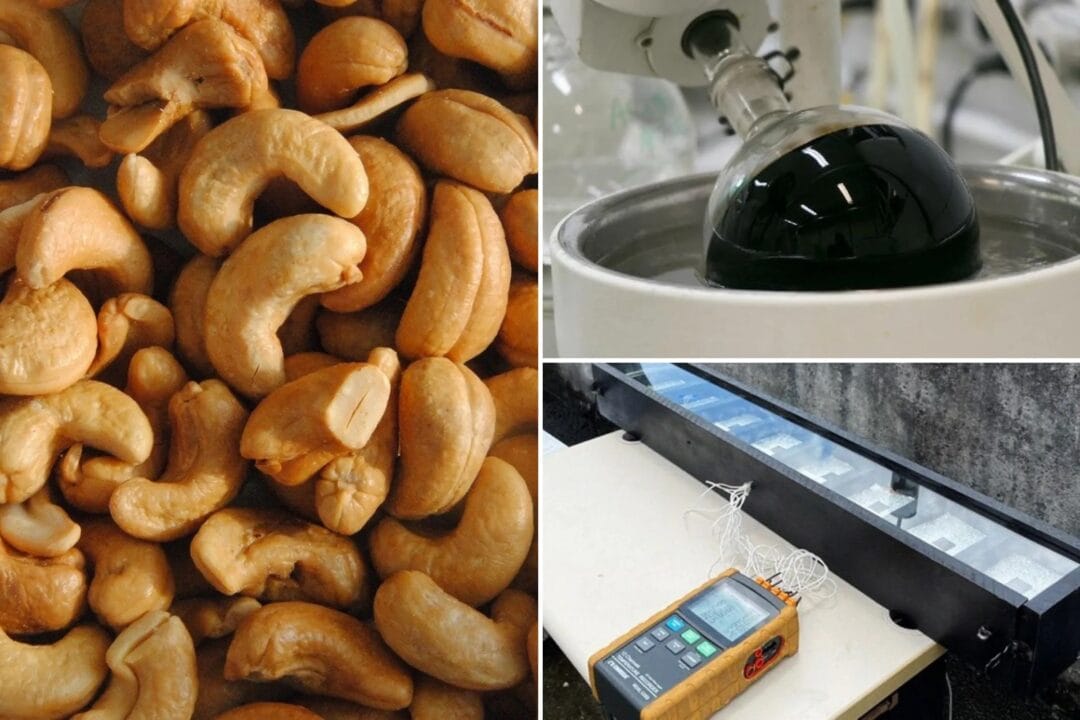
Cearense Student Creates Innovative Solar Panel from Cashew Nut Waste, Promising to Reduce Costs and Increase Efficiency.
Solar energy, despite its growing competitiveness, still faces the challenge of the high cost of solar panels and related equipment, making it inaccessible for many. However, a significant breakthrough may be on the way: a student from Ceará has developed an innovative solar panel made from cashew nut waste. This discovery has the potential to transform the photovoltaic market, making solar energy more accessible and efficient.
Understand How Cashew Nut Waste Solar Panels Work
Diego Pinho, a graduate student at the Federal University of Ceará, is determined to change this reality. Since 2007, he has been dedicated to finding ways to lower the prices of solar panels, making them more accessible to the population.

The solution for his sustainable initiative came from one of the most popular fruits in the Northeast: the cashew nut. Pinho’s studies indicate that processing the cashew nut shell produces a waste called LCC, an oil that is highly efficient in capturing solar radiation. This oil can be used in the generation of thermal photovoltaic energy.
-
Advancement in renewable energy: A R$ 150 million project launched by Petrobras and Finep aims to create state-of-the-art electrolyzers for green hydrogen, strengthening national research and preparing Brazil to compete in a billion-dollar energy market.

-
Solar energy can increase property value by up to 10% and become a selling point.
-
Illiterate or semi-literate grandmothers were trained to repair solar systems, open rural workshops, and light up homes that still depended on kerosene.
-
Solar and wind energy surpass natural gas for the first time in the world and accelerate energy revolution





Although tests are still ongoing, Diego states that the cashew nut waste solar panels are potentially more efficient than conventional photovoltaic panels available in the market, which are often made with toxic metals.
The innovation is so promising that six other researchers from the Federal University of Ceará have joined the student to intensify research and enhance the cashew nut solar panel.
Researchers Plan to Register the Patent for the Cashew Nut Solar Panel
According to Nivaldo Aguiar, a professor of the Postgraduate Program in Engineering and Materials Science, the remainder of the processing of cashew nuts causes harm to the environment, as it leaves the soil barren, making agriculture difficult.
Industries, without any means or options for dealing with cashew nut waste, usually store it in large reservoirs. Besides providing a “cleaner” destination, the researcher from the Federal University of Ceará states that the application of this waste in solar energy generation still has the potential to reduce the manufacturing cost of solar panels. The researchers have been working with the utilization of cashew nut waste for about five years.
During the next phase of the research, scientists plan to register the patent for the system and also conduct cost tests of these cashew nut waste solar panels. It is important to highlight that solar energy is gradually growing throughout Brazil and has significant development potential in Ceará, as the state has one of the highest solar irradiation indices in Brazil. Thus, both Ceará as a whole and its capital, Fortaleza, are considered the main solar energy generators in the Northeast region.
Other Innovations from Ceará for the Photovoltaic Sector
In addition to the cashew nut solar panel, Ceará students developed energy technology from panels that track the movement of the Sun without the use of sensors. Besides generating about 30% more energy, the solution can make costs for domestic use cheaper. The initiative was selected to participate in the 5th SESI Robotics Festival in Brasília, which took place from March 15 to 18 of this year.
The equipment operates based on an algorithm that maps the movement of the Sun. This way, energy is generated for a longer period.
The team is made up of 10 high school students, integrated into technical courses in electrotechnics and renewable energies. Two technicians, who are teachers from the Sesi/Senai Barra do Ceará School, are also participating.







Be the first to react!