Portuguese
  Spanish


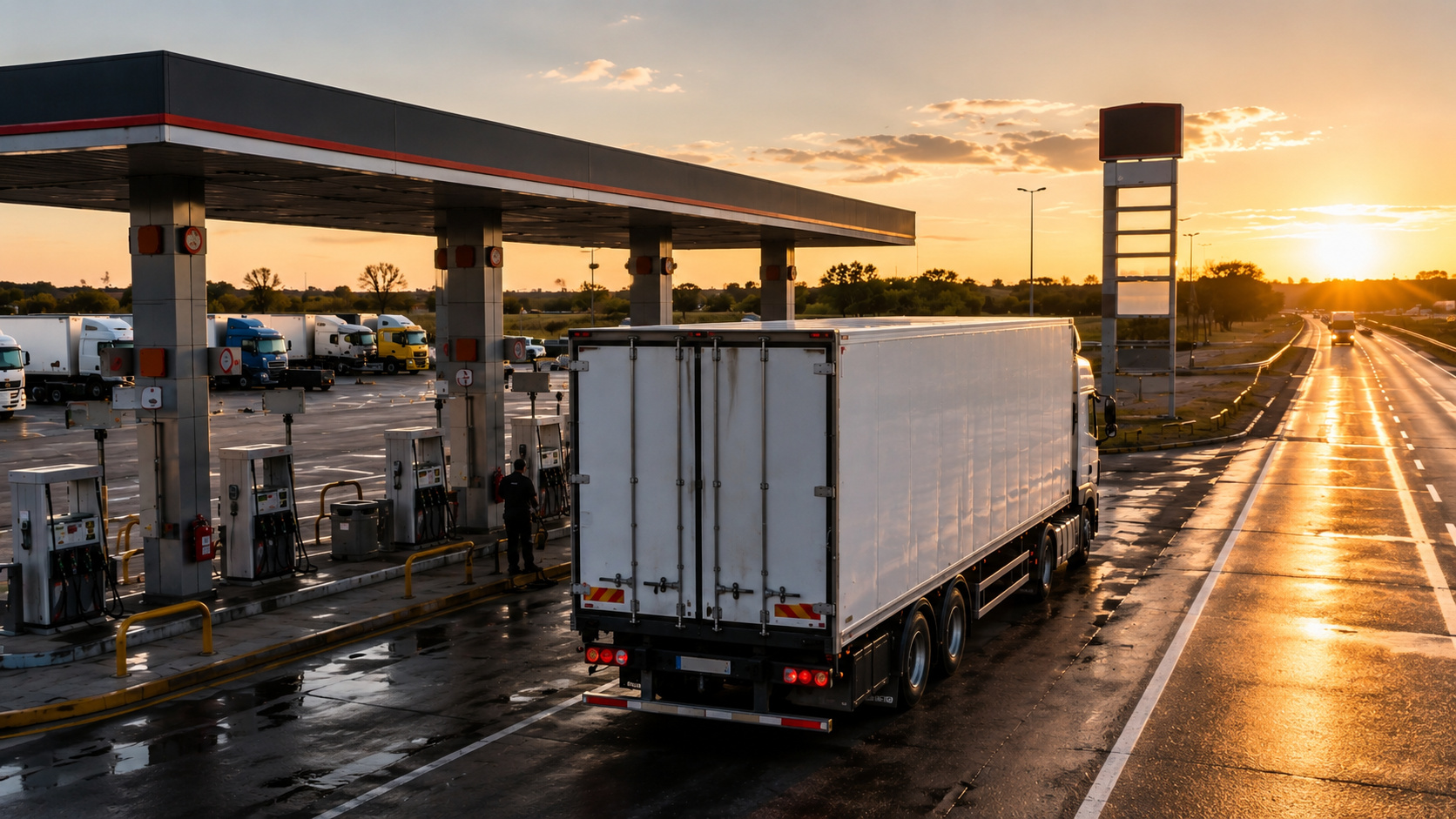


Records attributed to Grupo Monte Carlo indicate routes incompatible with the reality of Brazilian roads, while an audit cited in a judicial recovery process points to refuelings without physical correspondence, millionaire financial advances, use of Monte Carlo Network’s own stations, and legal charges against the operator
A case involving Grupo Monte Carlo, owner of the Monte Carlo Gas Station Network and Transportadora Monte Carlo TMC Ltda., gained prominence due to a series of records considered incompatible with reality.
The complaint presented in a judicial recovery process in the São Paulo Court points to refuelings at times that would not match the distances traveled.
Audit points to routes incompatible with physics
The most emblematic example involves a vehicle that allegedly refueled in São José do Rio Preto, in the interior of São Paulo, at 12:04 PM, and appeared again at 5:41 PM in Nova Mutum, in Mato Grosso.
-
New Smart Radar Begins Issuing Fines to Solo Drivers in Carpool Lanes, Uses Cameras to Count Occupants, Changing Traffic Enforcement Rules on Busy European Roads

-
Why can the crane operator only obey the correct signalman on the construction site: among dozens of workers, a hand raised by the wrong person can confuse the maneuver and turn a load of tons into an immediate risk.
-
What changes with the new public transportation rules that can reduce pressure on fares and pave the way for zero fare in Brazil?
-
Argentina confirms Belgian giant to lead strategic Paraná River waterway and promises to reduce logistical costs on one of South America’s most important routes


The distance between the two cities is approximately 1,336 kilometers. According to Google Maps, a passenger car would take about 18 hours and 44 minutes to cover this route, not considering stops.
A loaded truck would take even longer. Therefore, once again, the recorded interval raised suspicions about the veracity of the operation.
Complaint cites Monte Carlo Network’s own stations
According to the complaint, the records would not just be operational failures. The accusation claims that Transportadora Monte Carlo TMC Ltda. used its own Monte Carlo Network stations to record refuelings without real physical correspondence.
As a result, the entries would have generated credits within the system. Subsequently, according to the accusation, these credits would have allowed advance of receivables.
Then, according to the complaint, the amounts would have been used in judicial charges against the operator.

Another route also raised suspicions
Another cited example involves a vehicle that supposedly refueled in São José do Rio Preto at 10:26 AM and shortly after appeared in Hidrolândia, Goiás, at 1:32 PM.
The distance between the two points would be about 527 kilometers. Thus, the record was also deemed incompatible with a normal highway operation.
Million-dollar amounts enter the center of the case
The audit points to more than R$ 4 million in recorded fuelings during the analyzed period. In addition, the report cites about R$ 3 million in financial advances.
These amounts became part of one of the central accusations in the judicial recovery process. The transport company linked to the group has been in judicial recovery since 2016.
Meanwhile, the Monte Carlo Network continued to expand in the fuel market.
Monte Carlo Network grew while suspicions advanced
The company itself claims to have more than 70 units in 8 states. Furthermore, the media reported, in 2022, a raising of R$ 130 million via its own FIDC.
The operation aimed to sophisticate the services offered at the stations. It was also announced the expectation of a R$ 5 billion revenue in 2024.
Thus, the case brings together business expansion, judicial recovery, and suspicions involving fueling records.
What does the case reveal about fleet control?
The episode highlights the importance of audits in payment, fueling, and fleet management systems.
After all, incompatible records can raise doubts about credits, receivables, and judicial charges.
Now, the investigation revolves around a central question: how could a loaded truck cover such long distances in such short intervals?