






 Portuguese
  Spanish
  3 min of reading
  0 comments


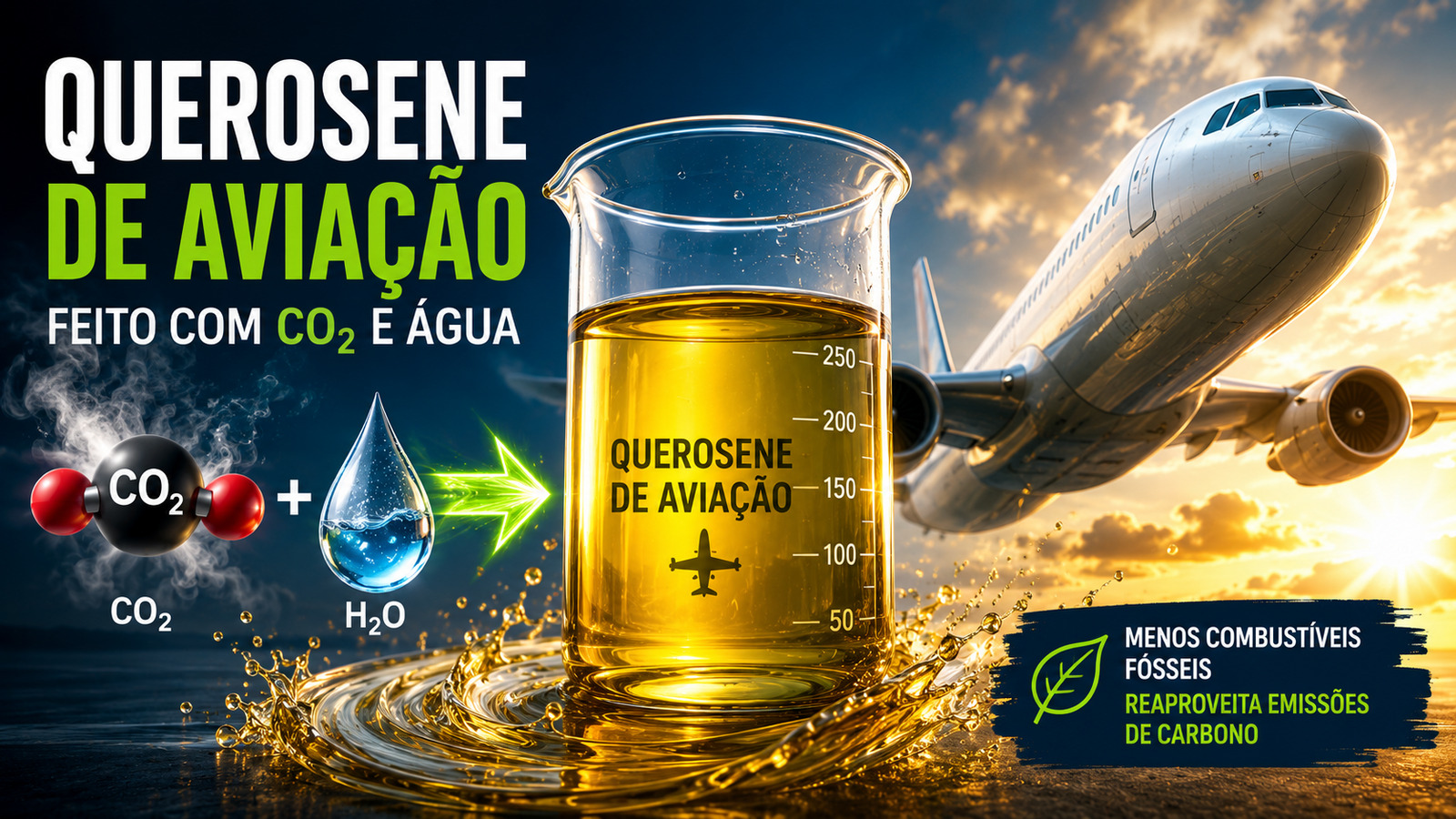
Chinese technology uses CO₂ and water to create experimental aviation kerosene, as air sector faces rising fuel costs and seeks alternatives to reduce costs and carbon emissions
An experimental process to produce jet fuel, aviation kerosene, from CO₂ and water was presented by a Chinese institute in a study published in ACS Catalysis, as the air sector faces cost pressure.


Process uses CO₂ as raw material
The research was conducted by the Shanghai Advanced Research Institute, affiliated with the Chinese Academy of Sciences. The team has moved beyond the laboratory phase and is now aiming for the viability of the process on an industrial scale.
The proposal reverses the logic of traditional combustion. Instead of releasing CO₂, the technology uses the gas as an input to form usable molecules for the production of aviation kerosene.
-
Bolivian Female Construction Workers Form Association to Combat Discrimination and 38% Pay Gap in the Industry

-
Near Amsterdam, residents buy land and discover they must also build streets, manage drainage, handle waste, and grow food on half their plot.
-
Without a mansion, without high investment, and without a traditional classroom, a teacher living in a 22 m² house taught students to build a 9 m² studio apartment with the equivalent of R$10,000.
-
Without her own home and pressured by rent, a 25-year-old bought a small 15-meter boat, gradually renovated the interior by herself, transformed the interior with paint, new flooring, a larger bathroom, and started living on the canals, paying much less per month.


In the experiment, CO₂ is combined with water and converted into long-chain hydrocarbons. These molecules form the basis of the fuel used by aircraft, according to the study released by the American Chemical Society.
Aviation faces more expensive fuel
This advance comes at a time of increasing operational costs for the air sector. Aviation fuel has become more expensive in recent months, pressured by the instability of international energy markets.
Supply shortages and rising crude oil prices have also weighed on prices. Analysts associate part of this volatility with tensions related to the conflict involving the United States, Israel, and Iran.
In this scenario, a route capable of producing aviation kerosene with CO₂ and water gains prominence by directly impacting one of the largest costs for airlines.
Study aims for efficiency and long molecules
For years, research in this area encountered two main obstacles. The first was the low efficiency in lengthening carbon chains, an essential step to generate molecules compatible with aviation fuel.
The second challenge involved precisely selecting the longer molecules required by aviation. The Chinese group claims to have made concrete progress on these fronts, with results published in the scientific journal.
Directing production towards long-chain hydrocarbons is a central point of the process. Without this control, the path between laboratory and practical application becomes more limited.
Jet fuel from air: Technology still seeks industrial scale
The news was initially reported by the South China Morning Post on Wednesday. The process still depends on commercial viability to move from the experimental stage to large-scale production.
If it reaches this point, the technology could reduce the consumption of fossil fuels in the air sector and reuse carbon emissions already present in the atmosphere.
With information from Fórum.







Be the first to react!