






 Portuguese
  Spanish


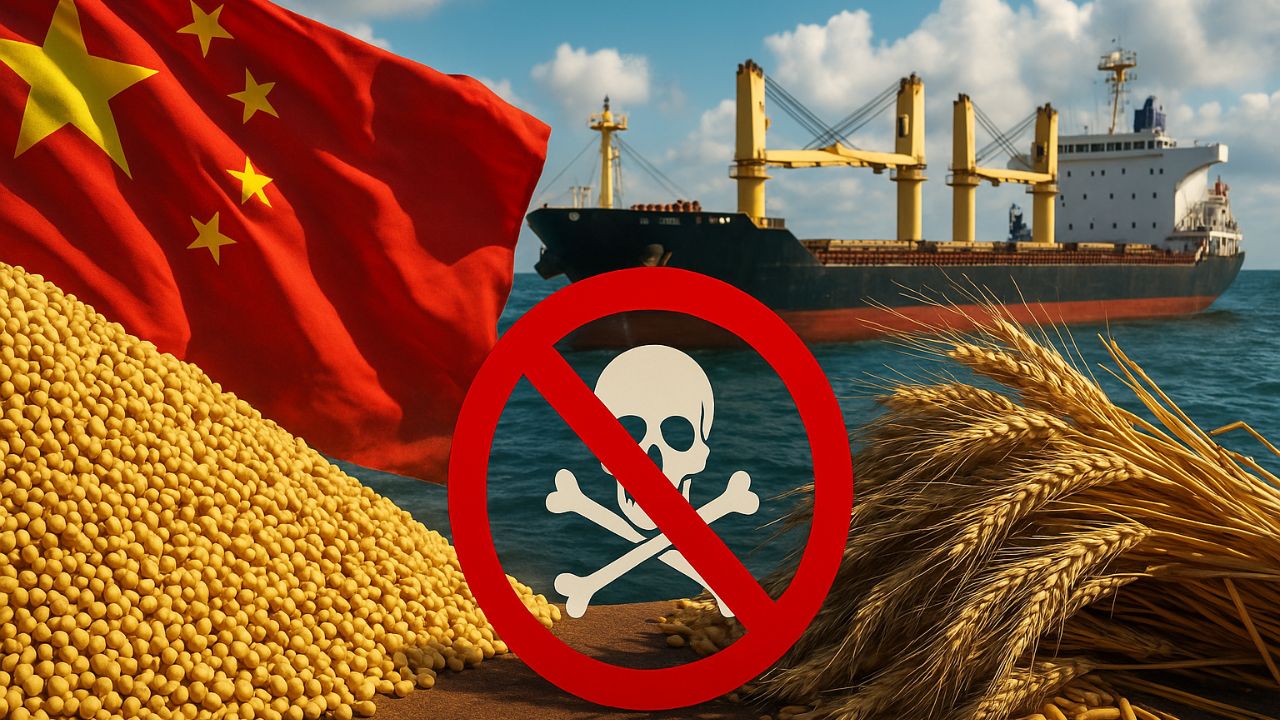


China Finds Pesticide-Treated Wheat on Ship Heading to Beijing, Blocks Soybean Cargo from Brazil, Pressures Brazilian Agriculture and Revises Soy Export to China After New Soy Contamination
China suspended the import of a 69,000-ton soybean shipment from Brazil after detecting wheat treated with a banned pesticide mixed with the grains in the hold of the ship Shine Ruby, which was en route to Beijing. The General Administration of Customs of China (GACC) classified the incident as a “serious violation” of food safety regulations, blocked the shipment, and ordered the suspension of soybean purchases from five Brazilian units of agribusiness giants.
The measures affect two Cargill plants in São Paulo, as well as units of Louis Dreyfus and CHS Agribusiness in the same state, and one plant of 3Tentos in Rio Grande do Sul.
Although other factories of these companies remain authorized to ship soybeans from Brazil to the Chinese market, the specific operations involved in the contamination will be halted pending further assessment by authorities in Beijing.
-
Cashew Becomes Billion-Dollar ‘Superfood’ in Ivory Coast: 1.6 Million Hectares of Monoculture Encroach on Forests as Families Trade Food for Nuts

-
In Rural Brazil, José Sirval Operates a Water-Powered Mill Grinding 125 Kilograms of Corn Daily Using His Great-Grandfather’s Century-Old Monjolo
-
From Market Stall to Agribusiness: Patagonian Fruit Grower Owns 550 Hectares and Processes 18 Million Kilos of Pears and Apples Annually, Exporting Directly to Brazil
-
At 93, Brazilian Farmer Restores 56 Hectares of Forest and Revives Spring in the Amazon, Installs First Climate Tower in the Region


China Reacts to Contamination and Targets Five Soy Giants from Brazil
According to the GACC, the inspection of the ship Shine Ruby found, among the soybean cargo from Brazil, about ten tons of pesticide-coated wheat, a toxic chemical product intended solely for planting, not for human or animal consumption.
In addition to representing an “unacceptable” health risk, Brazilian wheat is not even authorized for export to China, worsening the violation of the country’s trade and phytosanitary rules.
In the communication sent to the Ministry of Agriculture and Livestock (Mapa), the Chinese authority emphasizes that the decision aims to “protect the health of Chinese consumers and ensure the safety of imported soybeans.”
China also stated that it will not accept import declarations for soybeans from Brazil originating from these units for shipments loaded from November 27, 2025, maintaining an administrative block until the correction requirements are met.
Recidivism Raises Alarm About Controls on Brazilian Soy
Beijing made a point of noting that this is not the first time issues with pesticides in Brazilian soy have arisen.
In December 2024 and January 2025, China had already suspended certifications for five Brazilian establishments after detecting soybeans with pesticide coatings in shipments sent to the country.
In April 2025, the Brazilian side presented corrective measures and formal commitments to ensure the safety of soybeans exported from Brazil to the Chinese market, promising to eliminate grains with inadequate chemical coatings.
Now, with the new contamination involving treated wheat inside a soybean ship from Brazil, the credibility of these adjustments is being tested again, and the pressure for stricter oversight is likely to increase.
Brazilian Soy Still Strong in China, but Episode Pressures Oversight
Despite the seriousness of the case, the Mapa is trying to minimize institutional impact. Luís Rua, the Secretary of Commerce and International Relations of the ministry, stated that it is necessary to “relativize this situation” given the scale of Brazil’s soybean trade with China.
According to him, five establishments are involved compared to about 2,000 authorized to export soybeans to the Chinese market, which would keep the overall flow of business intact.
The figures show why the reaction is so sensitive. China is the world’s largest buyer of Brazilian soybeans, accounting for the import of US$ 31.5 billion in grains in 2024, equivalent to 73% of all the country sold abroad.
Between January and October of this year, China’s share rose to 78% of Brazil’s soybean exports, with transactions amounting to R$ 31.6 billion. In other words, any disruption in this partnership affects the heart of Brazilian agribusiness.
Brazilian Government Promises Quick Response and Dialogue with Companies
In light of the blockade, Luís Rua informed that the Brazilian government will immediately call the involved companies to clarify what happened and investigate the source of the contamination.
He emphasized that Brazil takes “any questioning from a trading partner very seriously” and that the analyses will be conducted with transparency and speed, precisely to protect the image of Brazilian soybeans in the largest purchasing market.
The original report sought comments from Cargill, Louis Dreyfus, CHS Agribusiness, and 3Tentos regarding the case but did not receive a response by publication time, leaving the space open for a statement.
Meanwhile, pressure is on the internal controls and shipping routines of Brazilian soybeans, from the field to the ship, to prevent entire loads from being compromised by isolated contaminations.
China’s Requirements to Relieve Suspension on Brazilian Plants
In the document sent to the Brazilian Embassy in Beijing, the GACC requests that the Brazilian government give “high attention” to the safety of agricultural products intended for the Chinese market.
Among the demands are reinforcing controls on origin, strengthening official oversight, and implementing strict sanitary and phytosanitary measures before loading Brazilian soybeans.
To reverse the suspension, each involved establishment must conduct a formal investigation into the source of the contamination, under Mapa’s supervision, adopt corrective measures to prevent recurrence, and demonstrate effective sanitary control capability.
Only after this, and upon recommendation from Brazilian authorities, will China assess the requalification of these Brazilian soybean exporting units and decide whether to resume accepting their shipments.
And you, do you think that this new blockade from China is a necessary warning to reinforce control over Brazilian soybeans, or an excessive rigor that could harm Brazilian agribusiness?





Guys look, note when the Brazilian exports are very high the Chinese government always try to look for some excuses for block the exportations to pressure the soybeans price to down.
This is always their strategy
These soybeans are apparently still fit for planting. However, the beans were sent intentionally and those companies need to be officially reprimanded and put on a list for ongoing inspections. There’s deceit going on and Brazil must take an active role in order to preserve the credibility within BRICS and preserve trust and commitment for trade between member countries.
MUITO IMPORTANTE ESSA REPORTAGEM ESPERANDO QUE AGORA AS AUTORIDADES DO BRASIL PROIBAM TODO TIPO DE AGROTÓXICOS E PESTICIDAS QUE CAUSAM DANOS A SAÚDE HUMANA E DOS ANIMAIS DOMÉSTICOS SEGUINDO A TENDENCIA INTERNACIONAL DE PROIBIÇÃO DESTES PRODUTOS E DANDO SEMPRE PRIORIDADE AOS ADUBOS NATURAIS.