






 Portuguese
  Spanish
  4 min of reading
  0 comments


The Expansion of Brazilian Products in the Chinese Market Draws Attention, While New Exporter Certifications and Promotional Actions by the Embassy Highlight Business Opportunities Amid Tariff Tensions with the United States.
The trade relationship between Brazil and China has taken new turns in recent days, particularly regarding the advancement of typical Brazilian products in the Asian market.
Recent posts from the official profile of the Chinese Embassy in Brazil on the social network X (formerly Twitter) have highlighted the growth of national exporter certifications to meet Chinese demand, a movement that occurs at the same time that the United States is imposing new tariff barriers on Brazilian products.
While the U.S. government, led by Donald Trump, raised the import tariff to 50% on various items coming from Brazil, Beijing has given clear signals that it intends to expand bilateral trade.
-
Brazilian Joins Homeownership Consortium, Faces Decade of Dual Payments Totaling $141,000, Surpassing Traditional Mortgage

-
Land Rover to Halt Production in July, Putting 371 Jobs at Risk, as Chinese Automaker Negotiates to Convert Factory to 100,000 Vehicles Annually by 2027

-
Mexican Pest Threatens U.S. Cattle Herds at Historic Lows, Potentially Boosting Brazilian Beef Exports as Burger Prices Soar

-
Brazilian Freight Bill Progresses in Congress with $5,000 Minimum Wage, 70% Advance Payment, and Fines Up to $1 Million, as Agriculture and Industry Warn of Rising Costs and Legal Uncertainty


According to the newspaper O Globo, the gesture is reflected in both the accreditation of new exporters and the promotion of Brazilian products in strategic cities in China.
Growth of the Coffee Market in China
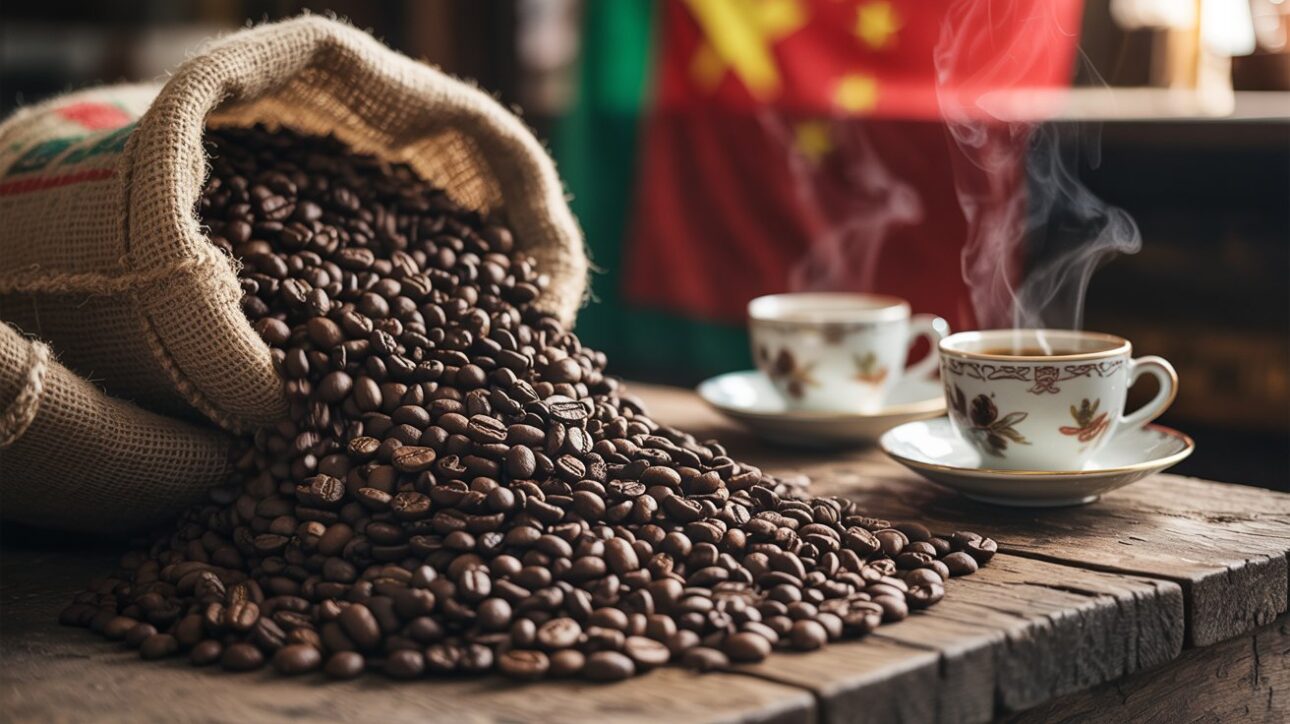
On August 2, the embassy announced that 183 coffee producers from Brazil have been certified to sell to the Chinese market.
The authorization, valid for five years, came into effect on July 30.
The announcement came just as Brazilian producers were facing difficulties accessing the North American market, after coffee was excluded from the exceptions list of the U.S. tariff decree.

According to the Chinese publication, domestic consumption of coffee in the Asian country has shown consistent growth between 2020 and 2024.
Despite this, the average per capita consumption is still only 16 cups per year, compared to 240 globally.
“Coffee is gaining space in the daily lives of the Chinese,” the publication noted, pointing out the potential for demand expansion.
Advancements in Other Agribusiness Sectors
In addition to coffee, the bilateral partnership has extended to other segments.
On the same day, the embassy highlighted the certification of 30 new Brazilian companies to export sesame, raising the total number authorized to 61.
This measure stems from a cooperation protocol signed in 2024 in Brasília by Presidents Luiz Inácio Lula da Silva and Xi Jinping.
There have also been advancements in the export of poultry and swine feeds.
On July 31, 46 Brazilian companies in the sector were certified to serve the Chinese market, strengthening Brazil’s presence as a supplier of animal protein to the Asian giant.
Acai Gains Space in the Chinese Market
Another recent highlight is the increase in acai sales in China.
In a publication dated August 7, the embassy stated: “Acai Wins Palates in China! Now available in cities like Beijing, Shanghai, Shenzhen, and Guangzhou, the Amazon superfruit is gaining space in beverage stores, attracting Chinese consumers with its unique flavor and health benefits.”
Acai, traditionally consumed in Brazil’s Northern Region, has been gaining global popularity for its nutritional properties and high antioxidant content.
In China, the product is already found on menus of cafes and establishments specializing in healthy food, leveraging the trend of consuming functional foods.
Impacts of U.S. Trade Policy
The Chinese movement occurs against a backdrop of trade tension with the United States.
The increase in U.S. tariffs directly affects Brazil, which in 2024 accounted for 30.7% of all coffee imported by the U.S., according to data highlighted by CNN.
The outlet noted that Americans, described as “a nation of coffee drinkers,” lead the global ranking for coffee bean imports.
The decision from Washington raises concerns among Brazilian producers who depend on the North American market.
With these restrictions, companies are likely to seek alternatives to maintain export flows, and China presents itself as a strategic destination.
New Agreements and Flexibility
In addition to food, recent cooperation has included the aerospace sector.
Brazilian authorities reported that Beijing expedited the authorization process for the purchase of planes produced in Brazil.
Although Embraer aircraft have been exempt from the 40% surcharge imposed by the U.S., they remain subject to a reciprocal tariff of 10%, announced by Trump in April.
The commercial rapprochement between the two countries has also manifested in logistical and technological partnerships.
Videos published on the embassy’s profile show Chinese delivery companies expanding operations in Brazil and the increased presence of Brazilian brands in China, especially in the food sector.
Landscape of Opportunities and Challenges
China’s approach to expanding the accreditation of Brazilian exporters contrasts with the restrictive environment imposed by the United States.
For foreign trade experts, this movement may signify a strategic repositioning of Brazil in global supply chains, leveraging niches such as the specialty coffee market, Amazon superfruits, and animal products with sanitary certification.
Nonetheless, market diversification requires investments in logistics, compliance with phytosanitary standards, and marketing strategies adapted to the profile of Chinese consumers.
Despite being vast, the Asian country presents challenges related to regulatory barriers, internal competition, and cultural product adaptation.
With the increase in export certifications and the growing presence of products such as coffee, sesame, animal protein, and acai in the Chinese market, Brazil finds itself in a landscape of possibilities.
But will the country be able to transform this momentary interest into a solid and long-term commercial partnership with China?





-

-

3 people reacted to this.