






 Portuguese
  Spanish
  3 min of reading
  0 comments


Discover How China Is Leading Innovation in Nuclear Energy with a Safe and Efficient Modular Fission Reactor That Promises Decarbonization and Energy Security
Disasters like Chernobyl and Fukushima led much of public opinion to oppose nuclear energy, but China wants to change that with the first meltdown-proof nuclear plant. The HTR-PM has demonstrated its safety operating at full capacity.
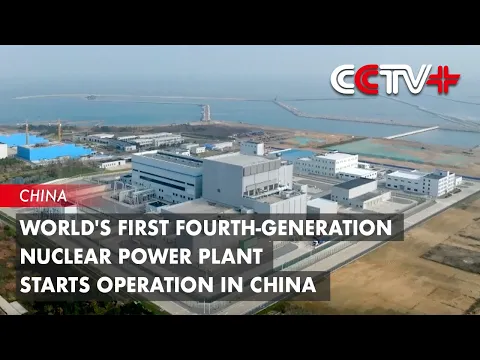
A Pioneering Fission Reactor. Inaugurated in December 2023 in Shidaowan, Shandong Province, the HTR-PM (High-Temperature Gas-Cooled Reactor Pebble-Bed Module) is the first small modular reactor (SMR) installed on land. Developed by the Nuclear Technology and New Energy Institute of Tsinghua University, it is also the second fourth-generation reactor (after the Russian BN-800) connected to the power grid and heating system. Since its inauguration, it has provided thermal energy to 1,850 households.
HTR-PM Features and Its Technological Innovation
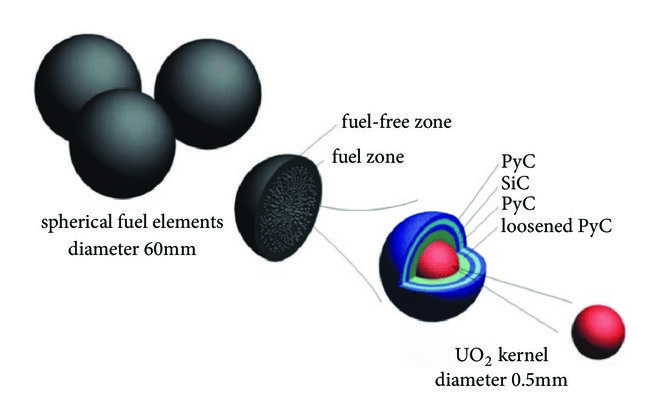
The First SMR with Pebble Bed. The HTR-PM has two modules of 250 MW thermal that drive a steam turbine of 210 MW electric. The most distinctive feature of this small gas-cooled modular fission reactor is that, instead of traditional fuel rods, it uses a pebble bed. The HTR-PM is the first SMR with this design, in which nuclear fuel is encapsulated in graphite balls of lower energy density that allow for more effective and safer cooling.
-
Japan sends ship to extract mud rich in rare earths at nearly 6,000 meters deep in the Pacific, attempts to lift 350 tons per day from the seabed, and transforms sediments near Minamitori Island into a strategic weapon to reduce dependence on China.

-
Venus Aerospace promises a rotating detonation hypersonic engine that takes the Stargazer to Mach 9 and crosses oceans in 1 hour, but the flight that made history barely surpassed the speed of sound.

-
Brazilian student creates a cheap formula that makes plants grow up to 90% faster and wins an award in a global scientific competition.

-
Europe unveils armored tank with remote turret, 1,500 horsepower, and 120-millimeter cannon



Operation of the HTR-PM
Gas Cooling: The HTR-PM is a gas-cooled modular fission reactor, using helium as the cooling fluid. Helium is chosen for its inert properties and high heat transfer capability.
Pebble Bed: Unlike traditional reactors that use fuel rods, the HTR-PM utilizes a pebble bed. Each sphere contains small particles of nuclear fuel encapsulated in graphite, allowing for better heat distribution and safer operation.
High Operating Temperature: This reactor operates at higher temperatures than conventional pressurized water reactors (PWR), reaching gas outlet temperatures around 750-950°C. This allows for greater thermal efficiency and the possibility of various industrial applications beyond electricity generation.
Passive Safety: One of the most notable features of the HTR-PM is its passive safety capability. In the event of a failure, the reactor can dissipate residual heat naturally, without the need for active cooling systems. This is demonstrated by the fact that during tests, the reactor was able to cool down to a stable temperature in 35 hours without external intervention. energy
Independent Modules: The HTR-PM consists of independent modules of 250 MW thermal each, which can be combined to drive a steam turbine of 210 MW electric. This modularity allows for flexibility in plant construction and operation, as well as facilitating maintenance.

Safety and Innovation in Nuclear Energy
Meltdown-Proof. Two safety tests were conducted on both modules, each operating at a power of 200 MW thermal. During the tests, the active power supply of the small reactors was disconnected to verify whether residual heat could be eliminated passively. The reactors cooled naturally to a stable temperature in 35 hours without external intervention. It is the first time that the safety of a commercially-scaled meltdown-proof nuclear power plant has been demonstrated.
The development of the HTR-PM started in 2016. Despite a six-year delay, the results at full power are promising for the safety of fission nuclear energy and low-cost decarbonization. The HTR-PM is an engineering feat with which China once again highlights its ability to reduce its dependence on fossil fuels. However, there is a long way to go for its global adoption, as this technology cannot be applied to existing reactors, meaning new facilities will be needed to benefit from this safe design.
Image | Tsinghua University





Be the first to react!