Portuguese
  Spanish


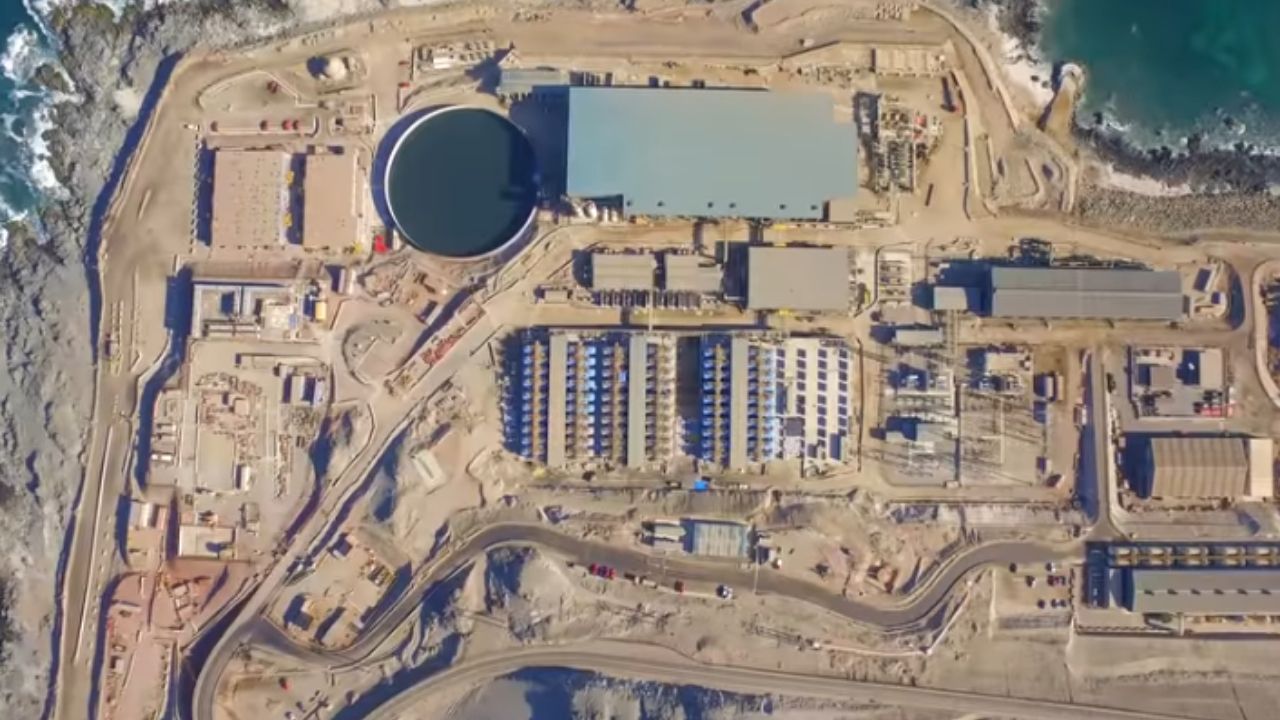

With unprecedented scale desalination in Latin America, BHP inaugurated in 2018 a 2,500 l/s plant for Escondida in Chile. The system includes 42-inch pipelines, four pumping stations, a reservoir at the mine, and water transport up to 3,200 meters in the Atacama Desert, reducing pressure on local aquifers.
Desalination has taken a central role in the water strategy of Minera Escondida, an operation controlled by BHP in northern Chile. The 2,500 liters per second plant was inaugurated on April 7, 2018, in Puerto Coloso, Antofagasta, to supply the largest copper mine in the world.
According to BHP, the structure was created to transport desalinated seawater to the Escondida operation, located about 170 km southeast of Antofagasta and over 3,000 meters in altitude. The project complemented a previous unit of 525 l/s, which had been operating for twelve years.
2,500 liters per second plant changes the scale of water in mining

The new desalination plant was presented by BHP as the largest of its kind in Latin America at the time of its inauguration. Its capacity of 2,500 l/s was designed to sustain the Escondida operation, where the demand for water is directly linked to mineral processing.
-
Brazilian Engineers Lead $200 Million Project to Bring Water from São Francisco River to Transform Supply in Northeastern Cities

-
Brazilian University Tests Recycled Plastic Component for Homes, Aiming for More Sustainable Single-Family Housing Construction
-
Apple, Samsung, and Sony Warn: Wet Bluetooth Earbuds Can Be Damaged if Stored Before Fully Drying
-
Brazil Develops AI-Driven Technology to Measure Brain Pressure Non-Invasively, Detecting Nanometric Deformations in Real Time to Aid Early Medical Intervention


The project also emerged in a context of pressure on water resources in the Atacama Desert. The company’s declared strategy was to expand the use of desalinated water and recover more water from its own processes, gradually reducing the withdrawal of water from aquifers.
Water needs to conquer the desert and reach over 3,000 meters
The complexity of the system is not only in the production of desalinated water. After being treated in Puerto Coloso, the water needs to be transported through long pipelines to the mine, in a region of high altitude and desert conditions.
For this, the construction included two 42-inch pipelines, four high-pressure pumping stations, a reservoir at the mine, and high-voltage electrical infrastructure. In practice, seawater is pushed by a gigantic industrial system to the heart of mining in Atacama.
Billion-dollar investment shows the weight of desalination

The plant required an investment of US$ 3.43 billion, including not only the plant but the entire set of transportation, pumping, storage, and energy needed to operate the system. In projects of this size, desalination depends not only on water treatment but on a complete chain of infrastructure.
This point is decisive because the mine is far from the coast and at a high altitude. The greater the distance and elevation, the greater the demand for pumping, energy, and maintenance. Therefore, the project combines water engineering, mining, electricity, and logistics in a single operation.
Energy also became part of the water equation
To ensure electricity for water pumping, BHP signed a long-term contract linked to the Kelar Thermoelectric Plant. The plant was originally designed to use coal but was converted to a natural gas combined cycle, a lower-emission alternative compared to coal.
This change shows that desalination in mining involves not only solving water supply. The energy consumption of pumping and treatment also enters the environmental and operational calculation, especially when the goal is to reduce the water impact without creating another problem on an equivalent scale.
Escondida uses the plant to sustain copper processing


Minera Escondida is one of the most important copper operations in the world. The new desalinated water plant was considered a crucial piece to maintain the mine’s processing capacity, especially during a period when the operation was working with three concentrators simultaneously.
According to BHP, the construction of the structure involved 45 million work hours. The scale helps to understand why water has become a strategic variable for copper, and not just a secondary input within mining.
BHP’s Goal Aims to Reduce Freshwater Use in Chile
BHP stated that its ambition in Chile was to stop using freshwater by 2030, gradually advancing in this transition in the years following the inauguration. The Escondida desalination plant was presented as an important step within this plan.
The decision reflects a larger trend in mining in arid regions: to rely less on aquifers and seek alternative sources. In Atacama, where water is a sensitive resource, such projects gain not only economic but also environmental and social relevance.
BHP’s megaplant shows how desalination has become a strategic solution for mineral operations installed in regions with water scarcity. In the case of Escondida, the project combines seawater, giant pipelines, high-pressure pumping, dedicated energy, and one of the largest copper mines on the planet.
At the same time, the solution raises questions about cost, energy consumption, and feasibility in other mining projects. Do you believe that desalination should become standard in mines located in dry regions, even with billion-dollar investments and high electrical demand? Leave your opinion in the comments.