






 Portuguese
  Spanish


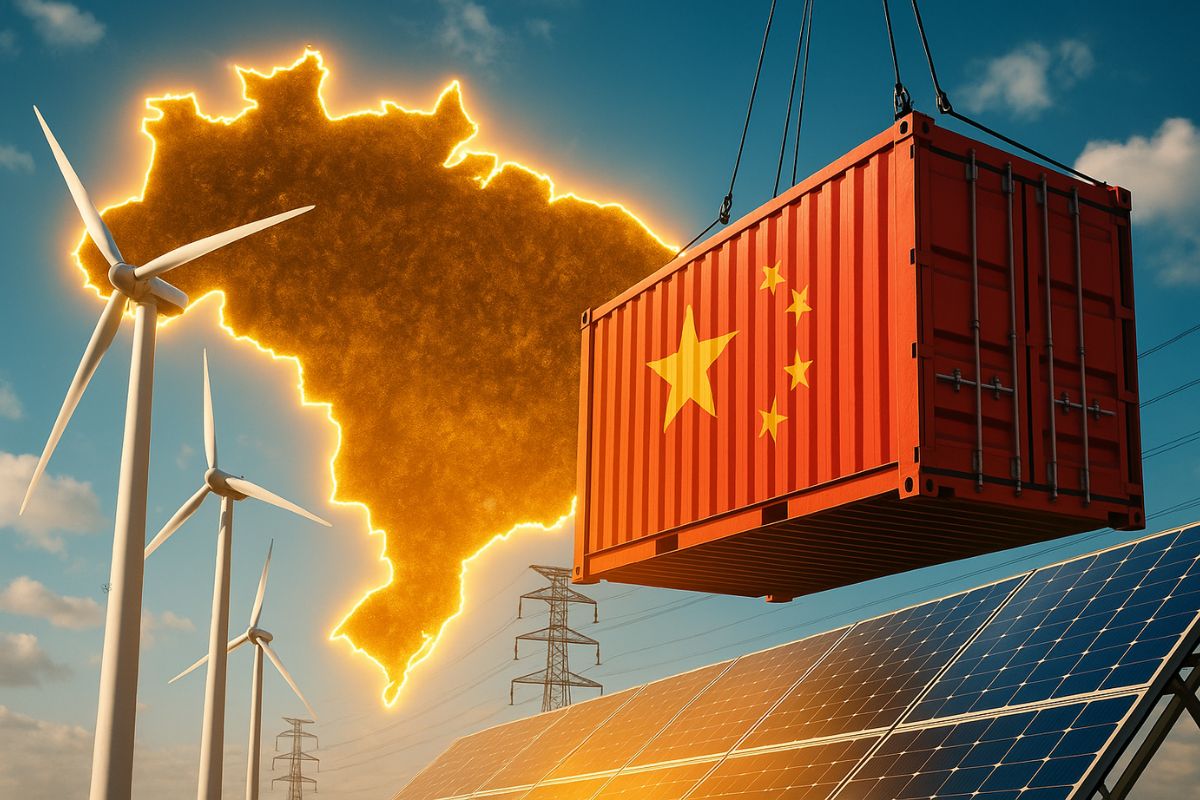


China Ranks Brazil As Its Second Largest Investment Destination. The Influx of Chinese Capital Strengthens Strategic Sectors Such As Energy, Infrastructure, Technology, and Mining
The news that China Ranks Brazil As Its Second Largest Investment Destination confirms a trend that has been consolidated in recent years. According to an analysis by Túlio Cariello, director of content and research at the Brazil-China Business Council (CEBC), cited by CNBC, the Asian country sees Brazil as a strategic market due to its combination of natural resources, clean energy matrix, and a digitally connected consumer base.
In the first six months of 2025, Chinese investments reached US$ 2.2 billion, falling just behind Indonesia. This economic closeness strengthens China’s presence on the continent and increases Brazil’s dependence on external capital in areas deemed sensitive for the future.
What Explains the Surge in Chinese Investments?
According to the CEBC, China Ranks Brazil As Its Second Largest Investment Destination due to factors that go beyond traditional trade in grains and oil. Chinese interest has diversified, reaching electricity, solar and wind energy, information technology, e-commerce, manufacturing, and even financial services.
-
Brazil’s 2026 Tax Refund: Record 9.58 Million Filers in Largest Payout Ever, But a Key Detail on Priority Recipients Draws Nationwide Attention

-
Itaú Alters Hybrid Work Model, Increasing Office Days from 2028, Prompting Employees to Adjust to New Routine
-
Facing Labor Shortage, Japan Plans to Invest $34 Million to Attract Foreign Workers in Construction, Healthcare, Industry, and Commerce

-
Brazilian City Makes Remarkable Leap, Becomes 4th Wealthiest in the Country with GDP of R$ 134.1 Billion


Another relevant point is Brazil’s energy matrix, the cleanest in the G20, which attracts companies willing to invest in sustainable projects. Additionally, internet penetration in over 90% of homes generates interest in digital sectors, especially fintechs and service apps.
Mining and Strategic Minerals on the Radar
Chinese activity is not limited to Brazil’s internal consumption. The mining sector and strategic minerals, such as lithium, niobium, and rare earths, are also on the agenda. China is already a world leader in processing these inputs, essential for the production of batteries and semiconductors, and seeks to expand its presence in Brazil.
Today, Brazilian exports of rare earths are still limited, but there is hope that the sino-Brazilian partnership could accelerate projects in Minas Gerais and Goiás, putting the country on the global map of energy transition.
Infrastructure and Industry: Filling Spaces Left by Other Powers
Another factor that helps explain why China Ranks Brazil As Its Second Largest Investment Destination is its entry into areas abandoned by companies from other countries. Automakers like Ford and Mercedes have reduced operations in Brazil, creating opportunities for Chinese companies like BYD and GWM to expand their factories and strengthen the national automotive industry.
Moreover, Chinese investments are present in nearly all Brazilian states, according to the CEBC, demonstrating a strategy of outreach and influence that extends far beyond major urban centers.
Counterparties and Impacts on the Brazilian Market
The massive influx of foreign capital always raises questions about counterparties. In the case of China, the tax benefits granted by Brazil are similar to those offered to investors from other origins. The difference lies in the speed and intensity with which the Chinese occupy the available spaces, leading to criticism from sectors that feel pressured by competition.
Still, experts believe that the movement brings gains in job creation, infrastructure, and industrial modernization, provided Brazil can negotiate counterparties that increase its involvement in higher value-added stages of the production chain.
The confirmation that China Ranks Brazil As Its Second Largest Investment Destination reinforces the weight of the bilateral relationship in the global economy. The challenge now is to ensure that these resources not only reinforce the dependence on commodities but also generate innovation, technology, and sustainable development in Brazilian territory.
And you, do you believe Brazil is making the most of this opportunity or risks becoming overly dependent on China? Share your opinion in the comments — we want to hear from those living this reality firsthand.









A Relação bilateral torna o Brasil dependente, Nunca devemos ter uma parceria com mais de 40% de nossas exportações, gera submissão
Trata-se de uma questão de oportunidades e estratégias de aprendizagem e crescimento. Se o Brasil souber aproveitar será uma revolução conjunta de autonomia e desenvolvimento.
Na minha concepção:
Não é preciso ser um grande expeert em negócios macroeconômicas geopolíticos, pata perceber que tais permissões deliberadas&facilitadas investidas da China aqui no Brasil, AL e continente africano, é no mínimo comprometedor, arriscado, perigosíssimo & ESCUSOS.
Na realidade estão vendendo&dando o Brasil, as nações da América Latina e continente africano à preço de lotes de sobras&restos de bananas. E, para piorar, no horário das xepas.😁Kkkkk KKKK