Portuguese
  Spanish


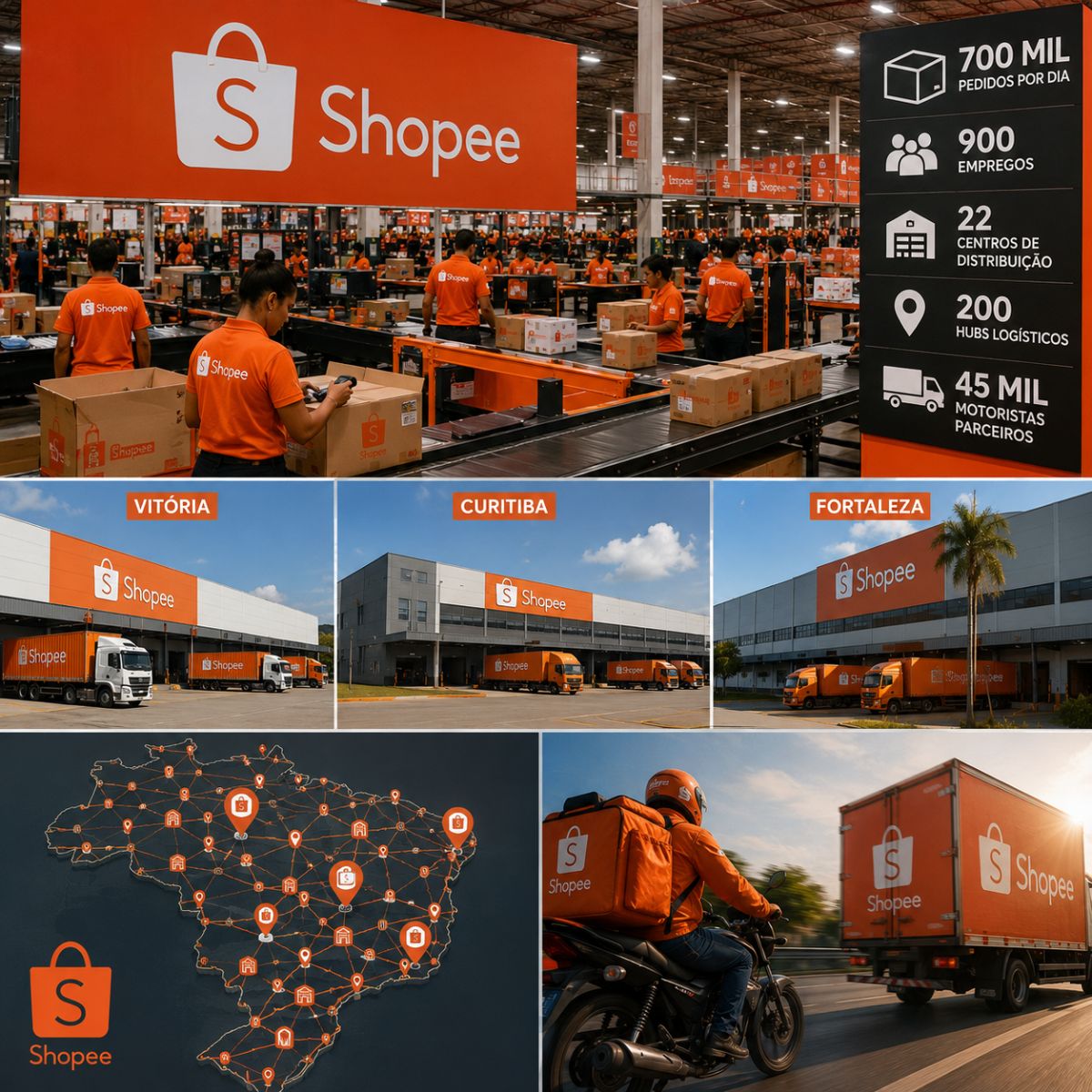


According to CNN Brasil, Shopee inaugurated on May 5, 2026, three simultaneous distribution centers in Vitória (ES), Curitiba (PR), and Fortaleza (CE), with a combined capacity to process over 700,000 orders per day and generate approximately 900 jobs. The units operate under the cross-docking model with automated conveyor belts. With this expansion, the platform now has 22 distribution centers, over 200 logistics hubs, approximately 3,000 agencies, and 45,000 partner drivers in Brazil.
The Shopee opened three distribution centers simultaneously in Vitória, Curitiba, and Fortaleza, and the scale of the move shows that the e-commerce platform is no longer just selling cheap products: it is building logistics infrastructure that directly competes with the largest marketplaces in Brazil. The combined capacity of the three new centers is over 700,000 orders per day, and the operation generated approximately 900 jobs distributed among the three states, according to the company’s official statement.
With the inauguration, Shopee now operates 22 distribution centers in Brazil, with 17 in the cross-docking model and five in the fulfillment model. The network is completed with over 200 logistics hubs, approximately 3,000 agencies that function as pickup points and reverse logistics, and 45,000 partner drivers who make the final delivery to the consumer. The number is impressive, but it doesn’t put Shopee in the lead: Mercado Livre operates about 50 centers in Brazil, and Magazine Luiza has over 30.
How the new cross-docking centers work

The three inaugurated centers operate under the cross-docking model, a system where goods arrive, are sorted, and dispatched for delivery quickly, without prolonged storage. The difference from the fulfillment model is that in cross-docking, Shopee does not stock products: they enter one side of the warehouse and exit the other within hours, which reduces warehouse costs and speeds up the flow.
-
Brazilian Startup Turns Coffee Grounds into Plant-Based Leather, Cutting Water Use by Over 50 Times for High-Impact Sustainable Fashion

-
Eco Invest Auction Aims to Unlock $10 Billion in Investments, Focusing on Green Fertilizers, Critical Minerals, Batteries, and AI for Clean Industry in Brazil

-
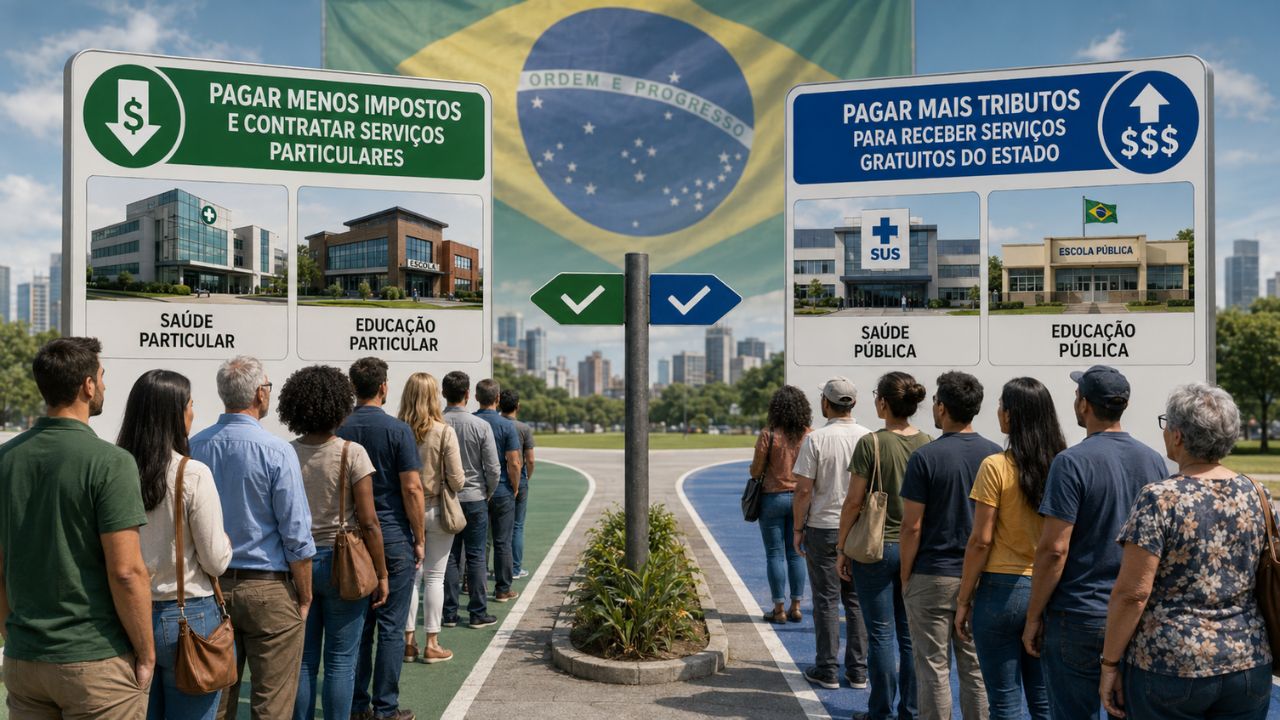
Half of Brazilians Prefer Lower Taxes with Private Health and Education, While 44% Opt for Higher Taxes for State-Provided Services, Datafolha Survey Reveals

-
Brazil’s Most Expensive Toll Rises to R$ 40.60 on Route from São Paulo to the Coast, Nearly Matching Bus Fare to Santos



The facilities feature automated conveyor belts that increase sorting speed and reduce manual intervention, according to Times Brasil and URB News. In practice, an order placed in the morning can be sorted, loaded, and dispatched on the same day, shortening the delivery time, which is the main battleground among marketplaces in Brazil. Rafael Flores, Shopee’s head of expansion, stated that “with the increased capacity, we shorten deadlines and strengthen the ecosystem of local sellers.”
The regional impact: 300 jobs per state
Each of the three centers generates approximately 300 direct and indirect jobs in the region. In Ceará, where Fortaleza received the new center, the state already ranked among the top ten in Brazil for active sellers on Shopee and had five logistics hubs in Caucaia, Juazeiro do Norte, Sobral, and Fortaleza, in addition to over 700 agencies functioning as collection and return points.
In Curitiba, the unit was installed in the metropolitan region and serves the entire state of Paraná, reducing dependence on centers located in São Paulo to supply the South of the country. In Vitória, the distribution center covers Espírito Santo and functions as a strategic point to serve the region that previously depended on warehouses in Rio de Janeiro and Minas Gerais. Decentralization is the logic: the closer to the consumer, the shorter the deadline and the lower the delivery cost.
The logistics race against Mercado Livre, Magalu, and Amazon
The expansion of Shopee is happening in a market where competition for **delivery** speed defines who wins the customer. **Mercado Livre leads comfortably, operating around 50 distribution and fulfillment centers in Brazil**, an infrastructure that allows it to offer **delivery** on the same day or the next day in hundreds of cities. Magazine Luiza has more than 30 **centers** with strong capillarity in the interior, and Amazon **Brazil** operates 12 units with planned expansion.
With 22 **centers**, **Shopee** is behind the leaders in absolute numbers, but compensates with its network of 200 hubs and 3,000 **agencies** that function as a capillary network for last-mile **deliveries**. **The 45,000 partner drivers form an army of delivery personnel operating on a gig economy model**, without employment ties, a model that gives operational flexibility to the **company** but faces challenges in lawsuits and public debate about the precarization of labor.
The 2026 strategy and lead time reduction
The inauguration of **Vitória**, **Curitiba**, and **Fortaleza** marks the second round of **Shopee**’s expansion in 2026. **Earlier this year, the platform had already opened fulfillment centers in Goiás, Rio Grande do Sul, and Minas Gerais**, a model where **Shopee** stores sellers’ products and manages the entire picking and dispatch process. The result of the previous round was measurable: the average **delivery** **time** fell by 1.5 days in the fourth quarter of 2025 year-on-year.
The logic is that each **distribution** **center** inaugurated outside the São Paulo-Rio axis reduces the average distance between the warehouse and the consumer, which decreases the **delivery time** and freight cost. **For local sellers, the proximity of a center means their products arrive faster** and with lower shipping costs, which improves competitiveness against São Paulo sellers who previously dominated the **marketplace** due to their **logistics** advantage.
Shopee’s numbers in Brazil and what they mean
**Shopee**’s Brazilian operation, a subsidiary of Singapore’s Sea Limited, has grown explosively since its arrival in **Brazil** in 2019. **In less than seven years, the platform has built a network that includes 22 distribution centers, over 200 hubs, 3,000 agencies, and 45,000 drivers**, numbers that position it among the three largest **marketplaces** in the country in terms of **logistics** infrastructure.
Before the new round, **Shopee** operated 19 **centers** (14 cross-docking and 5 fulfillment). **The three new ones raise the total to 22 and expand coverage to regions that still depended on distant warehouses.** The speed of expansion signals that the **company** is willing to invest heavily in physical infrastructure in **Brazil**, a bet that contradicts those who thought **Shopee** would only be an intermediation **platform** without operational presence in the country.
Have you ever bought from Shopee and noticed a difference in delivery time, or do you think Mercado Livre still delivers faster? Tell us in the comments if your city has a Shopee distribution center and how long your orders take to arrive.