Portuguese
  Spanish


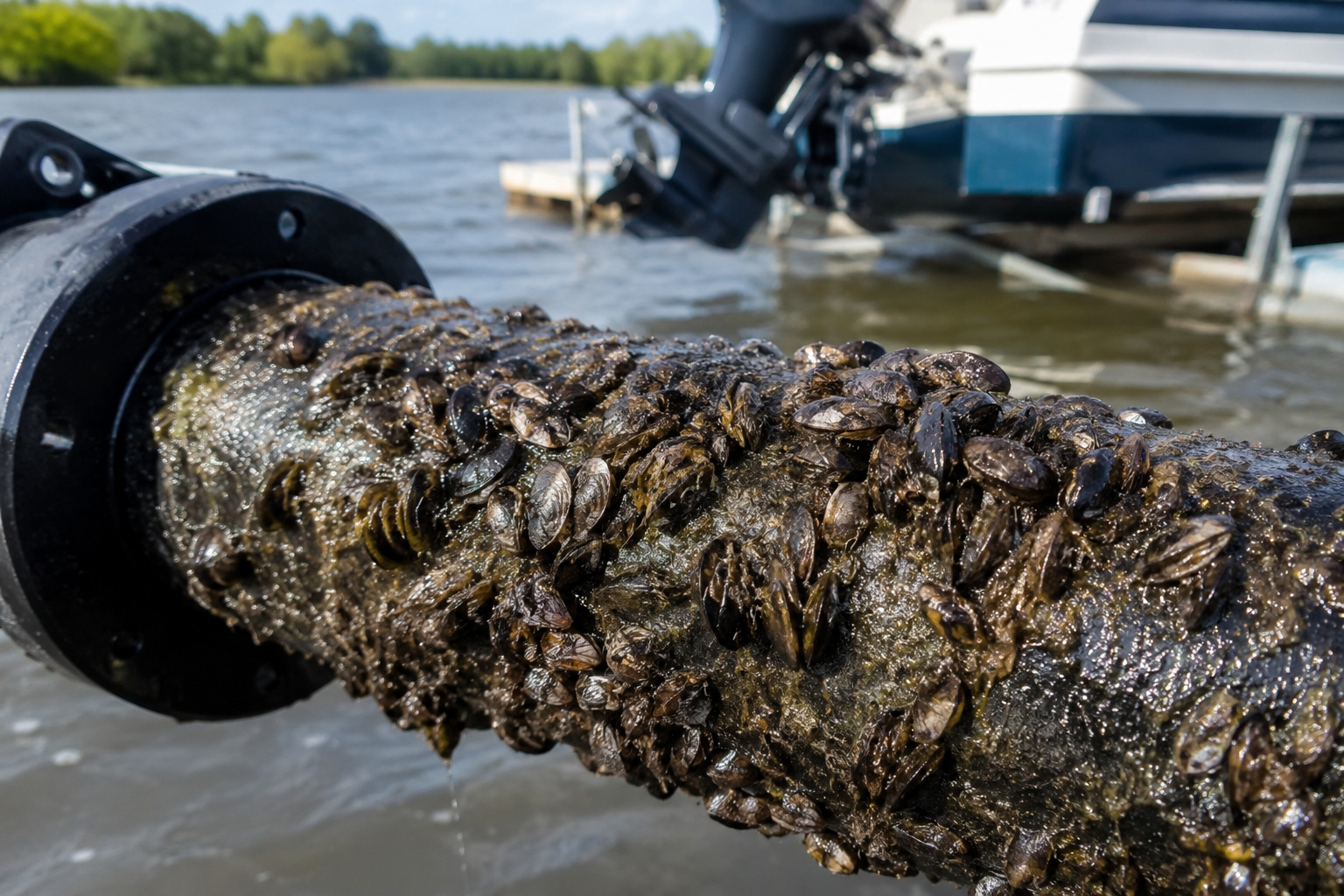


U.S. federal challenge seeks innovative, efficient, and scalable technology to prevent quagga, zebra, and golden mussels from hitchhiking on boats, rapidly spreading among rivers, lakes, and reservoirs, compromising water supply systems, affecting hydroelectric plants, straining critical infrastructure, and increasing billions in annual damages already recorded in the country
The United States government has launched a challenge with a prize of up to US$200,000, approximately R$998,000, to curb the spread of invasive mussels that threaten rivers, lakes, reservoirs, and essential water supply structures.
According to the Bureau of Reclamation, a federal agency linked to major water systems and hydroelectric generation, the program seeks new inspection and decontamination technologies. Therefore, the goal is to prevent invasive organisms from being transported by vessels between different bodies of water.
Invasive Species Hitchhike on Boats and Advance Between Reservoirs
Currently, quagga, zebra, and golden mussels can move between rivers and lakes using boats as a means of transport.
-
Forgotten Map Leads Diver to Shipwreck with Gold, Rare Jewels, and Secrets Hidden for Nearly 350 Years

-
Furong: The 2,000-Year-Old Chinese City Built on a 60-Meter Waterfall Becomes a Global Tourist Phenomenon

-
YouTube Inventor Dubbed “Real-Life Tony Stark” Builds Robotic Legs for Father’s Day, Creating a Wheelchair That Conquers Stairs and Rough Terrain
-
Brazilian Scrap Dealer Processes 3,000 Tons of Ferrous Scrap Monthly, Paying $0.09 to $0.70 per Pound, Reveals Why a Hidden Cylinder Costs 1,500 kg Discount




Furthermore, small amounts of water trapped in ballast compartments can carry larvae or microscopic organisms.
When boats circulate between reservoirs, these species can reach new environments and start infestations that are difficult to control.
Once established, these animals attach to submerged surfaces and form dense colonies.
Damage Affects Pipelines, Pumps, Intakes, and Power Systems
As a result, invasive mussels can accumulate in pipelines, pumps, and intake systems used by cities, farms, and power plants.
Consequently, these organisms reduce equipment efficiency and, in more severe situations, completely block water flow.
According to the Bureau of Reclamation, quagga and zebra mussels alone generate over US$1 billion per year in control and repair costs in the United States.
These species also affect aquatic ecosystems, marinas, beaches, and reservoirs.
Alert Grew After Detection of Golden Mussel in California in 2024
Recently, concern increased after the detection of golden mussels in California in 2024.
The species is considered highly invasive and reinforced the need for faster, more efficient, and large-scale applicable solutions.

Meanwhile, current decontamination methods still require time, specific equipment, and specialized labor.
In many cases, the process involves rinsing with heated water in internal areas of vessels, a procedure that can take up to an hour per boat.
Federal Challenge Will Have Three Phases and Seeks Lab-Tested Prototypes
To address this bottleneck, the government created the “Halt the Hitchhiker: Invasive Species Challenge”, or “Stop the Hitchhiker: Invasive Species Challenge”.
The initiative will be divided into three phases, with progressive awards for proposals, presentations, and prototypes.
First, participants must present concepts for new technologies or inspection and decontamination methods.
Thus, up to six projects may receive US$ 25 thousand each.
After that, the best advance to a virtual presentation, with up to three teams receiving US$ 50 thousand to develop the ideas.
Finally, the finalists will create prototypes for laboratory testing.
Final prizes reach US$ 125 thousand and winners will be announced in 2027
In the final stage, the first place winner may receive US$ 125 thousand, about R$ 623.5 thousand. Second place will have a prize of US$ 75 thousand, approximately R$ 374.1 thousand.
The third place winner may receive US$ 50 thousand, about R$ 250 thousand.
The competition is open to researchers, startups, universities, and inventors based in the United States.
According to the informed schedule, the final winners are expected to be announced in September 2027.
Meanwhile, the country is trying to accelerate solutions to protect rivers, lakes, power plants, urban water systems, and strategic reservoirs.
Will a new technology be able to prevent these invasive mussels from continuing to hitchhike on boats and spreading across the United States?