






 Portuguese
  Spanish
 2 min of reading
  0 comments


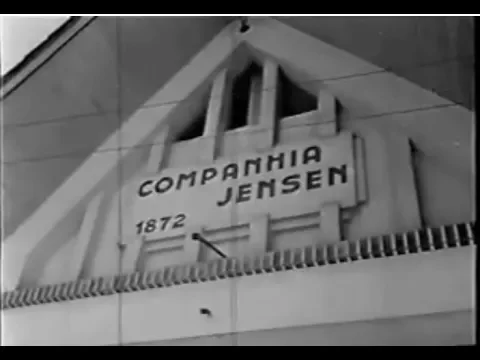
Founded in 1872 by German immigrants, the century-old Cia. Jensen was the first agroindustry of Blumenau, a reference in dairy products and meat packing
Cia. Jensen was one of the pioneers of agroindustry in Santa Catarina. Established in 1872 by German immigrant Rudolf Wilhelm Harro Jens Jensen, it utilized the surplus from local farmers’ properties to produce food.
Throughout the 20th century, it became a major industrial hub in Blumenau, marking the development of the Itoupava region with pasteurized milk productions, butter, meats, and sausages. Its initial success bolstered the local economy and justified the title of “first agroindustry of the Blumenau colony”.
Growth of Cia. Jensen and Its Role in the Economy of Santa Catarina
Over time, Cia. Jensen transitioned from being merely a rural enterprise to a large food industry. With investments in technology and the expansion of its facilities, especially after the introduction of pasteurization in the late 1930s, the company began processing milk, producing cheese, butter, preserves, and sausages on a large scale.
-
Survivor of 1966 SS Daniel J. Morrell Shipwreck in Lake Huron Recounts 38-Hour Ordeal in Extreme Cold

-
The Greatest Hoax in World Cup History? The Film That Denied Brazil’s 1958 Victory and Exposed How Fake Evidence Can Seem Convincing on TV
-
Fake South Korean Online Stores Offer Shopping Thrill Without Spending Money or Receiving Products
-
The War of Jenkins’ Ear: How a Severed Ear Sparked One of the 18th Century’s Most Unusual Conflicts



In the historical image above, employees work at the company’s old cheese factory, highlighting the importance of dairy products in its production line. In the second half of the 20th century, Jensen established itself as one of the largest companies in Blumenau: at its peak, it employed around 1,200 workers, ranking among the “giants” of industry in the state.
Social and Community Impact of Cia. Jensen
Cia. Jensen was not only economically relevant but also socially significant for Itoupava Central and Blumenau. The company maintained workers’ housing, a school, and even its own social club where parties and sports competitions were held. It was within this structure that, around 1925, the Frigor E.C. team was formed by factory employees.
The local community viewed Jensen as one of the neighborhood’s pillars: its quality products made it “one of the great prides” of Itoupava Central and the entire city. The company’s old football field was a leisure center for workers, and employees took pride in being part of this social cycle. Even today, the names of Jensen’s key leaders are immortalized in the urban landscape – for example, the avenues Guilherme Jensen and Pedro Zimmermann in Itoupava Central honor the founder’s grandson and his partner, key figures in the neighborhood’s history.





-

1 person reacted to this.