Portuguese
  Spanish


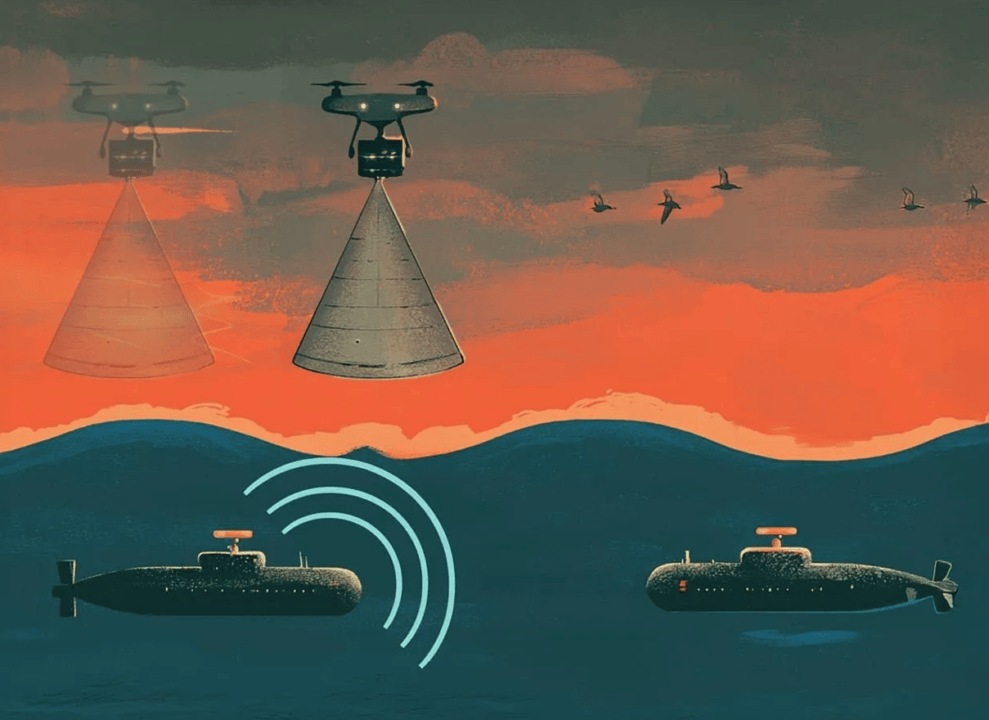

A Surprising Advancement In The Field Of Communications Has Been Achieved By Researchers Who Successfully Intercepted And Decoded Submarine Messages Directly From The Air.
Scientists from Princeton and MIT managed to decode submarine messages using radar, without touching the water. The technique allows for the decoding of acoustic signals emitted from below the surface based on the vibrations generated in the water.
These signals, previously considered protected, have now proven to be vulnerable. The tests were conducted on Carnegie Lake and worked even with winds and waves.
The equipment used was common, raising concerns about the ease of application.
-
New Study Finds Brief Stress Episodes Can Alter Blood and Increase Risk of Clot Formation

-
Ukraine Escalates War Efforts with Plan to Deploy 25,000 Ground Drones, Test Phantom MK-1 Humanoid Robot, Use Armed Mini-Tanks, and Expand Automated Attacks up to 15 km from Frontline

-
New Superfiber Developed by Imperial College Researchers and Approved by the EU Promises to Increase Satiety and Help Prevent Weight Gain
-
Harvard Researchers Develop Biological Clock to Estimate Life Expectancy, Potentially Transforming Human Aging Studies


Discreet And Hard To Detect Method
The innovation is based on reading the microscopic vibrations caused by underwater sound waves. A radar sends signals that bounce off these vibrations. Then, algorithms interpret the data to reconstruct the message.
The technique does not rely on direct contact with the water. This makes the process nearly invisible, ideal for surveillance or interception without being noticed.
Even without knowing the transmission parameters, the researchers managed to read the messages. This is an advancement over previous studies, such as those from MIT itself in 2018. Previously, communication had to be cooperative. Now, this is no longer necessary.
Implications For Defense, Oil, And Climate
The applications of the discovery are wide-ranging. It could impact defense, such as in submarine communications, and also the energy sector, in oil platforms. Even civil areas, such as climate monitoring and rescue operations, may be affected.
The main risk lies in espionage. The vulnerability of underwater communications requires a quick response.
The team has already proposed solutions. Among them, changes to the design of acoustic emitters to make external reading more difficult. This could enhance the security of these transmissions.
The researchers state that they continue testing. The goal now is to further improve the system’s accuracy and consider applications that could be positive.
The discovery, despite the risks, demonstrates the advancement of technology and how it can change rules once considered certain. Even the barrier between water and air, once reliable, is no longer so secure.