Portuguese
  Spanish



Project using the TESS satellite found over 10,000 exoplanet candidates in just one year with artificial intelligence support.
In 2026, the search for worlds outside the Solar System entered a new scale after researchers from the T16 Planet Hunt project reported the identification of 11,554 exoplanet candidates in data from the Transiting Exoplanet Survey Satellite, TESS, a NASA mission launched to search for planets around nearby stars using the transit method. The advancement appears in the study “The T16 Planet Hunt”, published on April 20, 2026 on arXiv, still without peer review, in which the team claims to have used semi-automated search and machine learning to examine light curves from 83,717,159 stars observed in the mission’s first cycle.
The number is impressive because humanity took about three decades to confirm just over 6,000 exoplanets, while the new survey found 10,091 unprecedented candidates in just one broad analysis of TESS data. According to the Space.com report, published on May 8, 2026, the method scoured stars up to 16 times fainter than normally prioritized targets, capturing transit signals that previously went unnoticed amidst the gigantic volume of astronomical information.
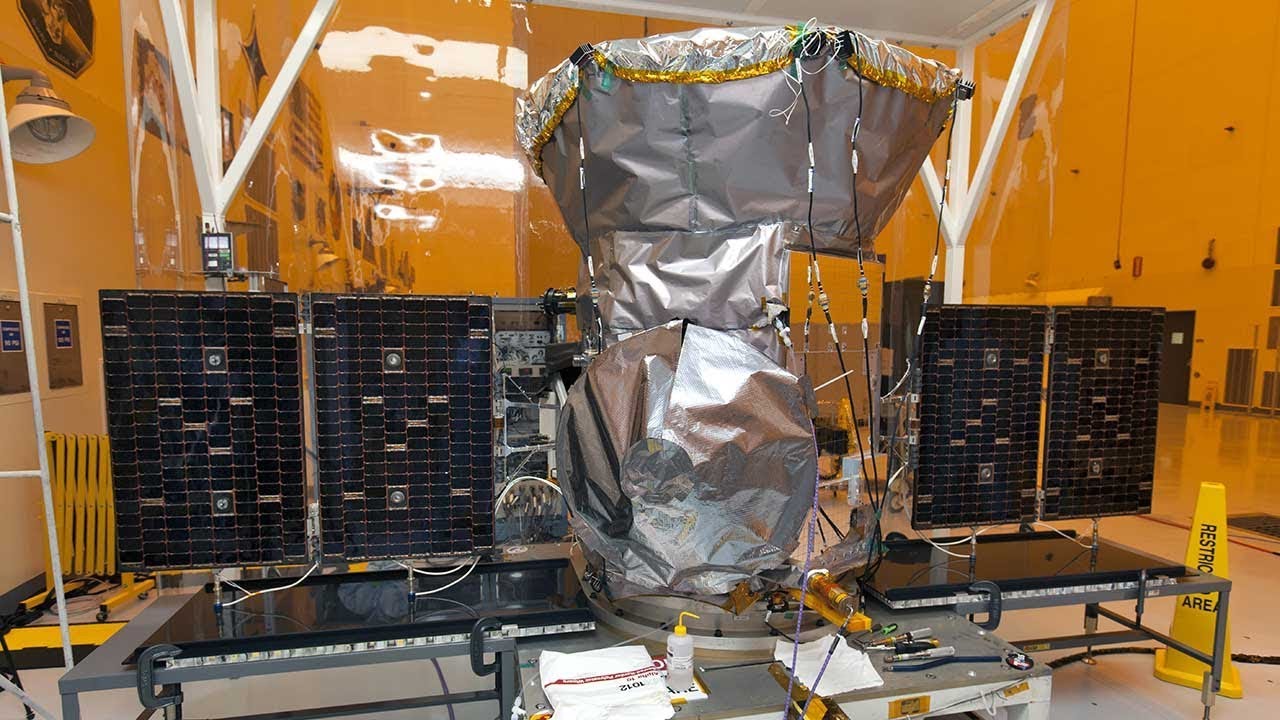
TESS Satellite was created to search for worlds outside the Solar System
The Transiting Exoplanet Survey Satellite was launched in 2018 to dramatically expand the search for exoplanets.
-
A 12-year-old boy from the municipal network of Canoas won gold in the Brazilian Mathematics Olympiad, earning the school’s first national medal in history and standing out in a competition that brought together more than 18 million students, demonstrating how public education can uncover hidden talents in Brazil.

-
Why did a company that was already earning US$ 1 million decide to completely change its strategy? The answer begins with used bottles, worms, and an unexpected decision.

-
Where it almost never rains, residents hung giant nets in the desert mountains and started to ‘fish’ drinking water from the fog: the nets can collect thousands of liters per day directly from the mist.

-
Young people from Minas created a robot without screws or metal parts, betting on a strong and flexible structure to compete against a thousand teams in Houston and took Brazil to the top of world robotics for the first time; Sofia, 15, also made history with an unprecedented leadership award.


Unlike previous telescopes that observed more specific regions of the sky, TESS was designed to monitor vast celestial areas simultaneously.


The mission uses four wide-field cameras capable of tracking millions of stars in search of small variations in brightness. The satellite’s main focus is to identify planets relatively close to the Solar System, increasing the chances for detailed studies in the future.
Method used by TESS looks for small shadows on distant stars
The detection system used by TESS is known as the transit method. It works by observing small, periodic drops in a star’s brightness.
When a planet passes in front of a star from the telescope’s point of view, part of the light is temporarily blocked. This extremely subtle decrease can indicate the presence of a planet orbiting the star.
The problem is that these signals are often tiny and frequently mixed with instrumental noise or other space phenomena.
Artificial intelligence analyzed 83 million stars
The recent leap happened because researchers began applying artificial intelligence on a large scale to the data collected by TESS.
According to information released by the scientists involved in the project, the algorithms analyzed signals associated with approximately 83 million stars.
The volume of data is so gigantic that it would be practically impossible to process manually in a reasonable amount of time. Automated systems began identifying extremely subtle patterns hidden in colossal amounts of astronomical information.
Over 10,000 candidates emerged in just one year
The result completely changed the speed of discoveries. In just one year, the project identified over 10,000 exoplanet candidates.
This does not mean that all objects found are already officially considered confirmed planets. Additional analyses will still be needed to validate many of the detected signals.
Even so, the volume found was impressive because it quickly surpasses entire decades of previous discoveries.
Humanity took about 30 years to confirm 6,000 exoplanets
The first modern exoplanet discoveries occurred in the 1990s. Since then, ground-based and space telescopes have spent decades accumulating observations, refining techniques, and confirming new worlds.

Until recently, the total number of officially confirmed exoplanets hovered around 6,000. Now, the new batch of candidates found by TESS suggests that the number of uncataloged worlds may be much larger than previously imagined.
Exoplanets are planets that orbit stars other than the Sun. Some are gas giants larger than Jupiter.
Others are similar in size to Earth. There are also extremely hot worlds, frozen planets, compact systems with multiple planets, and bodies located in potentially habitable zones.
Some of the candidates may be rocky worlds
One of the main scientific objectives of these searches is to find Earth-like planets. This includes rocky worlds located in regions where temperatures could allow for the presence of liquid water.
Although the new candidates still require detailed confirmation, some of them may belong precisely to this category.
Even with artificial intelligence identifying promising signals, confirming an exoplanet remains a complex process.
Astronomers need to use complementary observations to rule out phenomena that mimic planetary transits.
Among them:
- binary stars;
- stellar oscillations;
- instrumental noise;
- light interferences.
Therefore, many of the new candidates will still undergo years of verification.
Milky Way may contain billions of worlds
The Milky Way has hundreds of billions of stars. Today, many researchers believe that planets may be more common than stars in the galaxy.
Recent discoveries reinforce this hypothesis. The more technology advances, the more the universe seems to reveal that planetary systems are extremely abundant.

Before TESS, another NASA mission revolutionized planetary astronomy: the Kepler space telescope. Kepler demonstrated that exoplanets were common and helped confirm thousands of worlds.
TESS was created precisely to expand this search on an even larger scale and focus on closer, brighter stars.
Artificial intelligence is transforming modern astronomy
The TESS case shows how artificial intelligence is beginning to profoundly change space science. Modern telescopes produce gigantic amounts of data daily.
Without advanced automation, much of this information would take decades to process. Now, algorithms can detect patterns invisible to conventional human analysis and accelerate discoveries at an unprecedented speed.
Finding an exoplanet does not mean finding extraterrestrial life. But each new potentially habitable world expands the number of available targets for future atmospheric observations and chemical studies.
Next generations of telescopes will be able to analyze the atmospheres of these planets in search of gases associated with biological processes.
New leap shows that planetary exploration has entered another era
The explosive growth in the number of candidates detected by TESS shows that planetary astronomy is entering a new phase.
For decades, finding exoplanets was rare and extremely difficult. Now, automated systems and artificial intelligence allow for scanning millions of stars in search of unknown worlds at unprecedented speed.
And perhaps the most impressive fact is precisely this: humanity took about 30 years to confirm 6,000 exoplanets, but the new generation of space tools has already begun to find potential new worlds in numbers that could completely transform the known size of the planetary universe around us.