






 Portuguese
  Spanish
  4 min of reading
  11 comments


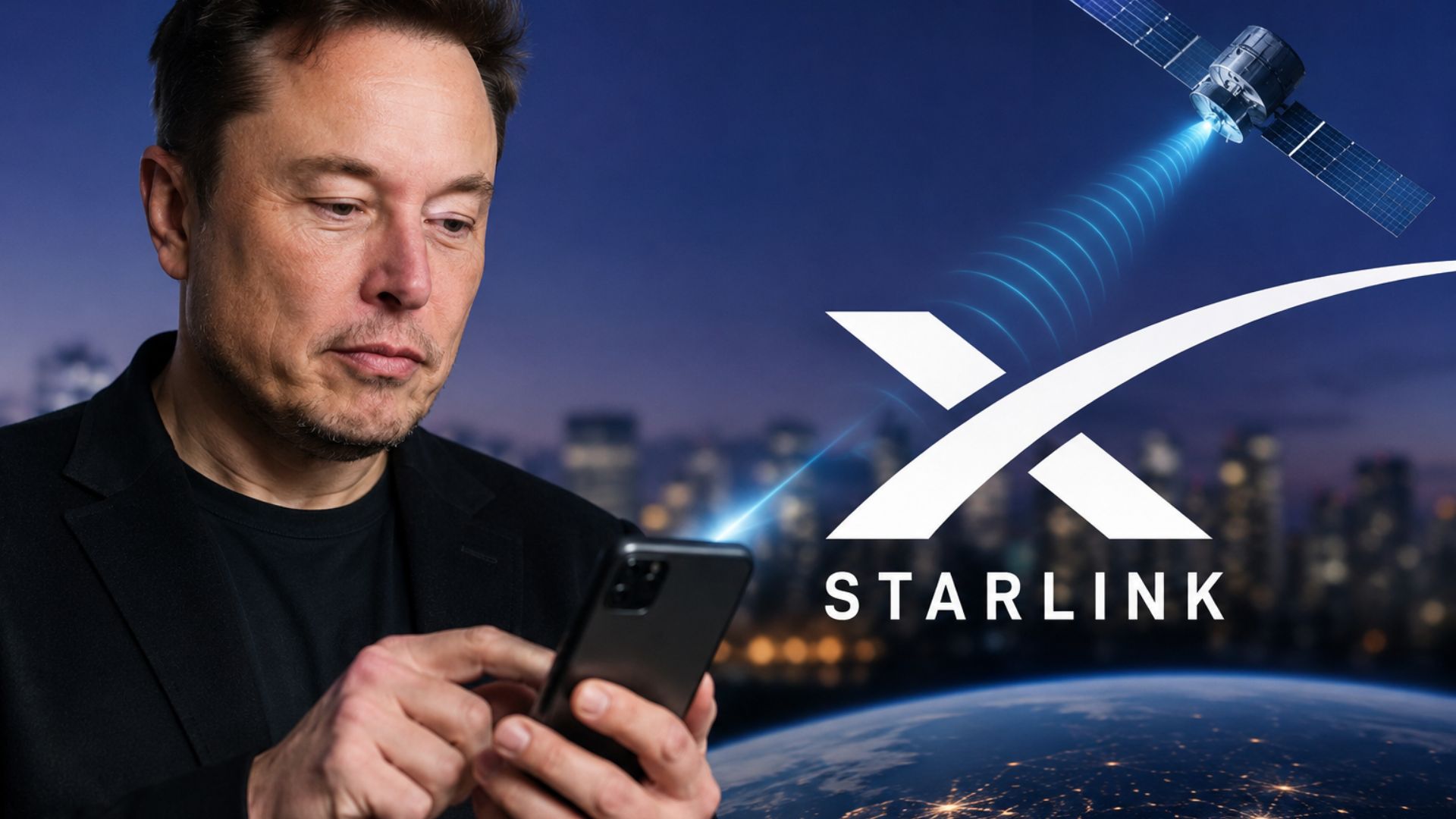


Starlink’s technology already allows direct satellite-to-cell phone connection in countries like the United States and Chile, functioning as emergency coverage in locations without traditional signal. Operators’ strategy still relies on cheap access or inclusion in plans to accelerate the service’s popularization before broader monetization.
Satellite internet directly on cell phones, without an external antenna and without relying on terrestrial towers, has begun commercial operation in countries like the United States and Chile, although the service is not yet available to Brazilian consumers.
Known as Direct to Cell, the technology allows compatible devices to connect to Starlink satellites when there is no conventional operator coverage.
Instead of completely replacing 4G or 5G, the system functions as an emergency communication layer in regions without terrestrial signal.
-
Brazilian student creates a cheap formula that makes plants grow up to 90% faster and wins an award in a global scientific competition.

-
Europe unveils armored tank with remote turret, 1,500 horsepower, and 120-millimeter cannon

-
Old hard drives may hide neodymium, dysprosium, praseodymium, and terbium, and a United States company is expanding its network with a new 93,000-square-foot facility to recover rare earths used in electric cars, artificial intelligence, defense, and renewable energy.

-
Giant crane lifts up to 3,000 tons, requires special logistics to reach the site, and can transform 18-hour operations into just 3 hours, speeding up the hoisting of oil platforms, refineries, and plants in giant industrial projects.




In the United States, T-Mobile has started offering the T-Satellite service in partnership with Starlink, incorporating the feature into premium plans and allowing individual contracting for certain customers.
Currently, the promotional price announced by the operator is US$ 10 per month, a strategy that reinforces the attempt to popularize the service before transforming it into a broader source of revenue.
Initially focused only on text messages and emergency location, the system began to include selected applications, such as WhatsApp, Google Maps, AccuWeather, and X, always in situations where the device loses traditional mobile coverage.
How Starlink’s direct-to-cell internet works
Unlike residential satellite internet, Direct to Cell transforms low-orbit satellites into structures equivalent to cell towers positioned in space.
When the smartphone loses conventional coverage, the connection occurs automatically, provided the user is in an open area with adequate sky visibility.
Despite technological advancements, the proposal still does not involve full navigation with speeds similar to traditional mobile networks, as the focus remains on basic communication, maps, location, and applications adapted for low transmission capacity.
This limitation helps explain why the service has not yet caused significant increases in the price of mobile plans offered by operators.
As the technology functions more as complementary coverage than a full replacement for the cellular network, telecommunications companies have preferred to include it in premium packages or charge small additional fees.
Furthermore, the current deployment phase requires stability tests, consumption behavior analysis, and infrastructure adaptation, which also influences the commercial strategy adopted so far.
Chile advances before Brazil in South America
While Brazil still depends on regulatory definitions and commercial agreements, Chile has become one of the first South American countries to offer direct satellite connection for cell phones.
The operator Entel has started offering the feature in partnership with Starlink, allowing communication in areas without conventional terrestrial coverage, provided the user has a compatible device and an enabled plan.
According to information released by the company, the plans include a promotional allowance of up to 200 SMS via satellite, in addition to limited access to compatible applications under certain operational conditions.
Coverage includes continental regions, island areas, and part of the Chilean maritime zone, although the operator reports restrictions related to terrain, climate, and lack of direct sky visibility.
In enclosed spaces, aircraft, ships, or environments with structural blockage, the connection may experience instability or simply cease to function.
Nevertheless, the model adopted by Entel follows the same logic observed in the United States, offering the feature initially as an adoption benefit before eventual broader charging in the future.
Why Direct to Cell hasn’t yet made plans more expensive
So far, the most advanced markets indicate that Direct to Cell has not caused a generalized increase in the base price of traditional mobile services.
In practice, operators have treated the technology as a competitive differentiator, especially in rural regions, roads, trails, and remote areas where conventional coverage still frequently fails.
Another important factor involves the current technical limitation of the system, which still does not completely replace the conventional mobile internet experience offered by terrestrial networks.
High charges at this stage could reduce consumer adoption and create expectations incompatible with the actual capacity delivered by the service.
At the same time, companies see satellite connectivity as a strategic opportunity to attract customers without drastically raising the perceived cost of plans.
When Starlink internet might arrive on cell phones in Brazil
Although Starlink already operates residential internet via antenna in Brazil, the direct connection between satellite and cell phone still depends on regulatory steps and agreements with national mobile operators.
Anatel authorized the expansion of the company’s satellite operation in the country, but this decision does not represent automatic release for the commercial operation of Direct to Cell.
As the technology uses mobile frequencies, the service requires integration with companies that control cellular telephony spectrum in Brazilian territory.
For this reason, there is still no official confirmation on prices, partner operators, or a definitive forecast for the commercial launch of the feature in Brazil.
Even without finalized details, the trend observed in other markets indicates that satellite connectivity should initially debut as a complementary benefit aimed at messaging, emergency, location, and specific applications.
If the international strategy is maintained, any additional charges will depend on the type of plan contracted and the commercial policy adopted by each operator.
Although still far from completely replacing traditional mobile networks, satellite internet for cell phones emerges as an alternative to reduce areas without communication and expand emergency access in regions where terrestrial antennas remain insufficient.




PNG need this star Link internet service
It’s already in Sierra Leone in collaboration with orange, but I can’t copy the link to paste my subscription.
Can it be commercially profitable in rural areas where national operations are inadequate or totally unreachable in Ghana…?