






 Portuguese
  Spanish


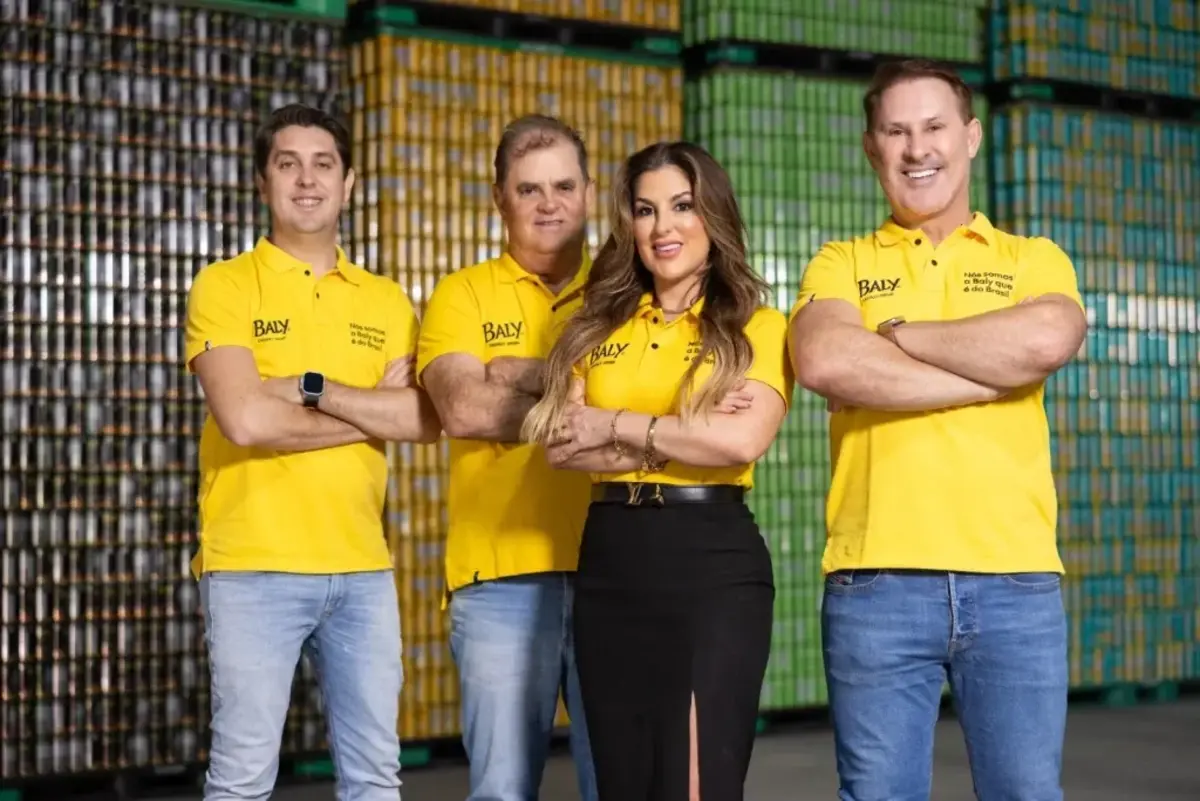

Headquartered in Santa Catarina, Baly Grows 50% Yearly, Captures 25% of the National Market, and Launches Products That Directly Engage Consumer Tastes
In the interior of Santa Catarina, a Brazilian brand achieved a rare feat: becoming the second most consumed energy drink in Brazil. Based in Tubarão, Baly has established itself as a giant in the sector, leaving behind established international brands and attracting attention for its rapid growth and innovations.
Founded in 1997, Baly currently produces 205 million liters of energy drink per year, according to company data. This places the brand just behind Monster, which is distributed in Brazil through the Coca-Cola system.
According to research commissioned by the company from NielsenIQ, Baly’s market share reached 25% in the first quarter of 2025, an increase of 4.2 percentage points over the last 12 months.
-
Brazil’s 2026 Tax Refund: Record 9.58 Million Filers in Largest Payout Ever, But a Key Detail on Priority Recipients Draws Nationwide Attention

-
Itaú Alters Hybrid Work Model, Increasing Office Days from 2028, Prompting Employees to Adjust to New Routine
-
Facing Labor Shortage, Japan Plans to Invest $34 Million to Attract Foreign Workers in Construction, Healthcare, Industry, and Commerce

-
Brazilian City Makes Remarkable Leap, Becomes 4th Wealthiest in the Country with GDP of R$ 134.1 Billion




When comparing the first quarter of 2025 to the fourth quarter of 2024, the company claims it experienced a 27% increase in volume, surpassing even Red Bull. NielsenIQ, approached for comment on the data, stated that it does not publicly disclose this type of information for contractual reasons.
From Cachaça to Energy Drink: The Brand’s Story
Baly’s journey began far from the world of energy drinks. When it was founded by Mário Cardoso and his nephew, the focus was on selling cachaças and wines.
This phase lasted more than a decade. The turning point occurred in 2009, during Carnival, when the company bet on a simple idea: selling energy drinks in PET bottles. Until then, the market was dominated by cans.
According to Dayane Titon Cardoso, commercial and marketing director, the innovation democratized access to the drink. “The arrival of PET bottles on the shelves democratized the drink among new consumers, especially in friend and family groups,” she explains.
The result was immediate. The energy drink became the brand’s main product, while alcoholic beverages lost market share. Only in 2017 did Baly return to producing alcohol, with a line of beers.
Currently, Baly operates two industrial units in Santa Catarina: one in Tubarão, covering 30,000 square meters, and another in Treze de Maio, covering 20,000 square meters. Together, the plants employ around a thousand direct employees.
Innovation and Proximity to the Consumer
The brand’s rapid growth intensified from 2017 onward. With Dayane and Mário at the helm, the company began to focus on reading market trends. One gap identified was the lack of energy drinks with diverse flavors.
The bet paid off. With domestic production, Baly managed to offer more accessible prices and created a line with 28 flavors. “During the pandemic, this became very clear. We launched several different flavors, all of which resonated with the audience,” Dayane says.
Among the most popular flavors are Tropical, Green Apple, Watermelon, and Strawberry with Peach. An example of engagement with the market was the creation of the Green Apple flavor. Its absence on the shelves had been noted by bartenders, and the company reacted quickly—the flavor became a success.
Another strong point is the company’s presence at points of sale. “We are spending a lot of shoe leather to understand the customers’ needs,” Dayane asserts. “The point of sale provides a lot of information, from needs to absences.”
Results in the Zero Sugar Segment and New Products
Baly’s operations also stand out in the zero sugar beverage segment. According to research from NielsenIQ, commissioned by the company, the brand had a 35% share of volume in the last 12 months in the modern channel.
This figure rose to 39% in the first quarter of 2025, reinforcing Baly’s leadership in this niche as well.
Another innovation was Baly Kids, a children’s drink with vitamins and minerals, aimed at kids. The product has sold over 6 million cans. “Children want to be part of adults’ leisure moments. Therefore, having their own Baly creates a connection with the brand from an early age,” explains the director.
Launches and Future Goals
In 2024, the company’s production reached a new record: 205 million liters of energy drinks. In the first four months of 2025 alone, Baly produced 90 million liters. The company claims to have maintained an average growth rate of 50% per year.
Among the most recent launches is the “Celebre” line, with non-alcoholic flavors inspired by cocktails: Champagne, Caipirinha, and Floripa Tropical Spritz. The Champagne flavor, according to the company, exceeded the historical average of orders by 600%.
The brand also entered the sports drink market with the Baly Hidrate line, which features flavors such as tangerine, lemon, and watermelon, sold in 500 ml PET bottles.
A Brand That Understood the Market
Baly has managed to grow by listening to consumers, innovating, and focusing on Brazilian flavors. The result is a strong presence in retail, a diversified portfolio, and consolidation as one of the largest in the sector.
The brand from Santa Catarina remains steadfast with its strategy and shows that even in a market dominated by multinationals, it is possible to carve out space and make history with focus, innovation, and proximity to the audience.
With information from Exame.







Top demais
Pode me condiderar cliente!
Já vi muitos produtos seus nos supermercados, mas eu nunca me interessei. Gostei de saber quem são vocês.
Um véi chshxaatttoooo!