






 Portuguese
  Spanish


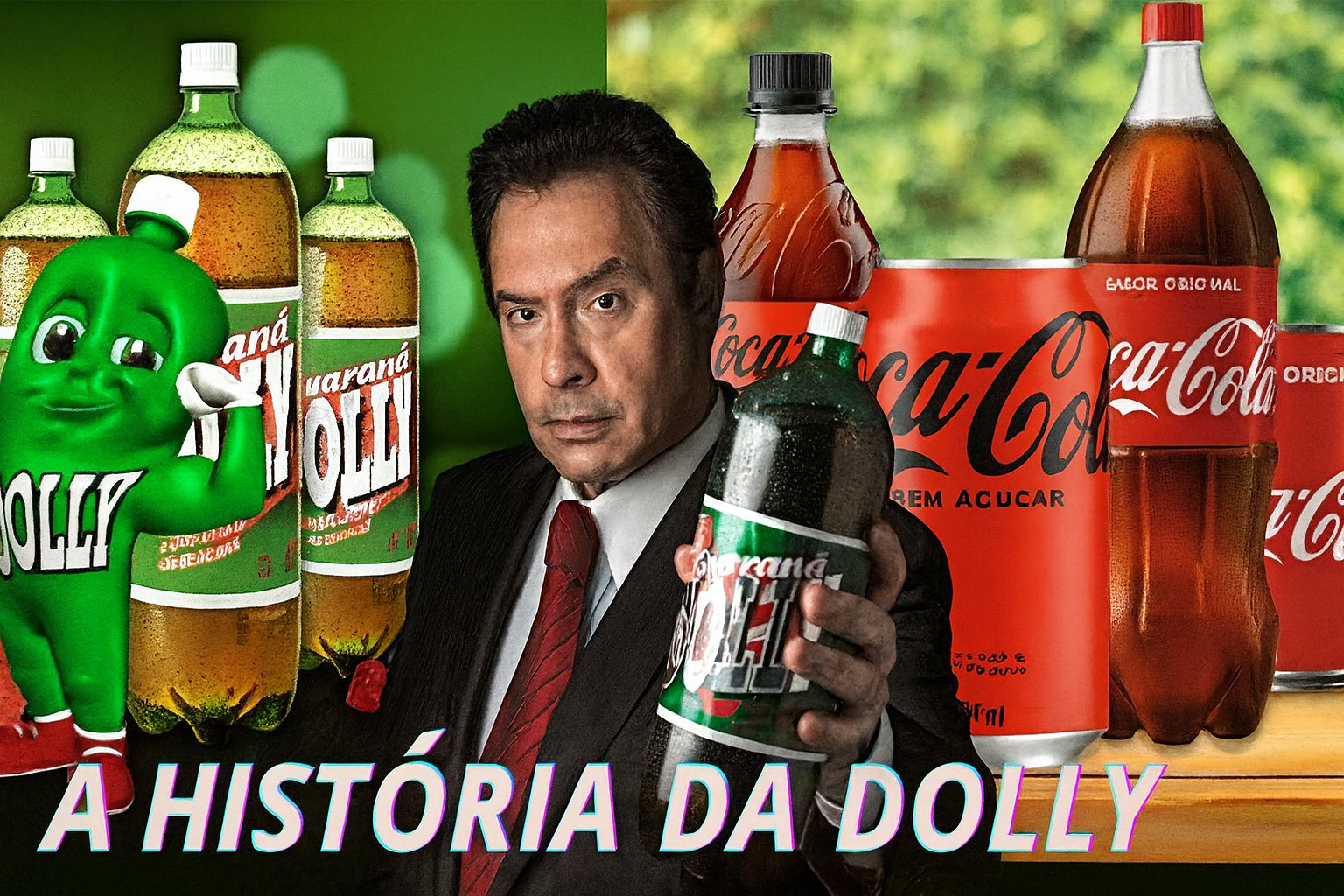


What Happened to Dolly? Understand Why the Brazilian Soda That Once Competed with Coca-Cola Practically Vanished from the Market. See the Story of Dollynho and the Behind-the-Scenes of the Crisis That Removed the Brand from the Shelves
During the 2000s, it was practically impossible to turn on the television and not see the friendly Dollynho in TV commercials. Created as an accessible and Brazilian soda, Dolly even competed directly with industry giants like Coca-Cola. But today, many consumers notice: Dolly has vanished. What happened to the brand that was a symbol of irreverence, popular marketing, and resilience? This article investigates the story of Dolly, the behind-the-scenes of its meteoric rise, the legal troubles faced by the company, and what led the brand to become practically invisible in today’s beverage market. Understand what made the most popular soda in Brazil disappear from the shelves.
The Peak of Dolly: A Brazilian Soda That Conquered the Country
Founded in 1987 by Laerte Codonho, Dolly emerged with a bold proposal: to offer sodas at affordable prices, but with flavor and quality comparable to major international brands.
The initial focus was on the guaraná soda, which quickly gained popularity among consumers in Greater São Paulo.
-
Brazilian National Team Traveled by Ship to First World Cup, Boarding Conte Verde to Reach Uruguay

-
Ancient Burial Site Uncovered in Brazil: 11,000-Year-Old Artifacts Found Beneath 300-Ton Rock

-
18-Year-Old Student Designs Modular Microhouse from Fiberglass and PET to Combat Homelessness in Brazil, Plans to Live in Prototype for a Year to Demonstrate Quick Assembly

-
The Frenchman Who Brought the World Cup to Life: Overcoming Resistance and Crossing the Atlantic with the Trophy to Create Football’s Biggest Tournament




During the 1990s, and especially in the 2000s, the company heavily invested in advertising campaigns featuring the character Dollynho – the “friend of the crowd.”
The mascot became an icon of Brazilian pop culture, going viral in commercials, children’s programs, and even internet memes. As a result, Dolly established itself as one of the main names in the beverage market, reaching a 30% market share in São Paulo, according to Nielsen data at the time.
This remarkable growth put Dolly in a strategic position in the beverage sector, to the point of becoming a real threat to Coca-Cola’s hegemony in the national market, especially in the Southeast. The competition for shelf space in supermarkets intensified, and the comparison between Dolly vs. Coca-Cola became inevitable.
When Dolly Vanished from the Radar: From Rivalry to Downfall
Dolly’s trajectory, however, began to change drastically starting in 2017. It was in that year that founder Laerte Codonho was the target of an operation by the Public Ministry and the State Revenue, accused of tax fraud and money laundering. The operation resulted in his temporary imprisonment and the blocking of the company’s assets and accounts.
The episode received widespread media coverage. Codonho stated that the action was the result of an alleged persecution by larger competitors, especially Coca-Cola. In interviews, he claimed that his company was systematically harmed by large conglomerates and fiscal authorities, making it difficult for Dolly to remain in the market.
The situation directly affected the brand’s supply chain. Supermarkets and retail chains began to reduce their orders. Without access to credit and with a tarnished image, Dolly began to disappear from the shelves – not just in São Paulo, but in various other regions. The most popular soda in Brazil, which had competed with the global sector leader, became a classic case of rise and fall.
The Impact of Marketing and Dollynho in the History of Dolly
Part of Dolly’s initial success can be attributed to a unique marketing strategy. Unlike the sophisticated campaigns of its competitors, the brand invested in simple, low-cost commercials aired widely on regional networks. The omnipresence of the Dollynho mascot helped cement the brand in the collective imagination, especially among children and teenagers.
Despite its technical limitations, Dolly’s advertising stood out for its originality and emotional connection with the audience.
Dollynho became a meme and part of Brazilian internet culture, contributing to the brand’s visibility even in times of crisis. Even today, old videos of the commercials circulate on YouTube and social media.
However, this marketing style also had side effects. Many began to view the brand as “too popular” or associated with low quality, even though the product’s composition was within Anvisa standards. The strong exposure, with a children’s appeal, ultimately alienated some adult consumers, impacting their perception of the brand’s value.
Judicial Crisis and Persecution: How the Brazilian Soda Was Pressured
The crisis of Dolly cannot be understood without mentioning the judicial context. According to Laerte Codonho himself, the company was the victim of an unjust process involving million-dollar fines, unproven accusations, and a fiscal siege that made its operation unviable.
In interviews with outlets like Record TV and Jovem Pan, Codonho reported abusive practices by the State Revenue of São Paulo and claimed that companies like Coca-Cola had undue influence in actions against Dolly. He even produced and disseminated videos with evidence and documents that, according to him, demonstrated persecution and manipulation.
Dolly’s defense even filed lawsuits reporting unfair competition. However, the damage to the brand’s reputation was already established. The supply chain was harmed, employees were laid off, and several production lines were shut down.
Amid the turmoil, Dolly vanished from the radar of the average consumer. Without a consistent presence in retail chains, without massive advertising campaigns, and with a damaged reputation, the soda became practically a ghost in the beverage sector.
Is There a Future for Dolly in the Brazilian Soda Market?
Despite all the challenges faced, the Dolly brand still survives. According to records from the Commercial Registry of the State of São Paulo, the company remains active and has a regularized CNPJ. There is production located in some regions of the state, although on a much smaller scale than during its golden years.
Laerte Codonho is also trying to recover the brand. On channels like YouTube and social media, the entrepreneur continues to denounce what he calls “sabotage” against Dolly and bets on reviving the image of Dollynho to win back the audience. There is still a loyal base of consumers who recognize the brand’s value as an affordable Brazilian soda.
In 2023, there were signs that Dolly might resume some distribution lines, focusing on regional markets. However, competition is even fiercer, with new popular and artisanal brands emerging, alongside the advance of low-cost international sodas.
What the Dolly Case Reveals About the Soda Sector in Brazil?
The story of Dolly is a true reflection of the difficulties faced by national companies when competing with powerful multinationals. From an icon of popular advertising to a complex case of judicial dispute, Dolly represents both the resilience of Brazilian entrepreneurship and the risks of a concentrated market.
Dolly has disappeared, but its cultural impact remains. Dollynho became a symbol of an era when smaller brands managed to compete with giants through creativity and direct connection with the audience. The case also raises important discussions about tax justice, competition, and protection for small businesses.
Whether it will become the most popular soda in Brazil again remains uncertain. But the legacy of Dolly, with all its ups and downs, is already guaranteed as one of the most curious and emblematic episodes in the national beverage market.





A coca vem com rato, Polly é o céu
Xarope de açúcar kkkk
Acompanhei desde o começo o processo contra a Dolly e foi um absurdo o que fizeram com a empresa por parte de concorrentes que tem muita influência no Brasil e no mundo. Infelizmente mais uma empresa brasileira foi demolida por interesses de gigantes e que as autoridades não o protegem.