






 Portuguese
  Spanish


According to the portal Diário do Nordeste, the research vessel R/V Falkor (Too), from the Schmidt Ocean Institute, departs from Fortaleza this Sunday (17) for a 35-day mission that will map the Brazilian ocean floor and search for marine species still unknown to science. On board, about 20 researchers, including professors and university students, will use an autonomous robot weighing more than two tons capable of descending to 6.5 thousand meters deep to collect images, samples of animals, plants, and sediments from the seabed.
The expedition, titled “Turbidity Currents in the Amazon Canyon: Impacts on the Seafloor, Benthic Ecosystems, and Carbon Flux,” investigates how submarine processes shape the seafloor, influence biodiversity, and transport carbon in the ocean depths. The ship docked in Fortaleza this week for port logistics reasons and will continue along the Brazilian coast until June 15, in partnership with the Seabed 2030 project, an unprecedented international initiative that aims to map the entire ocean floor of the planet in high resolution.
The data collected during the mission will be shared openly and included in the Ocean Census, a global initiative to identify as many unknown marine species as possible before they are lost to future generations. The research takes place between two symbolic dates on the environmental calendar: World Environment Day (June 5) and World Ocean Day (June 8).
The two-ton robot that descends to 6.5 thousand meters

Photo: Ana Beatriz Caldas.
The main instrument of the expedition is an autonomous underwater robot that functions as an exploration vehicle capable of reaching depths where no human diver would survive. The equipment weighs more than two tons, is equipped with multiple cameras to capture as many images as possible of the deep ocean, and can descend to 6.5 thousand meters below the surface, a depth that covers the vast majority of the seabed along the Brazilian coast.
-
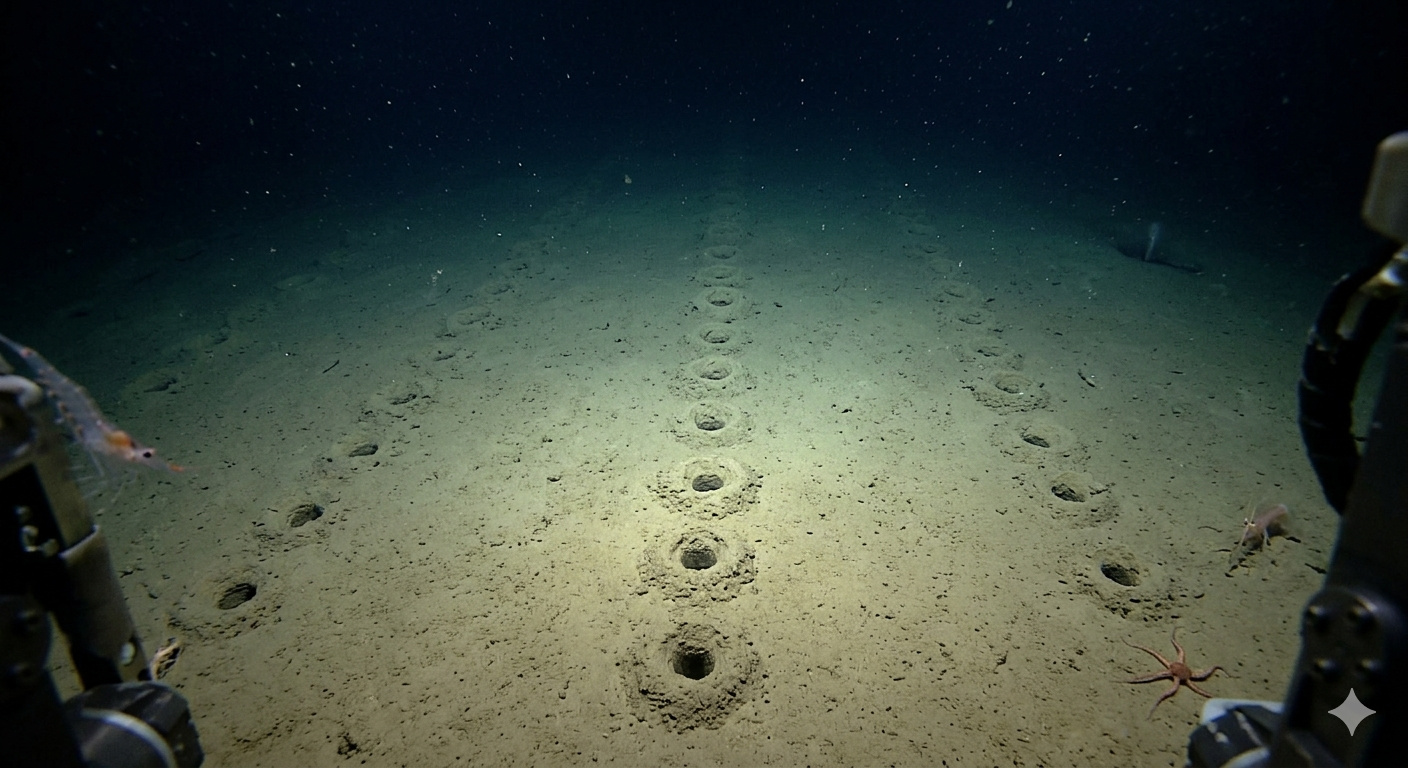
NOAA Scientists Discover Mysterious, Perfectly Aligned Holes on the Mid-Atlantic Ridge Seafloor, Origin Still Unknown

-
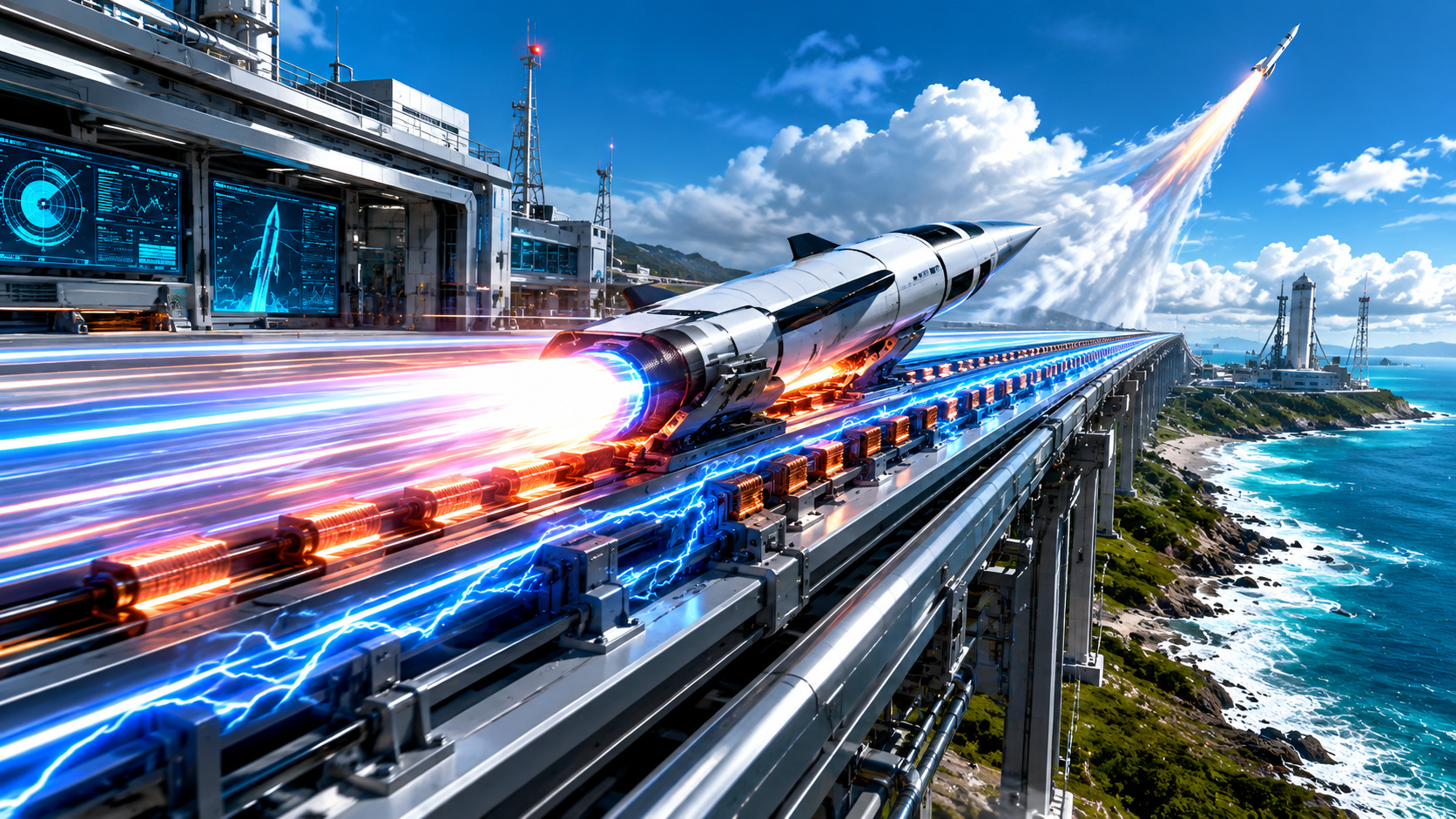
California Startup Develops Giant “Space Sling” to Launch Vehicles at Mach 6, Reducing Fuel Use and Enabling Thousands of Satellite Deployments

-
ChatGPT Alerts FBI to Prevent Planned Murder of 8-Year-Old in Brazil’s Espírito Santo
-
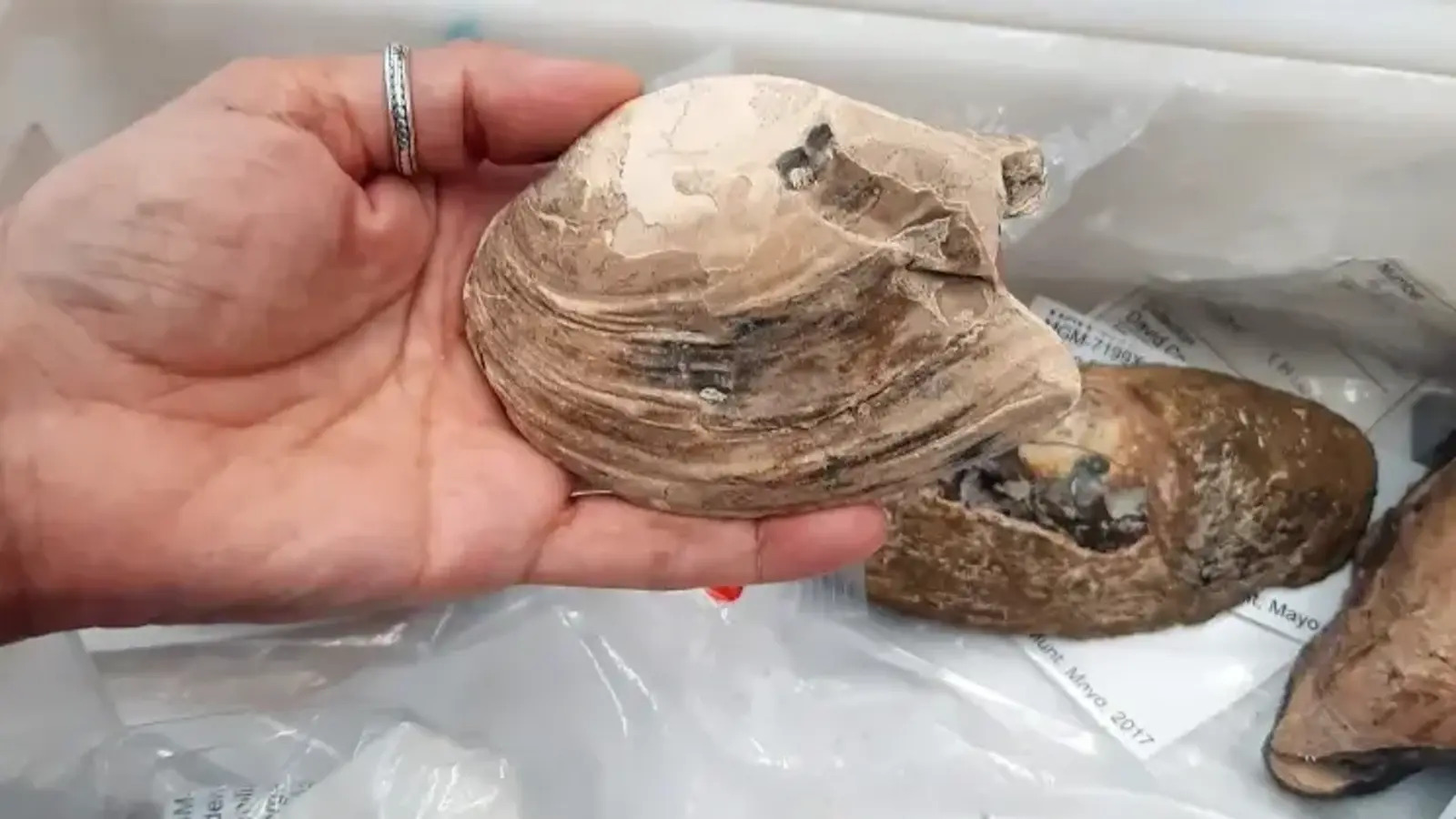
Scientists Discover 125-Million-Year-Old “Pregnant Fossil” with Preserved Embryos and Microscopic Larvae Inside Mollusk in England


Besides filming and photographing, the robot is capable of collecting physical samples of animals, plants, and sediments for laboratory analysis aboard the ship. These samples are essential for identifying new species, analyzing the composition of the marine soil, and understanding how benthic ecosystems (which live on the ocean floor) interact with currents, minerals, and carbon deposited in the depths. Those interested in seeing the robot in action can follow the missions live on the Schmidt Ocean Institute’s YouTube channel.
The Amazon Canyon and carbon on the ocean floor

Photo: Ismael Soares.
One of the main focuses of the expedition is the Amazon Canyon, a submarine geological formation at the mouth of the Amazon River that acts as a channel for transporting sediments and carbon to the ocean depths. Researchers are investigating how turbidity currents, dense flows of sediment-laden water that descend the canyon walls, impact the seafloor, the life that inhabits these depths, and the global carbon cycle. Understanding this process is relevant because the ocean is the largest carbon reservoir on the planet.
Professor Ângelo Bernardino, from the Federal University of Espírito Santo, explains that the team will explore an area with an active geological fault, where they expect to find biodiversity different from what is normally found in the oceans. “We can bring a little more information about what lives at the bottom of the oceans and the importance of this for humanity,” stated the researcher. For Brazilian science, mapping the living and non-living resources of the ocean floor, including minerals, can have implications ranging from environmental conservation to economic exploration.
Seabed 2030: mapping the entire ocean floor of the planet
The expedition departing from Fortaleza contributes to Seabed 2030, a groundbreaking international initiative aimed at mapping the entire global ocean floor in high resolution. Currently, most of the seafloor remains unmapped in detail, which means we know more about the surface of Mars than about what exists in the depths of our own oceans. Seabed 2030 seeks to fill this gap using data from expeditions like this to build a complete bathymetric map of the planet.
The data collected by the R/V Falkor (Too) off the Brazilian coast will be integrated into this global database and made openly available to researchers, governments, and conservation organizations worldwide. For Brazil, which has one of the largest oceanic coastlines on the planet, contributing to the mapping of its own seafloor is both a scientific advancement and a matter of sovereignty: knowing what exists in the depths of the Brazilian ocean is a condition for protecting and, when necessary, responsibly exploiting these resources.
Ocean Census: cataloging life before it disappears
The expedition’s data will also feed into the Ocean Census, a global initiative led by the Nippon Foundation that aims to identify as many unknown marine species as possible before climate change, pollution, and exploitation destroy life forms that science hasn’t even had the chance to document. “We are in a race against time to discover marine life before it is lost to future generations,” declared Yohei Sasakawa, president of the Nippon Foundation. “The Census will create an immense wealth of open-access knowledge that will benefit all life on Earth.”
The expedition hopes to find species that have never been cataloged, especially in the active geological fault areas of the Amazon Canyon, where extreme conditions of pressure, temperature, and chemical composition may harbor unique life forms. Each new species identified expands the understanding of oceanic biodiversity and can have applications in areas such as pharmacology, biotechnology, and materials science, as organisms from extreme environments often possess enzymes and compounds with properties not found in surface species.
Blue School: from the ocean floor to the classroom
The expedition will not be confined to the ship and laboratories. Professor Ronaldo Christofoletti, from the Federal University of São Paulo (Unifesp), coordinates an initiative that will connect the mission with students from public and private schools across Brazil through the “Blue School” project, from the Federal Government. Participating schools will be able to virtually visit the ship and talk in real-time with researchers during the expedition.
The goal is to make young Brazilians reflect on how the oceans relate to their own lives, in an approach that transforms a high-level scientific expedition into an accessible educational tool. For students living inland who have never seen the sea, following researchers deploying robots to 6,500 meters deep may be the experience that sparks interest in ocean science and marine conservation.
35 days to discover what has never been seen
The research vessel R/V Falkor (Too) departs from Fortaleza this Sunday for a 35-day mission to map the Brazilian ocean floor, search for unknown species in the Amazon Canyon, and feed the World Ocean Census with open-access data. The two-ton robot on board can descend to 6,500 meters, collect marine life samples, and film depths that most humans will never see. The results may reveal life forms that science didn’t even know existed, and it all starts less than 30 days before World Ocean Day.


