





 Portuguese
  English
  Spanish
  6 min of reading
  1 comment


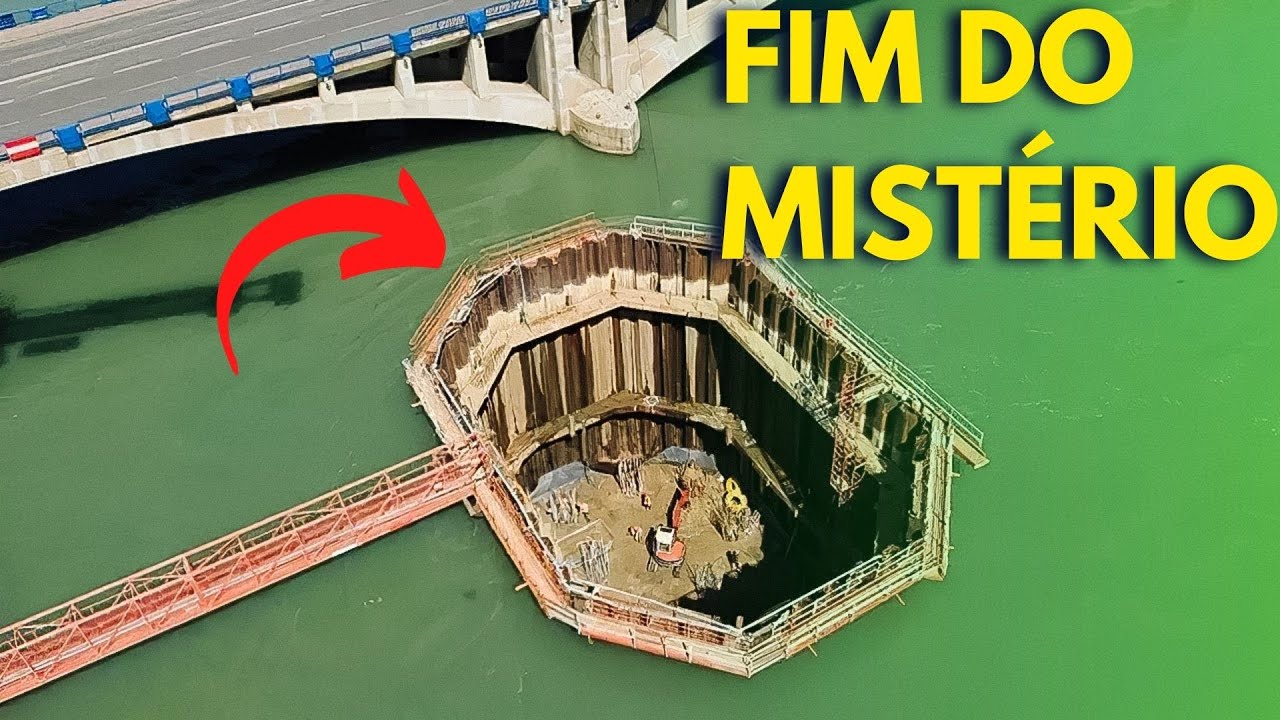


Want To Learn Once And For All How Bridges Over Water Are Built?
The construction of bridges over water is one of the greatest challenges in civil engineering. These structures, which often extend for miles, connect cities, people, and economies, facing forces of nature such as strong currents, winds, and extreme depths. But how are bridges built over water?
What techniques and technologies make this possible? In this article, we will explore the main methods used to erect these incredible works of engineering.
Building Bridges Over Water Is Very Challenging
Building over water is very different from building on solid ground. In addition to adverse conditions such as soil instability and environmental impacts, engineers must deal with water pressure and ensure worker safety.
-
Concrete made with seawater and marine sand challenges one of the basic rules of civil construction, replacing common steel with corrosion-resistant reinforcements, and can turn islands and coastal works into laboratories of a new salty engineering.

-
New Pomerode bridge progresses after operation with 7 concrete beams of 31 meters and 82 tons each, lifted by 4 cranes, while the connection between Atiradores and XV de Novembro aims to alleviate congestion in the Center during days of intense tourism.

-
How much does a simple renovation cost per square meter in 2026? See the average labor costs and extra expenses that often turn a cheap project into a much larger bill.

-
Zac Efron swaps traditional mansion for a sustainable hemp house near Byron Bay, with 6 cabins, private bathrooms, rooftop gardens, and surrounding waterfalls, in a project that promises to become one of the most unusual ecological retreats ever built by a celebrity.




In some cases, the design may include the construction of pillars in depths where the soil is unstable or where currents are very strong.
Although the use of divers and underwater equipment is possible, this approach is limited and often dangerous. Modern engineering, however, has developed techniques that make construction more efficient and safe. To understand how bridges are built over water, it is important to know the four main methods currently used: driven piles, cofferdams, caissons, and drilling shafts.
1. Driven Piles: The Foundation of Many Bridges
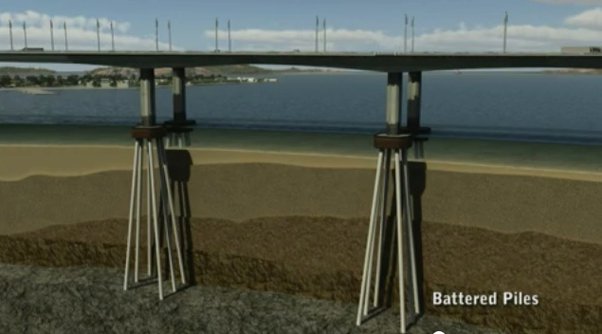
The driven piles are one of the most common ways to build foundations for bridges. They consist of large posts, usually made of steel or reinforced concrete, that are driven into the submerged soil. These posts function as pillars that support the weight of the bridge.
The installation begins with the delivery of the piles to the construction site, usually transported on floating barges. A machine called a pile driver is used to drive these piles into the submerged soil. The force exerted by this machine is similar to that of a giant hammer, which pushes the piles until they reach a stable layer of soil or rock.
To increase stability, the piles are often installed at specific angles, which helps support lateral forces caused by the weight of the bridge and the currents of the water. After the installation of the piles, a structure called a “cap” is placed on top of them. This cap evenly distributes the weight of the bridge, ensuring that the structure is stable and safe.
This method is widely used because it offers high resistance and is suitable for a variety of conditions, from shallow rivers to deep seas. It is impressive to see how bridges are constructed over water using driven piles, a technique that combines strength and precision.
2. Cofferdams: Creating a Dry Environment for Construction
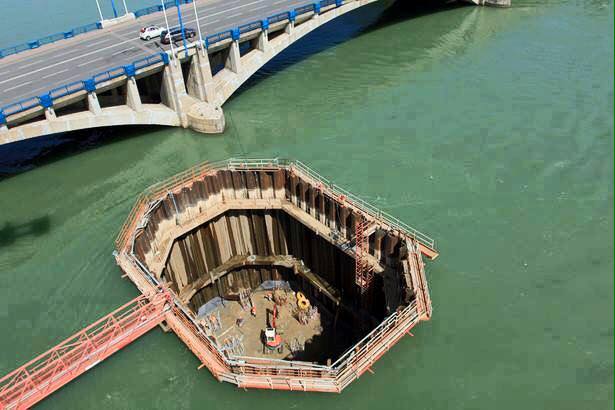
Cofferdams or enclosures are temporary structures designed to create a dry environment at the construction site. This method is particularly useful in shallow bodies of water or situations where it is necessary to work directly on the submerged soil.
The construction process for a cofferdam begins with the installation of watertight barriers around the work site. These barriers can be made of steel sheet piles, which are driven into the submerged soil and interconnected to form a watertight wall. Once the cofferdam is in place, the water inside it is pumped out, creating a dry area where workers can build the bridge’s foundation.
In some cases, cofferdams are made from simpler materials, such as soil or water-filled rubber bags. However, these less robust versions are more prone to collapses and are only used in smaller scale projects.
One of the main benefits of cofferdams is that they can be dismantled and reused after construction is complete. This reduces costs and minimizes environmental impact, making them an efficient solution for many projects.
3. Caissons: A Practical and Safe Solution
Caissons are prefabricated structures, usually made of concrete, that are installed on the bed of a body of water to serve as the foundation of the bridge. This method is widely used due to its practicality and safety.
The installation process for a caisson begins with preparing the submerged soil. Ships and barges equipped with leveling radar smooth the soil, removing rocks and other materials. Then, the caisson is transported to the site and carefully submerged.
Once in place, the caisson is filled with concrete, becoming a permanent structure. This technique is particularly effective because much of the work is done out of the water, at floating docks, where conditions are more controlled.
Additionally, the use of caissons reduces risks for workers, as many steps in the process can be performed remotely or in safer environments. It is fascinating to see how bridges are built over the water with the help of caissons, which combine efficiency and safety in an exemplary manner.
4. Drilling Shafts: Precision in Deep Waters
When it comes to building in very deep waters, the drilling shaft method is often the best choice. This technique allows for the creation of extremely robust foundations, even in challenging conditions.
The process begins with the installation of a floating drilling platform over the location where the bridge will be built. From this platform, a cased tube is inserted into the submerged soil to prevent collapses during drilling.
A special drill is then used to excavate the soil, creating a hole that will be filled with concrete. Before this, a steel cage is placed inside the hole to reinforce the structure. The concrete is pumped into the hole through a tube called a tremie, ensuring it completely fills the space.
This approach is particularly effective because it allows the foundation to be built without the need to displace large volumes of water. Additionally, the concrete used in this process is formulated to harden underwater, ensuring maximum durability.
The Science Behind Underwater Construction
In addition to the methods described, building bridges over water requires detailed planning and the use of advanced technologies. For example, 3D modeling tools and digital simulations help engineers anticipate how the structure will behave under different conditions.
The environmental impact is also a significant concern. Installing piles, cofferdams, or caissons can disrupt aquatic ecosystems, which is why engineering teams often collaborate with biologists to minimize harm.
Another important aspect is safety. Working over or under water is inherently risky, and modern projects include a series of measures to protect workers, such as using protective equipment and real-time monitoring systems.
Understanding how bridges are constructed over water is more than just a curiosity. These techniques play a crucial role in the development of infrastructures that connect people and economies. Without them, many cities would remain isolated, and the transportation of goods would be much slower and more expensive.
Furthermore, innovations in bridge construction are driving advancements in other areas of civil engineering, such as the construction of oil platforms, offshore wind turbines, and underwater facilities.
Did You Enjoy Learning How Bridges Over Water Are Built?
Building bridges over water is a testament to human capacity to overcome challenges and create innovative solutions. Whether with driven piles, cofferdams, caissons, or drilling shafts, each method reflects the ingenuity and creativity of engineers.
These structures, which often go unnoticed in day-to-day life, are actually marvels of modern engineering. The next time you cross a bridge, take a moment to appreciate the monumental effort involved in its construction. After all, understanding how bridges over water are built helps us value these impressive achievements of humanity even more.






Fazer um filme seria ótimo para maiores conhecimentos