Portuguese
  Spanish


The Eta Aquarids reach their peak on May 6, 2026. See the best times, where to observe, and what might hinder visibility this year.
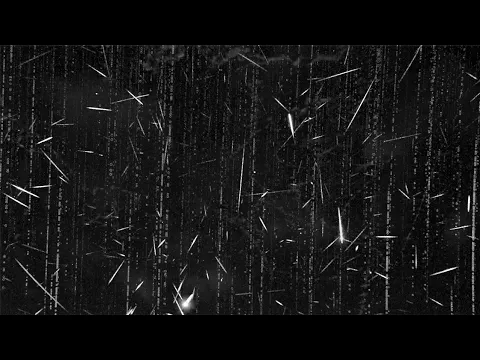
The Eta Aquarids meteor shower, the most significant of May, reaches its peak around May 6, 2026. Those in the Southern Hemisphere — including much of Brazil — will have the best viewing conditions, with the possibility of seeing up to 50 meteors per hour in open skies. However, the interference of an 83% illuminated waning gibbous Moon reduces the visibility of less bright meteors in all regions of the planet.
Most favorable dates and times to see the Eta Aquarids
The shower’s peak occurs on May 6, but activity remains high on neighboring days. The most productive window for observation is from the mornings of May 4 to 7, always in the hours before sunrise.
This time is most recommended because it is when the radiant — the point in the sky where the meteors appear to originate from, from the observer’s perspective — reaches its highest position above the horizon.
-
In Brazil’s backyard: Tesla, by Elon Musk, announces official operations in Uruguay, where electric vehicles already make up 20% of new cars but still leaves out the largest market in the region.

-
This Mars rover may finally reveal if life ever existed on Mars.
-
A nearly 70-year-old Chinese inventor has registered 90 patents and created a device that stores water in the roots, helping seedlings survive drought while trying to transform the arid slopes of the Loess Plateau into green areas without relying on heavy irrigation.

-
Researchers want to change the way of producing rare earth magnets, reducing purification steps and making better use of the elements found in Swedish deposits.


In the case of the Eta Aquarids, this point is in the constellation Aquarius, near the star Eta Aquarii, and starts rising after midnight. The higher it is, the more meteors become visible.
The visibility of the shower varies greatly depending on the observer’s location. The table below summarizes the conditions for each region of the world:
| Region | Countries and locations | Meteors at peak | Viewing quality |
| Southern Hemisphere | Brazil, Australia, New Zealand, South Africa, and much of South America | Up to 50/hour | Best in the world — highest radiant, but Moon hinders faint meteors |
| Southern USA | California, Arizona, New Mexico, Texas, Louisiana, Florida, and northern Mexico | Up to 10/hour | Limited — low radiant and Moon interference |
| Southern Europe | Portugal, Spain, Italy, Greece, and Mediterranean countries | Up to 10/hour | Limited — valid for latitudes below 40° north |
| Northern Africa | Morocco, Algeria, Tunisia, Libya, Egypt | Up to 10/hour | Limited, but possible in the early mornings before dawn |
| Middle East | Saudi Arabia, United Arab Emirates, Iran, Iraq, and neighboring countries | Up to 10/hour | Limited — same conditions as Northern Hemisphere south of 40° |
| Central and South Asia | Northern India, China, Central Asia | Up to 10/hour | Limited — radiant near the horizon throughout the night |
In summary: the further south the observer is, the higher the radiant rises in the sky and the greater the number of visible meteors. Regions above 40° latitude north — such as central and northern Europe, Canada, and northern USA — have very unfavorable conditions and will hardly be able to record the shower.

The Moon as the main obstacle in 2026
Under ideal conditions, the Eta Aquarids are among the most spectacular showers of the year. In 2026, the lunar calendar complicates the scenario: the peak occurs just five days after the Full Moon, keeping the waning gibbous Moon in the sky for much of the night and dimming the faintest meteors.
To minimize the problem, it is ideal to position yourself so that an obstacle — a tree, a building, or a hill — blocks the Moon from your field of view. This way, your eyes adapt better to the dark, and the chances of spotting meteors increase significantly.
The origin of the Eta Aquarids: trails of Halley’s Comet
Every meteor shower has an origin. In the case of the Eta Aquarids, the source is Halley’s Comet, one of the most famous in the history of astronomy. During its passages through the Solar System, the comet leaves a trail of dust and small fragments in space.
Each time the Earth crosses this trail — which happens every May — these debris enter the atmosphere at about 65 km/s and ignite due to friction with the air, creating the luminous trails we call shooting stars.
It is worth remembering that the same Halley’s Comet originates the Orionids, another meteor shower that occurs in October when the Earth crosses a different part of this same cosmic trail.
Practical tips to enjoy the Eta Aquarids
- Choose locations away from urban lighting — the darker the sky, the better;
- Block the Moon with a tree, building, or any nearby obstacle;
- Wait at least 20 minutes for your eyes to adjust to the dark before starting to observe;
- You don’t need to look directly at the constellation Aquarius — the meteors spread across the sky from the radiant;
- Prioritize the mornings of May 4 to 7, always in the hours before sunrise;
- Use the free app Sky Tonight to locate the radiant precisely in your city: search for “Eta Aquarids,” tap the target icon, and follow the arrow on the screen.
Therefore, even with the Moon hindering, residents of Brazil and other Southern Hemisphere countries have a good chance of witnessing one of the most anticipated astronomical events of the first half of 2026 — as long as they choose a dark location and are awake before dawn.

With information from Star Walk