






 Portuguese
  Spanish
  4 min of reading
  0 comments



Discover a Little-Known Technique That Combines Diverse Skills to Increase Income and Transform Careers, Revolutionizing the Way Professionals Operate Without Having to Work More Hours.
Amid a challenging economic landscape, marked by rising living costs and high interest rates, many professionals seek efficient ways to improve their income without increasing their work hours.
According to Andre Purri, CEO and co-founder of Alymente, a company specializing in flexible solutions for corporate benefits management, the answer may lie in “skill stacking,” a technique that combines different skills to maximize earnings and highlight the professional in the job market.
This strategy has been gaining prominence in 2025, showing that the secret is not to work more, but to work more intelligently and strategically.
-
Survivor of 1966 SS Daniel J. Morrell Shipwreck in Lake Huron Recounts 38-Hour Ordeal in Extreme Cold

-
The Greatest Hoax in World Cup History? The Film That Denied Brazil’s 1958 Victory and Exposed How Fake Evidence Can Seem Convincing on TV
-
Fake South Korean Online Stores Offer Shopping Thrill Without Spending Money or Receiving Products
-
The War of Jenkins’ Ear: How a Severed Ear Sparked One of the 18th Century’s Most Unusual Conflicts


What Is Skill Stacking?
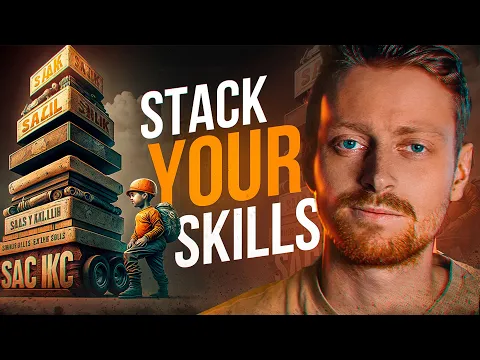
The concept of skill stacking consists of developing and integrating various complementary competencies to increase professional value.
Instead of aiming to be the best in a single area, the professional becomes versatile by mastering multiple skills that, when combined, create a competitive edge, according to Purri.
According to career experts, being among the top 10% in two or more areas considerably increases the chances of attaining more valued positions and higher salaries.
Which Skills to Combine?
Skill stacking is based on three fundamental pillars:
- Technical skills: programming, data analysis, graphic design, among others;
- Human skills: communication, empathy, leadership, teamwork;
- Industry knowledge: specific experience in sectors such as healthcare, logistics, education, among others.
For example, a professional who combines technical knowledge in digital marketing with fluency in a second language and strong interpersonal skills stands out more than someone who only masters one of these areas.
This combination creates a unique and valued proposition, capable of opening doors and allowing for better salary negotiations without the need to increase the workload, emphasizes Andre Purri.
The Power of Practical Application
Having knowledge is not enough to be competitive in today’s market.
According to Purri, the differential lies in the constant and strategic application of these skills in professional daily life.
A classic example, mentioned in personal development courses, is that of an athlete who learned javelin throwing techniques through YouTube but only reached the top after much disciplined and constant practice.
This also applies to the corporate world: skill stacking must be incorporated into real work to generate tangible results.
Microcredentials: Allies of Skill Stacking
In 2025, the search for microcredentials — quick courses focused on specific competencies — has been one of the main tools for those looking to apply skill stacking.
They allow professionals to update their resumes with new skills in a short timeframe, without the need for long study periods, as Purri explains.
Renowned institutions, online platforms, and even companies offer these certifications that enhance the combination of technical, human, and sectoral competencies.
This creates a scenario in which the most valued in the market is not just the deep specialist, but the hybrid professional who masters three or more areas and knows how to apply them strategically.
Real Cases and the Brazilian Market
In Brazil, professionals from various fields are already adopting skill stacking to advance in their careers.
A social media manager who understands hospitality, masters Spanish, and has strong relationship skills, for example, can charge more and retain clients without needing to increase their hours.
This unique combination makes them indispensable in an increasingly competitive and demanding market, states Andre Purri.
Another common case involves programmers who also develop competencies in project management and communication, which facilitates the leadership of teams and complex projects, increasing their market value.
Why Is Skill Stacking the Strategy of the Future?
The global job market has undergone profound transformations, with technology and automation changing the way professions are performed.
According to Andre Purri, versatile professionals with multiple skills have greater resilience to change and higher employability.
Moreover, the concept of a traditional career — climbing step by step in a single area — is giving way to hybrid and multifaceted career paths.
Investing in the development of a complementary skill set provides greater flexibility, innovation, and growth opportunities.
How to Start Stacking Your Skills?
For those who want to apply skill stacking, the first step is to map out the competencies already mastered and identify which others can add value to their field of work.
Focusing on skills that complement each other, creating a strategic differential, is essential, advises Purri.
Additionally, constant practice and the use of microcredentials help accelerate the learning and application process.
Platforms like Coursera, Udemy, and Brazilian institutions like SENAI offer accessible and updated courses to boost careers.
What Changes for the Professional Who Bets on Skill Stacking?
By investing in the intelligent combination of skills, the worker gains more autonomy, can negotiate better salaries, and build a purposeful career without sacrificing their quality of life.
Working less, but with more strategy, is the trend for the future of work, emphasizes Andre Purri.
According to experts, skill stacking is a sustainable alternative to tackle current economic and professional challenges.
And you, have you thought about which skills you could combine to stand out and earn more without working more? What combination of competencies do you think could transform your career? Share your opinion!





Be the first to react!