






 Portuguese
  Spanish


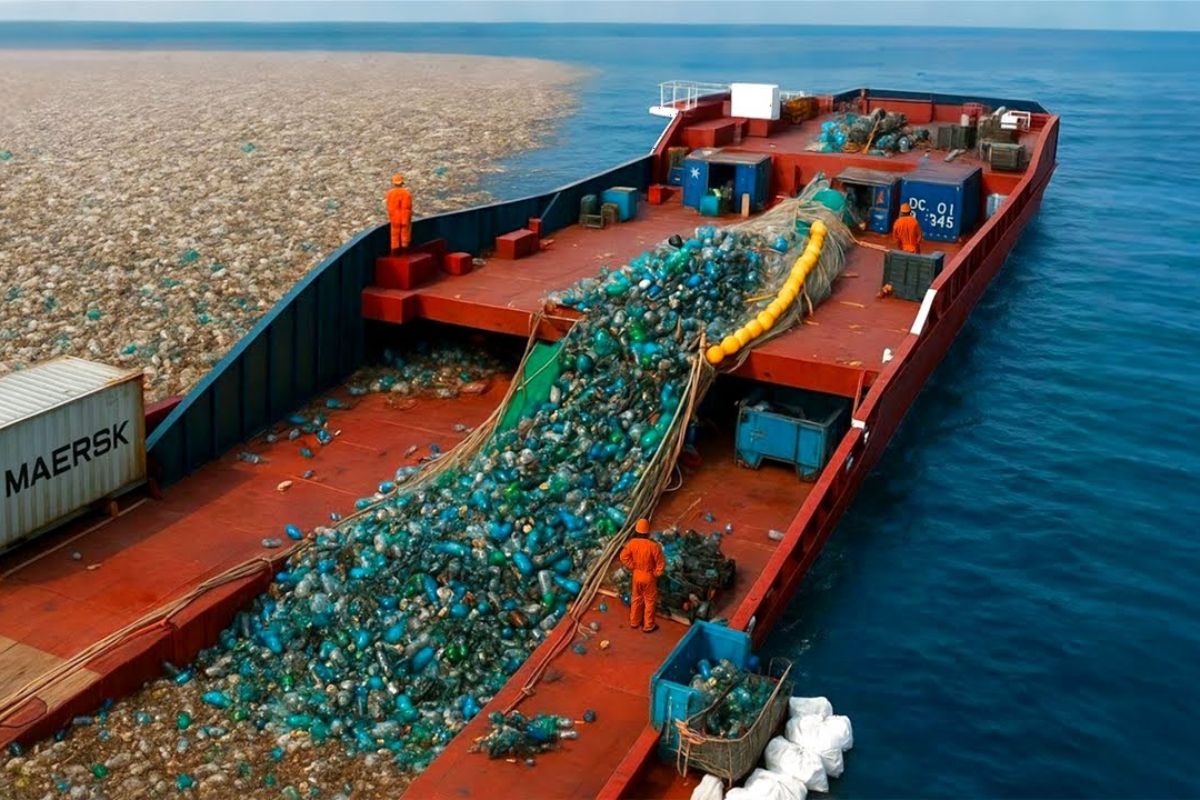


While Tons Of Marine Debris Threaten Life In The Oceans, A Silent Revolution Is Transforming This Problem Into New Packaging, Textile Fibers, And Products That Are Already Returning To The Daily Lives Of Millions Of People.
Holding a bottle made of plastic that was once trash floating in the sea has ceased to be science fiction. Companies, cooperatives, and environmental projects are collecting waste in rivers, beaches, and open sea and converting it all into raw materials for new packaging, clothing, furniture, and a range of recycled products. What would take centuries to decompose is entering an industrial cycle that cleans the water and also reduces the use of virgin plastic.
Every year, over 20 million tons of waste are dumped into the oceans, and about 80% of that volume is plastic. This ultra-resistant material forms real “garbage islands,” suffocates marine animals, and enters the food chain of over 700 species. At the same time, studies and experiments show that a good portion of this waste can be recovered and transformed into new packaging, synthetic fibers for the textile sector, and even metal inputs, saving energy, reducing emissions, and creating a circular economy around the ocean.
The Tide Of Trash That Turned Into Raw Material For New Packaging

Before turning into new packaging, the plastic collected from the sea must undergo a heavy stage of collection and sorting. In large accumulation areas, such as ocean gyres and convergence zones of currents, ships equipped specifically for cleanup come into play.
-
Man with Metal Detector Finds Medieval Silver Seal in England, Uncovers 2,000-Year-Old Roman Gem with ‘Richard’s Secret’

-
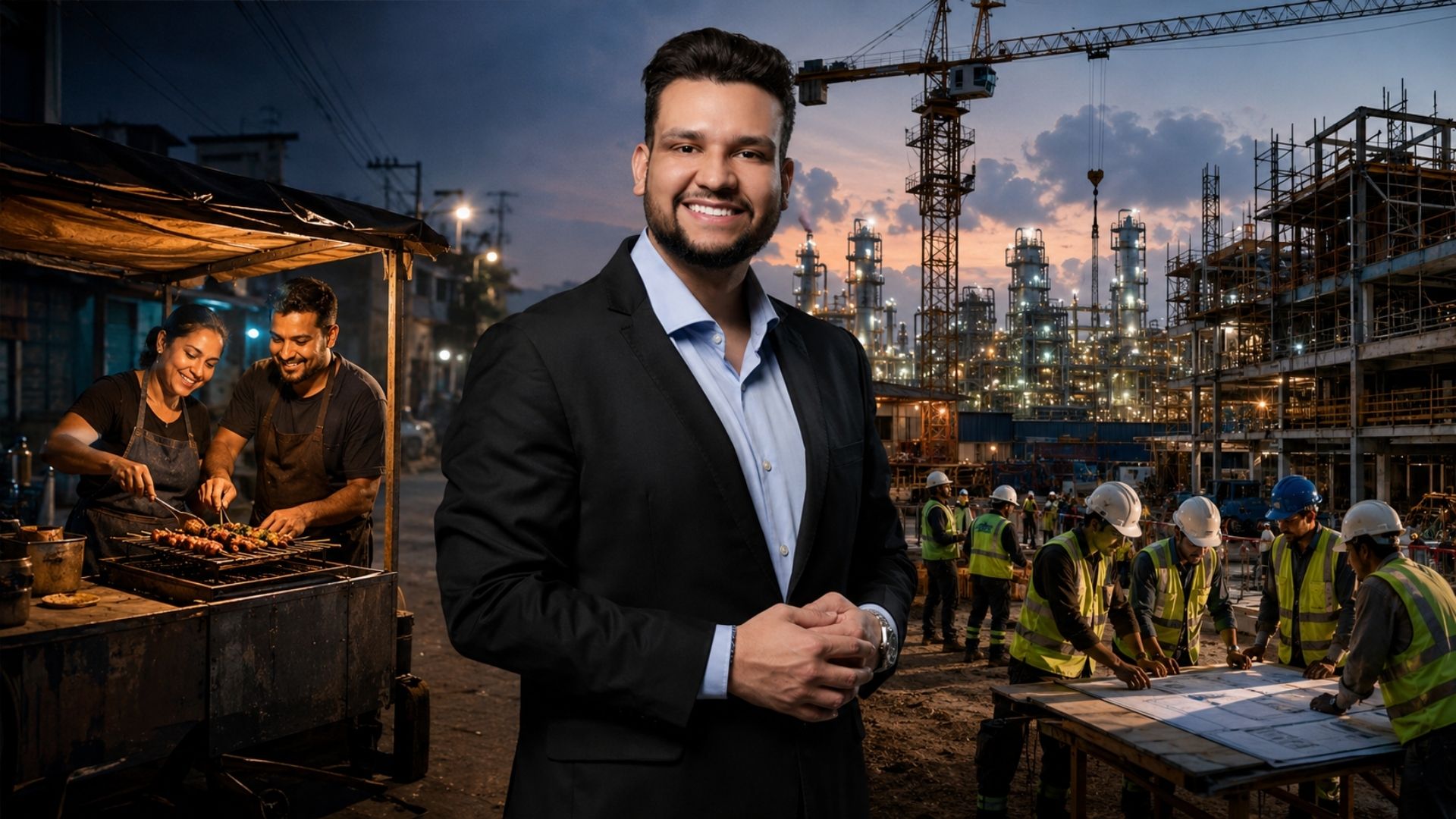
Thailand Converts 8 Tons of PET Bottles into 3,500 School Backpacks, Showcasing Circular Economy with Over 40 Factories Involved

-
Mysterious Bats Spotted in Paris’s Père Lachaise Cemetery, Drawing Tourists to the “Vampire Cemetery”

-
From Selling Street Food to Leading a $300 Million Construction Firm: The Journey of a Brazilian Entrepreneur


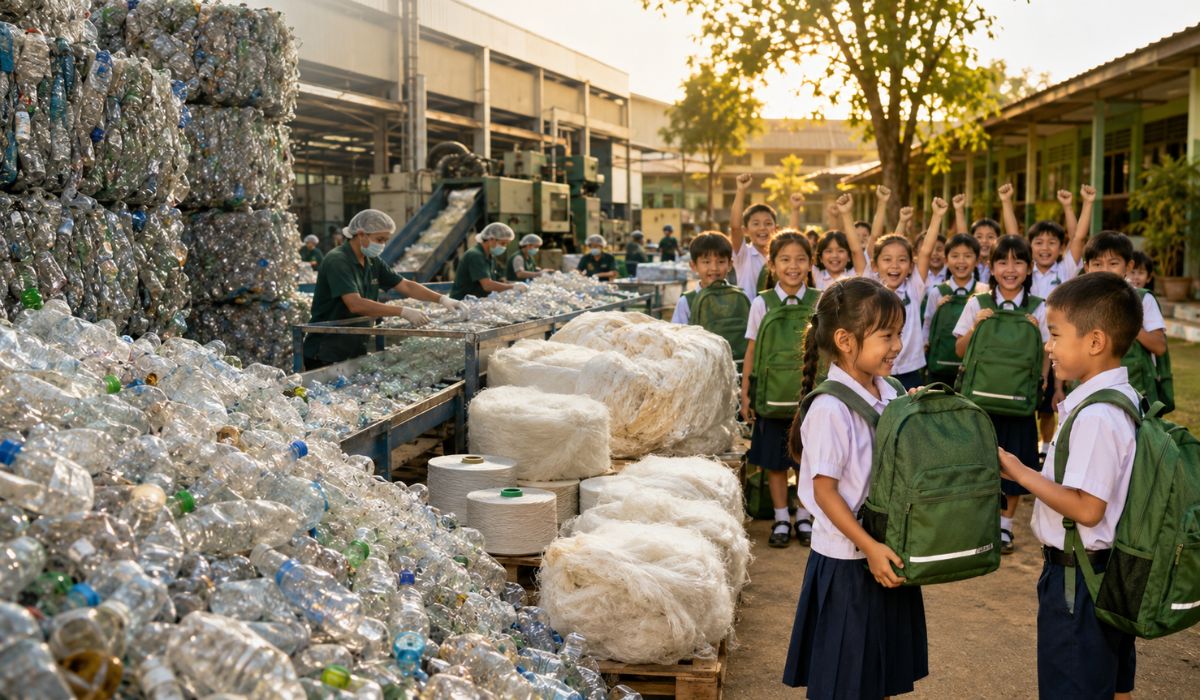

Two hydraulic mechanical arms extend from the sides of the vessel and sweep the surface in a fan pattern, pulling into floating channels everything they encounter.
Bottles, bags, pieces of fishing nets, jugs, and other plastics are transported on steel conveyors to internal compartments, where they are stored.

In a single mission lasting 8 to 10 hours, a ship can collect 5 to 10 tons of mixed waste, which can later become raw materials for new packaging and recycled products.
A huge part of the problem, however, never reaches the open sea. Rivers, canals, and ponds accumulate thick layers of waste that block the flow of water and serve as a “corridor” for plastic to reach the ocean.
At these points, excavators with claws mounted on trucks come into action, pulling out hundreds of kilos of waste in one go, from bottles to old tires.
Alongside this mechanized front, fishermen and volunteers still do the slower but essential work, using nets and hooks in small vessels. Each person can recover several hundred kilos per day.
This seemingly small effort is precisely the starting point of many chains that will transform waste into new packaging in factories.

From Deck To Port: The First Filter Of Ocean Trash
After collection, the boats head to the port or to receiving points in coastal areas. A small fishing boat of 8 or 9 meters, for example, can fill its hold with up to 5 tons of waste in a work shift.
At the dock, hydraulic systems lift and dump everything into reception areas, where the technical process begins in earnest.
The mix is chaotic. There is plastic, metal, wood, algae, mud, and a multitude of objects. Teams perform a quick inspection and remove large or dangerous items, such as steel nets, oil drums, and tires. What remains goes to a conveyor belt that feeds the initial sorting area.
Inside the facility, a rotating sieve separates the waste by size. Sand, shells, tiny fragments, and mud fall through the mesh, while bottles, packaging, and larger pieces continue onward.
The goal of this stage is to concentrate as much usable plastic as possible into a separate flow, which will be the basis for the new packaging, fibers, and recycled products coming out of the production line.
Deep Washing: Removing Salt, Oil, And Microorganisms
The plastic that has spent months or years in the sea does not go directly into the extruder. It needs to be washed, decontaminated, and carefully separated before being reborn as new packaging. This is where mechanical washing tanks, drum washers, and flotation systems come in.
In the tanks, rotating shafts with blades create a whirlpool that scrubs the waste while water mixed with gentle detergents and neutralizing solutions removes salt, oil, and some microorganisms.
In some plants, this water is heated to 70 or 80 degrees to increase the efficiency of cleaning and sterilization. The process can last from 15 to 30 minutes, depending on the condition of the material.
Then, a drum washer spins as high-pressure jets sweep the plastic, tearing off sand and more resilient algae.
Next, a flotation tank makes a crucial separation: plastics with different densities behave differently, allowing the isolation of types such as PET, HDPE, and PP, which have specific destinations in recycling and use in new packaging. PET typically sinks, while HDPE and PP float.
Finally, everything goes through centrifugal dryers and hot air tunnels at around 75 degrees to remove moisture. Larger facilities also have ozone deodorization systems that treat vapors, reduce odors, and decrease the bacterial load.
Fine Sorting: Choosing The Right Plastic For New Packaging
With the material cleaned, finer sorting begins. There are several types of plastic in the flow, but the focus is on isolating primarily PET and HDPE, which are highly recyclable and ideal for producing new packaging, such as bottles, jars, and containers.
The mixed plastic goes through a large rotary steel drum. The holes allow very small fragments, dust, and off-spec leftovers to fall out.
Bottles and larger pieces proceed to the manual sorting conveyor, where workers remove items that shouldn’t be there, such as metals, cardboard, and incompatible plastics.
Then, automatic systems come into play. Cap and label separators use air jets to blow away these lighter parts, while magnetic sensors hunt for any tiny piece of metal that might still be in the mix.
The result of this stage is an almost exclusive flow of PET bottles and other compatible plastics, ready to be turned into flakes, pellets, and finally, new packaging.
From Flake To Pellet: The Industrial Rebirth Of Plastic
In the next stage, the bottles go to a high-speed grinder. Inside the machine, dozens or hundreds of blades spin at thousands of rotations per minute, shredding the plastic into small flakes of a few centimeters.
A single unit can process between 900 and 1,000 kilos of plastic per hour, turning mountains of bottles into a loose and uniform material.
This grinding is not just to reduce volume. Flakes melt faster and more homogeneously, which reduces energy consumption in the subsequent thermal stages. Next, cameras and optical sensors come into play.
High-speed systems scan each flake individually, analyzing color, transparency, and texture, and use bursts of compressed air to automatically separate unwanted or out-of-spec materials.
What remains is an extremely pure flow of flakes, divided by type and color. These flakes feed extruders that operate at temperatures around 270 degrees.
Giant screws in rotation push the melted plastic through ultra-fine metal filters that retain the last impurities. At the exit, an underwater pelletizer cuts the flow into millions of tiny pellets that are quickly cooled in water in a closed circuit.
These dry and standardized pellets are the currency of recycling. They return to the industry as raw material for new packaging, textile fibers, plastic parts, urban furniture, and an expanding list of products that are already born with recycled DNA.
How Sea Plastic Becomes New Packaging
When the destination is to return as a bottle, the recycled PET in pellet form goes into injection molding machines. The material is heated to about 250 degrees until it becomes pasty and is then injected into steel molds that form the so-called pre-forms, small thick “bottles” with the neck already threaded.
These pre-forms are easier to transport and store. Many factories specialize only in this stage and send the product to beverage industries or bottlers, which will handle the next phase.
In blowing lines, the pre-forms are reheated until they become pliable and enter metal molds of the final size of the bottle. Compressed air jets expand the plastic from the inside until it occupies the entire volume of the mold.
A pre-form a few centimeters tall can transform into a bottle four or five times larger.
Each automated line can produce thousands of units per minute, maintaining thickness, transparency, and strength within strict standards, allowing these new packaging to compete with products made from virgin plastic.
After blowing, the bottles enter cooling tunnels with circulating air or water. The goal is to stabilize the shape without compromising clarity and rigidity. In more efficient factories, the heat extracted from the bottles is reused to heat the process water, closing another part of the cycle.
Before leaving the line, sensors, cameras, and mechanical tests check for everything from small bubbles and micro-cracks to resistance to pressure, impact, and deformation.
Only then are the bottles grouped, wrapped in protective film, and stacked on pallets, each batch with its tracking code.
Beyond Bottles: Clothes, Fibers, And Daily Use Products
Not all recycled pellets become bottles. The same chain that supplies new packaging also feeds spinning processes that produce synthetic fibers used in clothing, backpacks, footwear, and technical fabrics.
From the pellets, the plastic is melted again and extruded into very thin filaments, which are then spun, woven, or knitted.
Other fractions go on to produce plastic furniture, car parts, storage boxes, rigid and flexible packaging.
Each well-planned application extends the material’s lifespan, reduces the demand for virgin resins, and helps relieve the pressure on ecosystems that today receive waste that shouldn’t have left land.
In the end, a bottle that once floated in a bay can return as another bottle, as a sports jacket, or as part of a chair.
Technology alone does not solve the problem of plastic in the oceans, but it shows that discarding and forgetting is no longer an acceptable option.
New Packaging, New Perspective On Trash Going To The Sea
The transformation of ocean plastic into new packaging, fabrics, and daily use products is, at the same time, an engineering feat and a mirror of our behavior.
All this effort of collection, washing, sorting, grinding, and extrusion only exists because someone threw this material in the wrong place.
Still, the result is powerful. Each recycled bottle, each fiber, and each product made with plastic collected from the sea represents a small course correction, a step toward an economy where waste stops being the end of the line and becomes the beginning of a cycle.
The ocean continues to await the recovery of its original blue, but the industry has already shown it can do its part.
And you, would you buy more frequently products made with recycled plastic from the sea if the information were clearly stated on the labels of new packaging?






Acredito que poderia ter mais incentivos fiscais para empresas que trabalhassem nessa área, quanto à reciclagem. Deveriam existir mais campanhas de conscientização principalmente nas escolas através de gincanas e competições sobre o material reciclável. Pessoa educada não joga lixo no chão, que dirá no mar.
Se o povo tivesse educação, qto trabalho seria poupado desses trabalhadores… É tão fácil separar os lixos em casa ! Menos políticos e mais educação e esclarecimentos à todas as classes.
Ficou infinitamente grata pelos esforços das equipes nesse trabalho incansável. Com certeza comprarei, sou 100% à favor da reciclagem ♻️