Portuguese
  Spanish


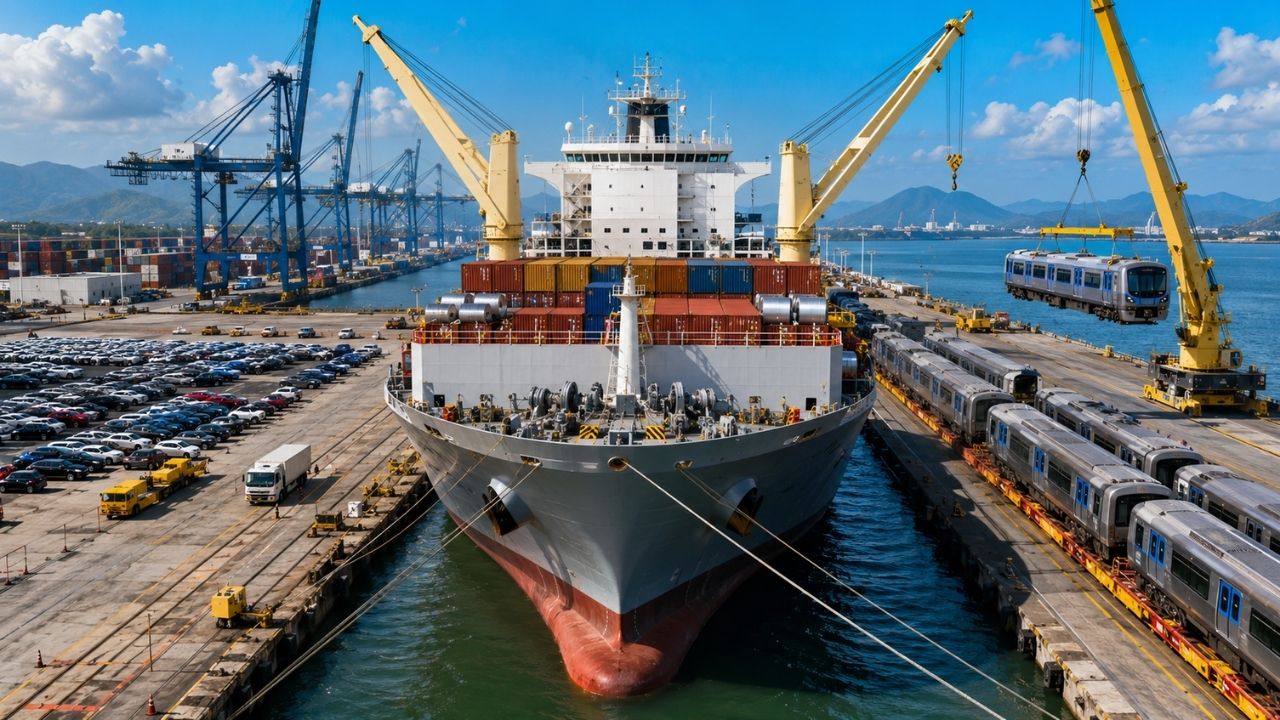

Green Suape Ship, from COSCO Shipping Specialized Carriers, docked on March 20 at Sepetiba Tecon, in Itaguaí, carrying containers, vehicles, steel coils, and subway cars in a single stop, an operation that highlights the advancement of multipurpose ships and requires terminals prepared for different cargoes in the Brazilian port market.
According to information from DatamarNews, the multipurpose ship Green Suape, from COSCO Shipping Specialized Carriers, docked at Sepetiba Tecon, in Itaguaí, Rio de Janeiro, on March 20, 2026, bringing in a single stop different types of cargo, including containers, vehicles, steel coils, and subway cars.
The operation reinforces a movement that has been gaining ground in Brazilian ports: the use of vessels capable of transporting varied profiles of goods in a single trip. This model challenges the traditional division between containerized cargo, general cargo, and project cargo.
Green Suape Ship gathered different cargoes in a single stop

The Green Suape arrived at Sepetiba Tecon with an unusual combination for more conventional operations. Instead of moving only containers or only loose cargo, the ship brought items with different characteristics, dimensions, and logistical needs.
-
Brazil’s Port of Santos to Receive New $1.1 Billion Container Terminal, Tecon Santos 10, Set to Begin Operations in 2029

-
Ports without drivers and cabins already move containers like automated factories: robotic cranes, autonomous electric vehicles, and software transform giant terminals into 24-hour logistics machines.
-
About 300 American ports still breathe diesel from trucks, cranes, and locomotives, but they are now trying to electrify heavy machinery to clean the air for 31 million nearby residents.

-
A 220-meter giant powered in part by solar energy and lithium batteries has just unloaded nearly 5,000 Chinese cars at the Port of Itajaí. It is the first of ten Grimaldi super ships and the first in the world prepared to run on ammonia as fuel.


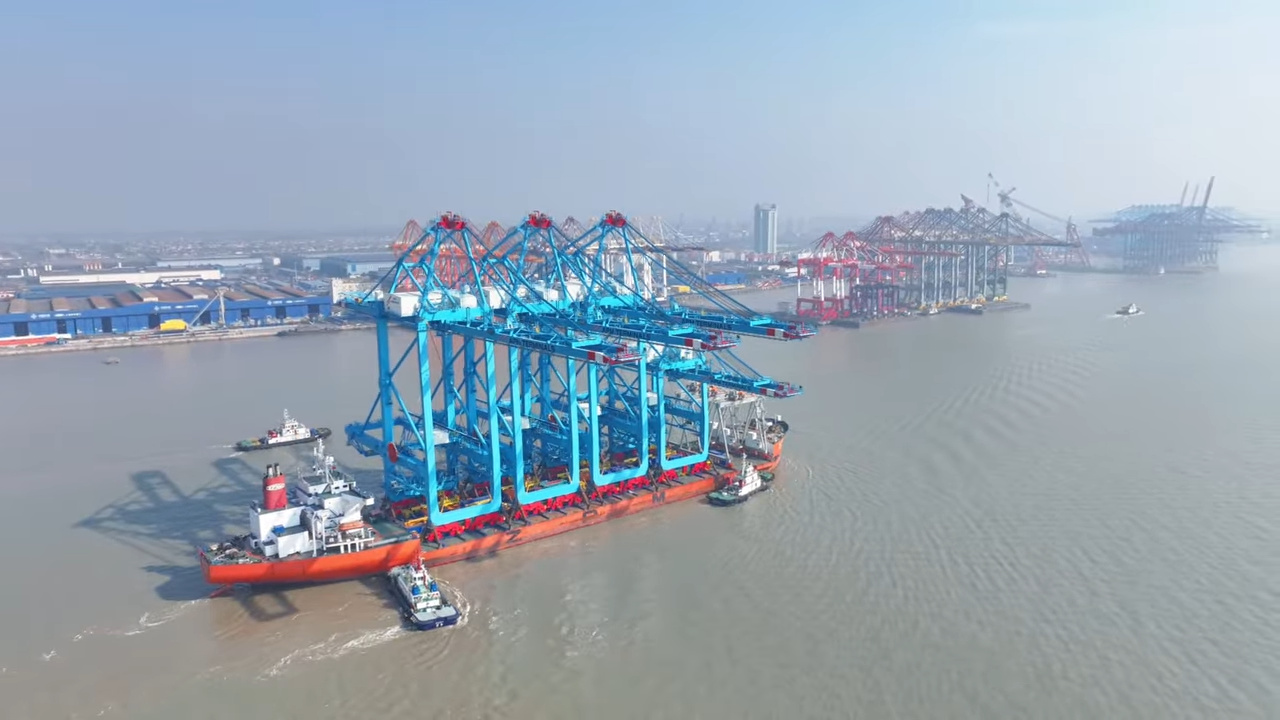


Among the cargoes moved were containers, vehicles, steel coils, and subway cars. This diversity requires broader operational planning, as each type of cargo demands specific care in handling, storage, and movement within the terminal.
The docking shows how multipurpose ships can meet demands that do not easily fit into a single category of maritime transport. In a single stop, the shipowner can combine varied volumes and profiles, making better use of the vessel’s capacity.
The most relevant point is not just the arrival of the ship, but the type of operation it represents. For ports and terminals, this format expands commercial possibilities but also increases the complexity of execution.
Multipurpose stops gain space in Brazilian ports
Traditionally, containerized cargo follows in container ships, while loose cargo, vehicles, industrial parts, or project materials usually use general cargo or project vessels. This separation is still common but can create limitations.
When each type of cargo depends on a specific ship, shipowners need to concentrate sufficient volumes to make the occupation of the vessels viable. This can increase waiting time, reduce flexibility, and create additional costs for exporters and importers.
In this scenario, the multipurpose ship emerges as a more flexible alternative. It allows different goods to be gathered on the same trip, which can improve capacity utilization and make freight more competitive on certain routes.
The stop at Sepetiba Tecon precisely signals this change. The Brazilian port market is beginning to pay more attention to vessels that do not operate under a single cargo pattern but in more adaptable logistical combinations.
Model can reduce costs and improve ship utilization
One of the arguments in favor of multipurpose stops is the better utilization of ship capacity. When different cargoes can be combined, the vessel no longer depends on a single type of merchandise to justify the trip.
This can help shipowners organize routes more efficiently. It can also benefit importers and exporters who, in some cases, would need to adapt their cargo to container transport or bear storage costs while waiting for an adequate logistical solution.
Flexibility, however, does not mean simplicity. Each cargo has its own requirements, and the operation only works when the terminal can integrate equipment, teams, areas, and access in a coordinated manner.
In the case of Green Suape, the presence of containers, vehicles, steel coils, and subway cars shows how a single stop can gather cargo with very different weights, shapes, and needs.
Terminals need infrastructure and prepared teams
Operating a multipurpose ship requires more than receiving the vessel at the quay. The terminal needs to have adequate storage areas, compatible equipment, and access capable of handling cargo of different dimensions.
In addition to maritime access, road and rail connections are part of the planning. Cargo such as subway cars, for example, requires more specific logistics than common containers, as they involve large parts and careful handling.
The Chief Operating Officer of Sepetiba Tecon, Guilherme Vidal, stated that the terminal already has the conditions for this type of operation, with infrastructure, storage areas, and access for different cargo profiles. Nevertheless, he highlighted the need to continue investing.
The advancement of multipurpose schedules depends on terminals with a multidisciplinary profile. It’s not enough to have machines; it’s necessary to form teams capable of handling security procedures, equipment, and different services simultaneously.
Sepetiba Tecon tries to position itself in an expanding demand
The docking of the Green Suape reinforces the role of Sepetiba Tecon in more diversified operations. Located in Itaguaí, the terminal is beginning to appear in a trend that may gain relevance as the demand for general cargo grows.
This movement has strategic importance because terminals capable of handling different cargo profiles can become more competitive. In a market with constantly changing routes, costs, and volumes, operational flexibility is increasingly important.
The movement of subway wagons alongside steel coils, vehicles, and containers illustrates this need well. The multipurpose operation requires integration between port planning and practical execution.
If the demand for this model increases in the coming years, terminals prepared to receive varied cargoes in a single schedule may gain ground over structures more limited to a single type of operation.
Multipurpose ship shows new logic for complex cargoes
The case of the Green Suape shows that maritime transport is seeking more flexible solutions for cargoes that do not easily fit into a single standard. The operation at Sepetiba Tecon combines containers, general cargo, and large items in a single docking.
This type of schedule can reduce inefficiencies, improve vessel utilization, and offer alternatives for companies that need to move cargoes with distinct characteristics. But it also pressures terminals to invest in structure and training.
The trend does not eliminate specialized ships, but it expands the space for vessels capable of combining different demands on a route. In Brazilian ports, this flexibility can become an important differentiator.
In the end, the ship Green Suape highlights how a single operation can gather goods of very different profiles and point to a new phase for port logistics.
Do you think Brazilian ports are prepared to receive more multipurpose ships, or is there still a lack of infrastructure for this type of cargo? Share your opinion.