Portuguese
  Spanish


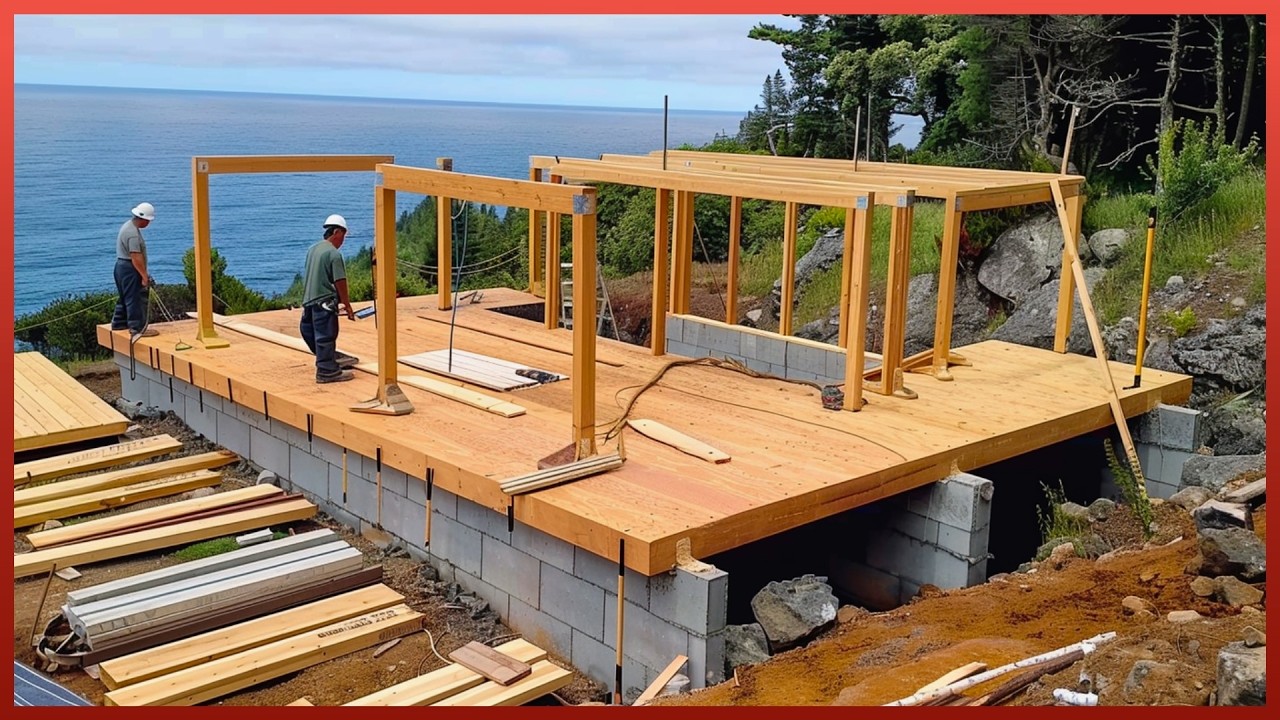


Cabin of 15 m² Built in 10 Days in the Azores Uses Cedar Wood, Light Foundation, and Efficient Insulation to Unite Sustainability, Beauty, and Autonomy.
The demands of contemporary urban life — excess concrete, dense cities, pollution, and pressure for productivity — are driving a global wave of small, sustainable, and essential-focused constructions. In this context, minimalist projects emerge that combine traditional techniques, low environmental footprint, and autonomy. One of the most interesting examples comes from the Azores, a Portuguese archipelago in the Atlantic, where a builder erected a 15 m² cabin using Japanese cedar, with spot assistance from small machinery and a lot of manual labor.
More than just a shelter, the project serves as a synthesis of three global trends: sustainable architecture, habitable minimalism, and low-impact off-grid construction. From a constructivist, logistical, and environmental standpoint, it demonstrates what happens when carpentry, high-quality wood, and planning converge to create something simple yet technically sound.
Raised Foundation and Light Structure: Construction Begins at the Ground
The chosen land is located near the sea, in a green area typical of the Azores, with constant winds and high humidity. The first step was the excavation of support points, followed by the installation of tubes intended to receive structural pillars.
-
China to Drill 90 Kilometers Under the Sea to Connect Two Cities Currently Linked Only by Ferry

-
18 m² Home Built in Two Days by Teto Volunteers Provides Shelter from Insects and Cold for Resident in Brazilian Community; 43 Delivered in 2026

-
$134.7 Million Project in São Paulo Installs Over 5 Kilometers of Pipes, Creates New Underwater Crossing to Boost Water Supply for Over 450,000 People

-
At 61, Former Homeless Wheelchair User Receives Key to Container Home in Brazil, Declares Independence



This type of solution — raised foundation on concrete piles or pillars — addresses three problems at once:
• reduces wood contact with the damp ground, extending lifespan;
• allows ventilation beneath the floor, preventing mold and rot;
• eliminates large volumes of concrete and heavy earthworks, reducing environmental impact.
With the tubes positioned and filled, the assembly of the structural wooden flooring begins, upon which the rest of the cabin will be erected.
Japanese Cedar: Lightness, Resistance, and Climatic Performance
The main material of the project is Japanese cedar (Cryptomeria japonica), a species found both in Japan and in the Azores. It is used for exterior constructions because it is:
• light and easy to work with;
• resistant to moisture and fungal attacks;
• durable even without extensive industrial treatments;
• dimensionally stable.

These characteristics reduce rework, speed up cuts and fittings, and allow for rapid assembly.
Structure in 10 Days: Pace, Carpentry, and Pre-Planning
The assembly of the structure followed a schedule that optimized time and labor:
- Structural flooring completed;
- Vertical studs and bracing formed the “skeleton”;
- Rafters were installed;
- Wall panels and roof battens advanced right after.
The images show the builder using circular saw, manual level, screwdriver, squares, and precise cuts, highlighting mastery of carpentry and pre-planning.

This type of construction is only possible in 10 days because the project avoids:
• complex internal plumbing installations;
• heavy masonry;
• bricks, concrete or slow curing;
• lengthy wet stages.
The logic is clear: less mass, more precision, which accelerates schedules.
Enclosure and Insulation: It’s Not Enough to Build, It Needs to Be Lived In
The cabin is not just a “pretty shell”. It received:
• external cladding in wood;
• internal sealing with insulating panels;
• thermal insulation in the roof, essential in a humid climate;
• battening for tiles, creating a breathable roof.
This stage is crucial as it defines thermal comfort and moisture control, two critical points in architecture built in oceanic regions.
Internal Finishes and Space Use: 15 m² Can Be Sufficient
With only 15 m², the interior was designed to function as a compact shelter, with space for:
• bed or sofa bed,
• small counter,
• bookshelf,
• external stove or annex.

Even without urban purposes, the space allows for remote work, short stays, or minimal living, aligned with global movements such as tiny houses, retreat cabins, and modular housing.
Sustainability: Wood, Low Energy, and Clean Construction
The highlight is not just in speed but in the reduced environmental footprint.
This cabin provides:
✔ low use of concrete (only foundations);
✔ renewable material (cedar);
✔ low embodied energy in the construction elements;
✔ discreet intervention on the land;
✔ possibility of future disassembly, reducing waste.

To those who follow construction, sustainable architecture, and minimal living, this type of project is not a trend, it is a clear sign of cultural change.