






 Portuguese
  Spanish


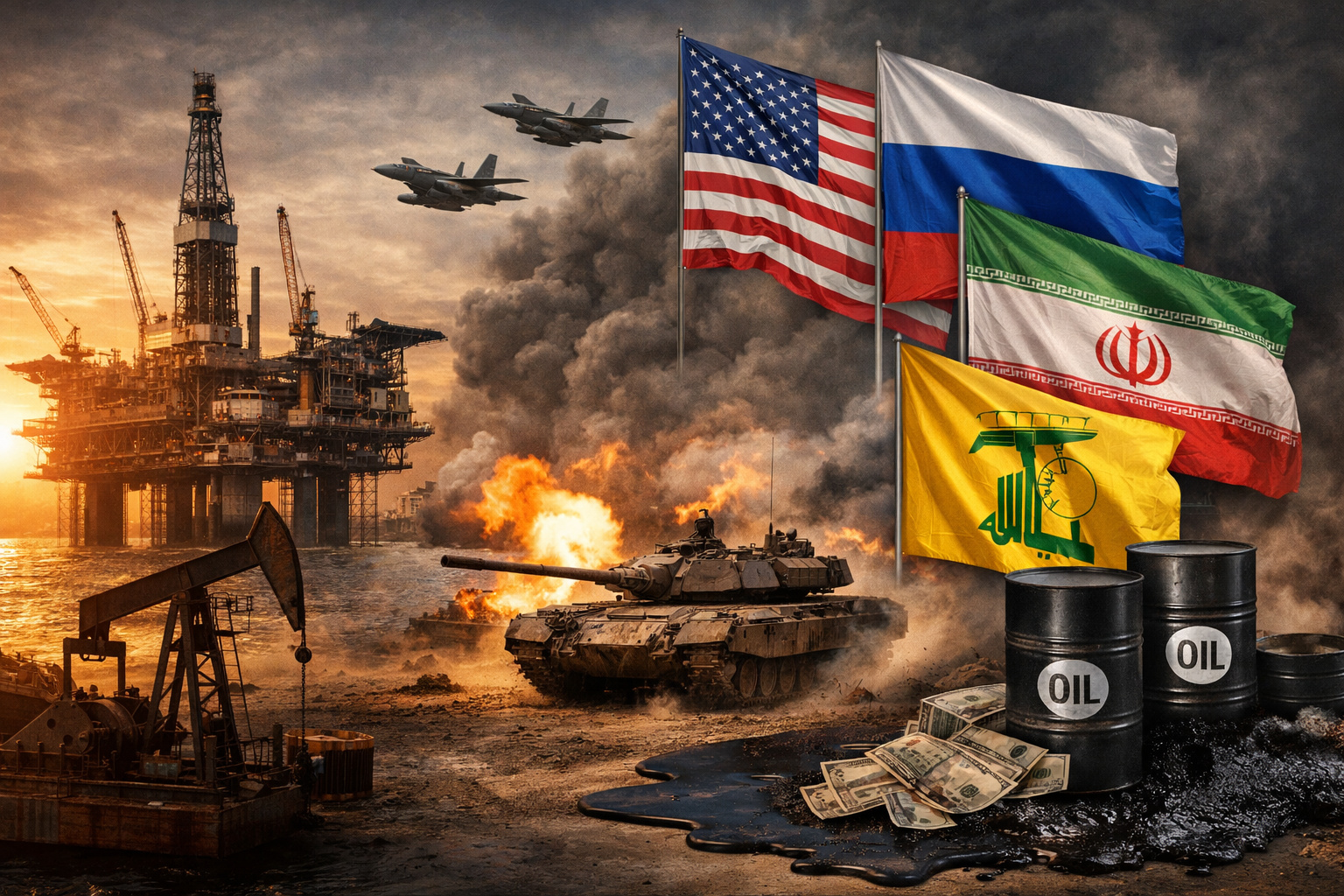

The oil remains, above all, one of the most important pillars of the global economy. Moreover, it directly influences political decisions, international conflicts, and economic strategies. In this context, the United States recently announced new sanctions against an international network linked to Iran, Russia, and Hezbollah. As a result, the topic has returned to the center of global attention.
According to the U.S. Department of the Treasury, in an official statement released in 2026, the measure targets a global scheme that used ships and companies to circumvent trade restrictions. Thus, the U.S. government seeks to increase economic pressure amid delicate geopolitical negotiations.
At the same time, this movement reinforces something that has been observed for decades. That is, oil is not just a commodity, but rather a strategic instrument of power.
-
Oil production grows in Rio, but reserve replacement raises a warning sign

-
Petrobras is expected to complete the drilling of the Morpho well in the Foz do Amazonas in August 2026, the first well in the Equatorial Margin, an oil frontier that the ANP estimates at more than 30 billion barrels and could redraw the map of Brazil.

-
Oil returns to the center of concerns with tension between the US and Iran

-
IEA reduces forecast for global oil demand in 2026 after impacts of the Middle East crisis
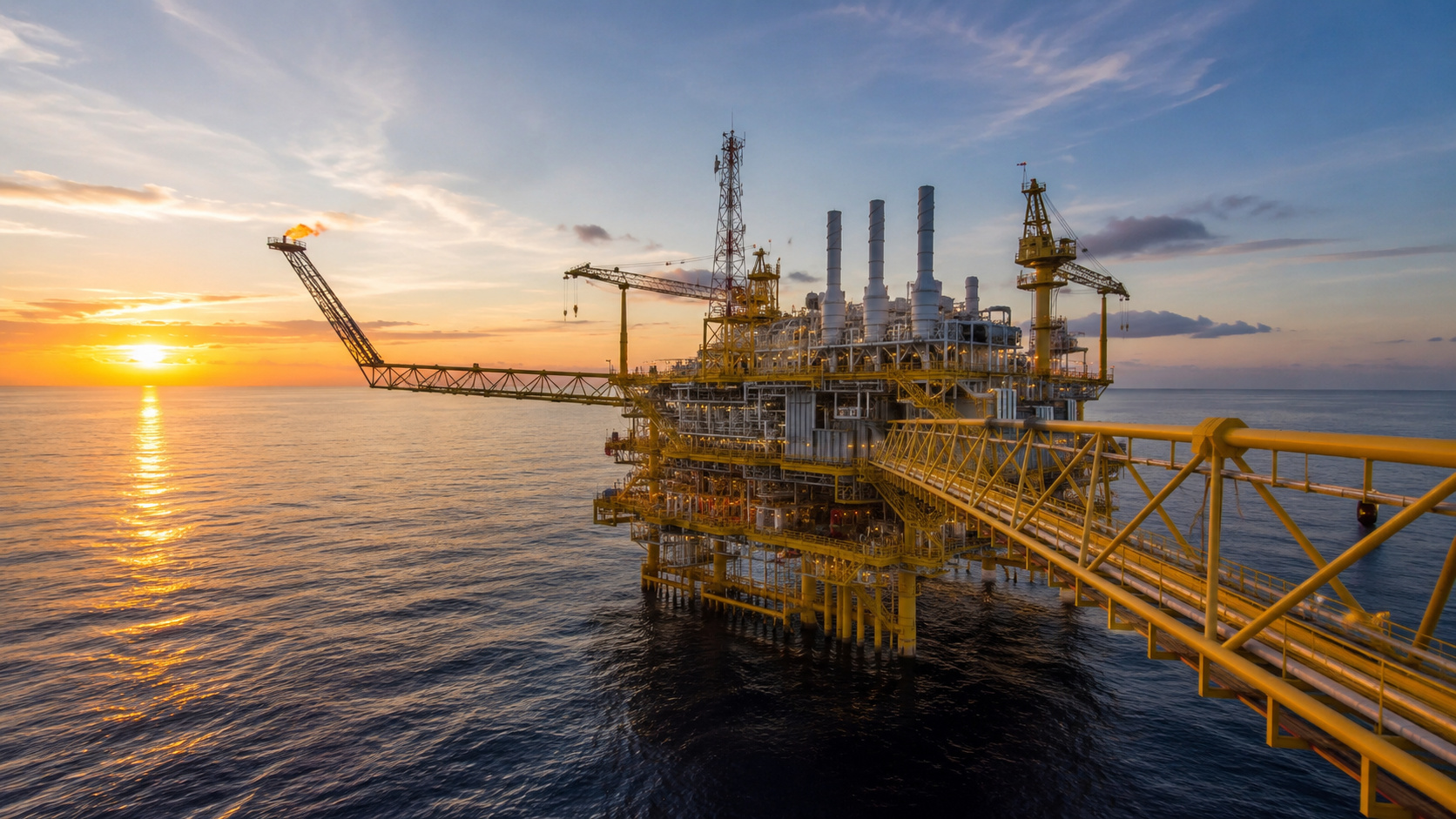


The historical importance of oil in international relations
Since the beginning of the 20th century, oil has shaped alliances and conflicts. For example, during World War I, countries became dependent on fuel to power their war machines. Soon after, this dependency grew even more during World War II.
According to the Britannica Encyclopedia, oil played a decisive role in both World War I and World War II, as it ensured the operation of military vehicles, ships, and aircraft, becoming essential for the industrial and strategic mobilization of the powers.
Furthermore, throughout the Cold War, the United States and the Soviet Union competed for influence in oil-rich regions. As a consequence, the Middle East gained global prominence.
Moreover, the creation of the OPEC (Organization of the Petroleum Exporting Countries) in 1960 marked a turning point. From that moment on, producing countries began to coordinate their production. In this way, they managed to influence prices and international policies.
Economic sanctions and the role of oil in the current scenario
Currently, economic sanctions represent one of the main tools of pressure between countries. In this sense, oil remains at the center of these strategies.
According to the Metrópoles website, based on official information from the U.S. government, the recent action involves a complex network for transporting and trading oil. This network, in turn, is linked to the financing of sanctioned groups and governments.
Additionally, according to the U.S. Department of the Treasury, these operations used ships with altered registrations. They also involved shell companies to conceal the origin of the oil.
On the other hand, these measures do not arise in isolation. On the contrary, they are part of a broader strategy of economic containment.
According to the International Monetary Fund (IMF), in recent analyses, such sanctions can impact global energy chains. Consequently, they affect oil prices and availability in different markets.
The evolution of the oil market over the decades
Over time, the oil market has undergone profound transformations. Initially, large companies dominated exploration and distribution. These companies became known as the “Seven Sisters.”
However, starting in the 1970s, producing countries gained more control over their reserves. As a result, the balance of power shifted.
According to British Petroleum (BP), in its annual statistical report, global oil consumption grew continuously until the early 21st century. This growth, in turn, accompanied global economic expansion.
Moreover, crises such as the oil embargo in 1973 showed how vulnerable the market can be. At that time, Arab countries reduced production, thus causing a sharp rise in prices.
Today, although there are expanding renewable sources, oil still accounts for a significant share of the global energy matrix.

Geopolitics, energy, and global dependence
Currently, the geopolitics of oil involves multiple actors. Among them, the United States, Russia, Saudi Arabia, and Iran stand out.
According to the U.S. Energy Information Administration (EIA), these countries have significant influence over global production and export. Therefore, any decision made by them directly impacts the market.
Additionally, regional conflicts are often related to the control of energy resources. For example, tensions in the Middle East often affect the price of oil.
Similarly, sanctions against producing countries can reduce global supply. Consequently, this puts upward pressure on prices.
Economic impacts and future prospects
From an economic perspective, oil remains a strategic indicator. When prices rise, for example, transportation and production costs also increase.
According to the World Bank, fluctuations in oil prices directly influence global inflation. Therefore, governments closely monitor this market.
In addition, companies in the sector are constantly investing in new technologies. Among them, more efficient and less polluting extraction methods stand out.
On the other hand, the energy transition is gradually advancing. Nevertheless, oil still maintains significant relevance.
According to the International Energy Agency (IEA), even with the growth of renewable energies, oil consumption is expected to remain relevant in the coming decades. This is mainly due to the demand from sectors such as transportation and industry.
The role of oil in a transforming world
In light of this scenario, it is clear that oil will continue to be a central element in international relations. Although new energy sources are gaining ground, its influence remains strong.
Moreover, events such as recent sanctions show that oil still serves as a tool of political pressure. In this way, it connects economy, security, and diplomacy.
Finally, when observing history and the present, it is clear that oil is not just a natural resource. In fact, it represents one of the main drivers of global transformations.
Thus, understanding its trajectory helps to comprehend not only the past but also the challenges and paths of the global energy future.





This post touched my heart today in ways I cannot explain 🔥
This content speaks to what makes life truly meaningful and worth celebrating