






 Portuguese
  Spanish


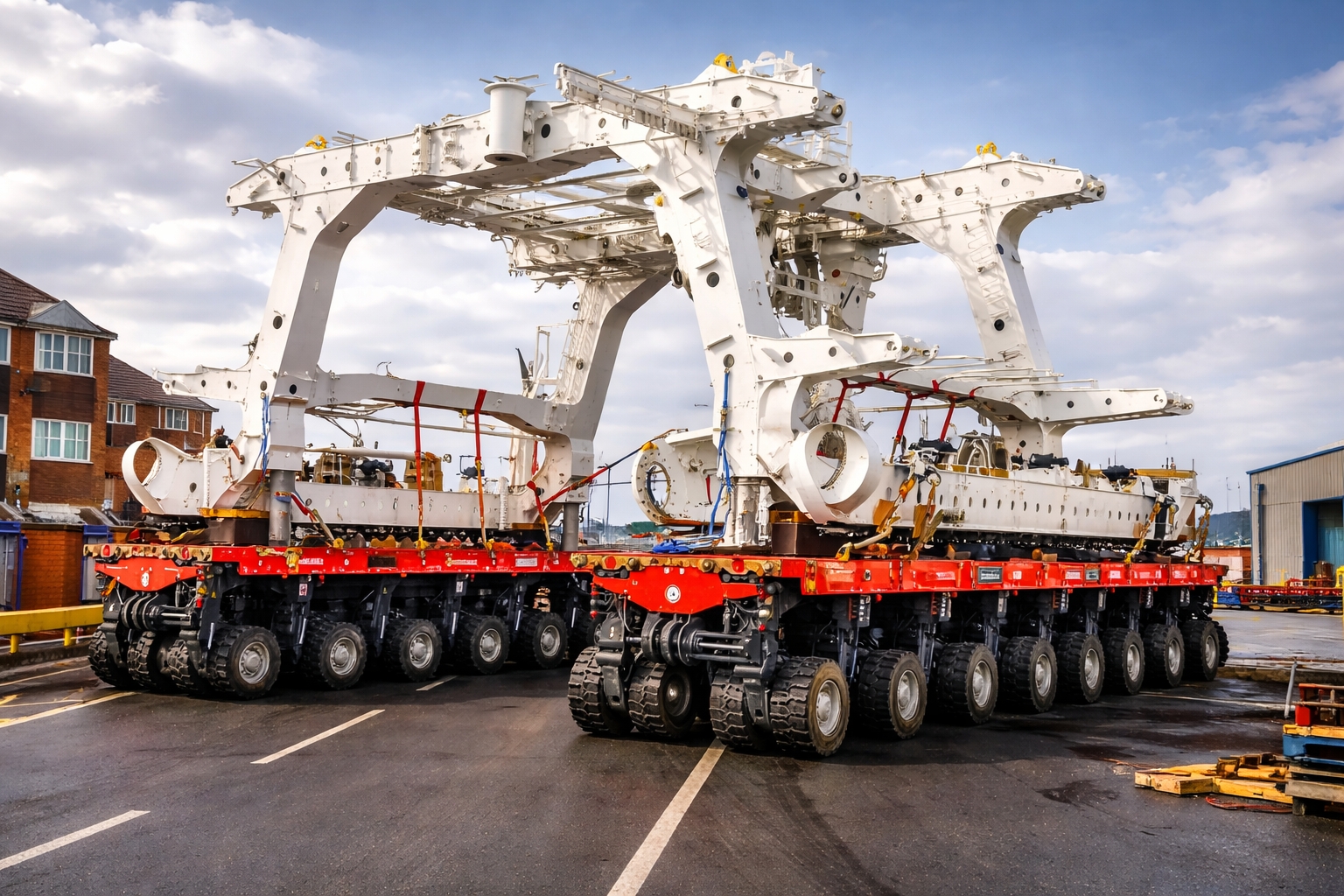


World’s Most Powerful Subsea Excavator Will Bury Power Cables Nearly 6 Meters Below the Seabed: Danish NKT Brings a Giant to Blyth Port Built to Protect High Voltage Cables and Strengthen the European Renewable Energy Infrastructure
The world’s most powerful subsea excavator promises to enhance the security of offshore energy in Europe: Burying cables nearly six meters below the seabed may seem excessive. But in today’s offshore energy landscape, it is a matter of survival. With increasing tensions at sea and the rising risk of sabotage, companies have begun to treat subsea cables as strategic assets. A cut can mean blackouts and million-dollar losses.
It was in this context that this true industrial giant arrived in the United Kingdom.
The Silent Race to Protect High Voltage Cables in an Increasingly Pressured Sea
Offshore wind farms are growing year after year in Europe. They rely on high voltage cables that cross kilometers of seabed to reach the continent.
-
Billionaire says the most valuable skill will help overcome job elimination caused by AI, following Bill Gates’ fears

-
A Dutchman created a ‘box’ that makes trees grow in the desert almost without water and without irrigation: the invention has already brought seedlings to dozens of countries and achieves up to 90% survival where common planting did not exceed 10%.

-
Abandoned warehouse hid a giant collection of rare computers, with over 2,000 artifacts from the 1930s to the 1980s.
-
Scientists warn that melting ice is triggering an alarming chemical transformation in preserved areas, and the first signs are already concerning researchers worldwide.




The problem is that much of this infrastructure remains vulnerable.
Executives from NKT have stated that protecting cables has never been more important given the high maritime activity and the risk of sabotage. It’s not just engineering; it’s about energy security.
The Danish company’s response was to invest heavily in a new subsea trencher and secure a four-year agreement with Helix Robotics Solutions Group to ensure operation, maintenance, and offshore support.
What Makes the NKT T3600 One of the Most Powerful Trenchers Ever Created for the Offshore Industry
The name may sound technical, but the numbers are striking.
The NKT T3600 delivers 3,600 horsepower, enough force to bury cables up to 5.5 meters deep below the seabed.
To put it into perspective, it’s like hiding cables and all the electrical infrastructure beneath the height of a two-story building, but underwater.
The machine was designed and built by the British company Osbit, which also developed the launch and recovery system. Helix will be responsible for operating the equipment using its own support vessel.
Commercial operations are expected to start in 2027.
The Technical Secret That Allows Excavation in Different Types of Seabed
Not all seabeds are soft.
There are areas with loose sediments, others with compact layers, and sections with more challenging conditions. It is at this point that the technical differentiator comes into play.
The NKT T3600 combines two functions, jetting and mechanical cutting. This combination enhances operational capability in varied soil conditions, which is crucial for ensuring actual depth of protection.
According to the company itself, the aim is to ensure deep burial of cables even in environments considered complex.
This reduces exposure and increases the protection of the cables against external impacts.
The Direct Impact on Energy Security and the Competition in the European Offshore Market
The arrival of the equipment at Blyth Port signifies not just an industrial delivery. It represents a strategic move.
NKT stated that the investment also strengthens the local economy by involving companies from the United Kingdom in the project’s development.
At the same time, it enhances the protection of the electrical infrastructure that supports the European energy transition.
In a scenario of growing concern over security and energy supply, companies that can offer more robust solutions tend to gain a competitive edge.
Why Burying Cables Deeper May Become the New Industry Standard
Increasing the depth of cable burial is not just a technical detail. It is a direct response to a riskier environment at sea.
If the trend holds, other projects may follow suit, raising the protection standards of subsea cable infrastructure.
The NKT T3600 is still in preparation, but its arrival already indicates that the offshore industry has entered a new phase, where power and protection go hand in hand.
This movement has drawn attention because it combines heavy engineering, energy strategy, and security at a sensitive time for the European electricity sector.
Do you believe that the protection of subsea cables will be one of the main focuses of offshore energy in the coming years? Share your thoughts in the comments.





