






 Portuguese
  Spanish




The Dutchman Pieter Hoff, former producer and exporter of flowers and bulbs, abandoned his own business in 2003 to solve a problem that seemed impossible: making trees grow in the desert almost without water. The result was the Groasis Waterboxx, an intelligent box that surrounds the seedling, captures dew and rain, and returns this liquid drop by drop to the root. Launched and awarded in 2010, the invention achieved survival rates of up to 90% in dry areas where common planting did not exceed 10%.
According to Food Tank, an international organization dedicated to food sustainability, the Waterboxx is essentially a two-lid bucket with a central duct through which the seedling grows: the top lid collects rain and early morning condensation, the bottom one prevents evaporation, and a wick conducts this thread of moisture directly to the root. In tests in Spain and Morocco, 88% of seedlings planted with the Waterboxx remained alive after three years, compared to only 10% of the group planted directly in the soil, a performance that earned the invention the Innovation of the Year award from Popular Science magazine in 2010. The method consumes about 90% less water than traditional drip irrigation, which uses 15 to 50 liters per tree each day, and also dispenses with electricity and continuous watering, functioning organically.
The genius lies in simplicity. After decades of cultivating flowers and bulbs in the Netherlands, one of the flattest and wettest countries in the world, Pieter Hoff reached a counterintuitive conclusion: the secret to reforesting the desert was not to pour more liquid over the problem, but to mimic nature’s way of saving every drop. Each Waterboxx is made of reusable polypropylene, lasts about ten years, and stays on the ground for only nine to twelve months, enough time for the seedlings to develop deep roots and become self-sustaining. After that, the box is removed without harming the plant and moves on to the next tree. From Spain to Morocco, from Ecuador to Mexico, from Dubai to California, the invention has already been taken to dozens of countries and some of the most hostile environments on the planet. Hoff died in 2021, at the age of 67, leaving the company and the mission in the hands of his son, Wout Hoff.
From the Tulip Bulb to the Obsession of Replanting the World
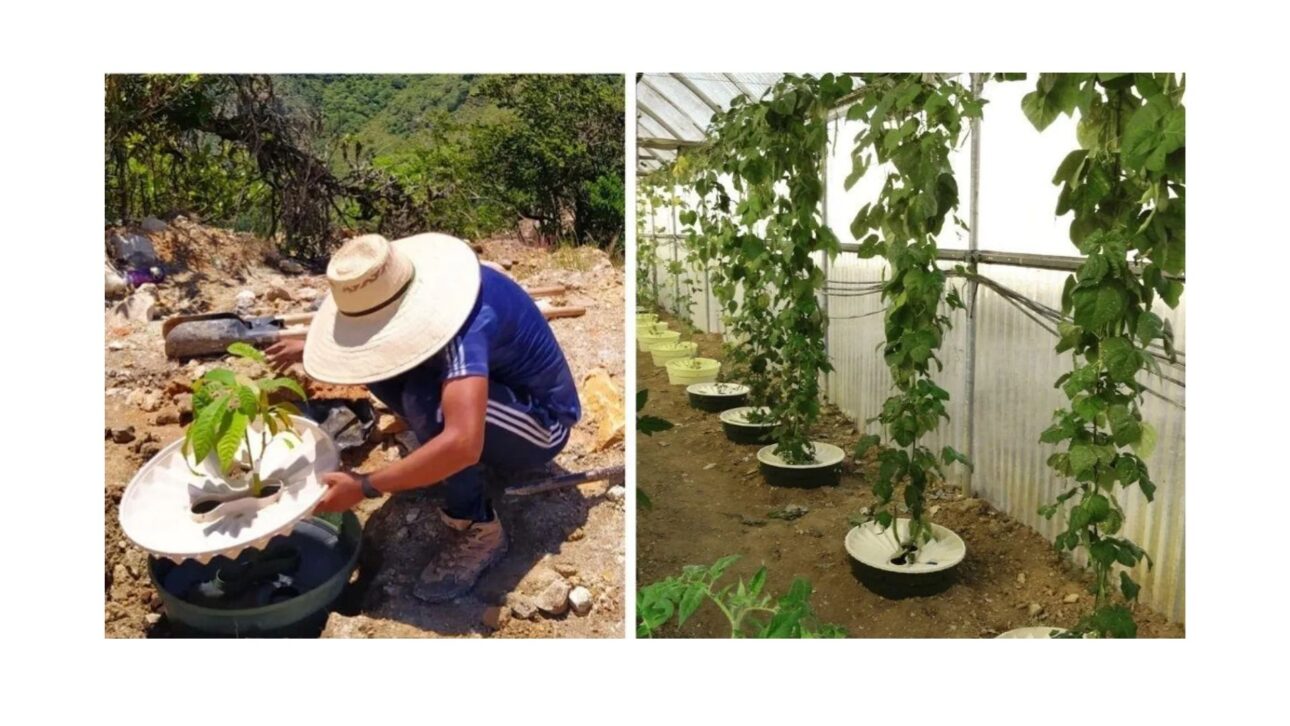
Pieter Hoff was neither an engineer nor a lab scientist. He was a flower agribusiness entrepreneur, with decades of experience exporting tulip and lily bulbs from the Netherlands. By observing how seeds thrive in nature, germinating in rock crevices from bird droppings full of moisture, he dreamed of reproducing this miracle on a large scale in dry lands.
-
Abandoned warehouse hid a giant collection of rare computers, with over 2,000 artifacts from the 1930s to the 1980s.

-
Scientists warn that melting ice is triggering an alarming chemical transformation in preserved areas, and the first signs are already concerning researchers worldwide.

-
China placed 198 robotic legs under a 7,600-ton school and made the building walk 62 meters in 18 days, rotating the historic structure as if a concrete structure had gained feet to escape demolition.

-
Distributor confirms the premiere of ‘Dark Horse’, Bolsonaro’s film, in 650 cinemas with 99% of copies dubbed.



Around 2003, Hoff closed the flower business to fully dedicate himself to the idea that would come to define him: returning trees to soils that drought had condemned to sand. Admirers began to call him the green musketeer, an inventor driven by an environmental mission, not profit. The goal was global: reforest eroded slopes and degraded soils without pipes, wells, or pumps.
The reasoning started from a direct criticism of the dominant model. Planting in arid regions with conventional irrigation is expensive, wastes water, and creates dependency: if watering stops, the plant dies. He wanted the opposite, a system that taught the seedling to fend for itself from an early age, seeking its own moisture underground. From this inversion of logic, the Waterboxx was born.
How the Waterboxx works, watering the seedling with almost no water
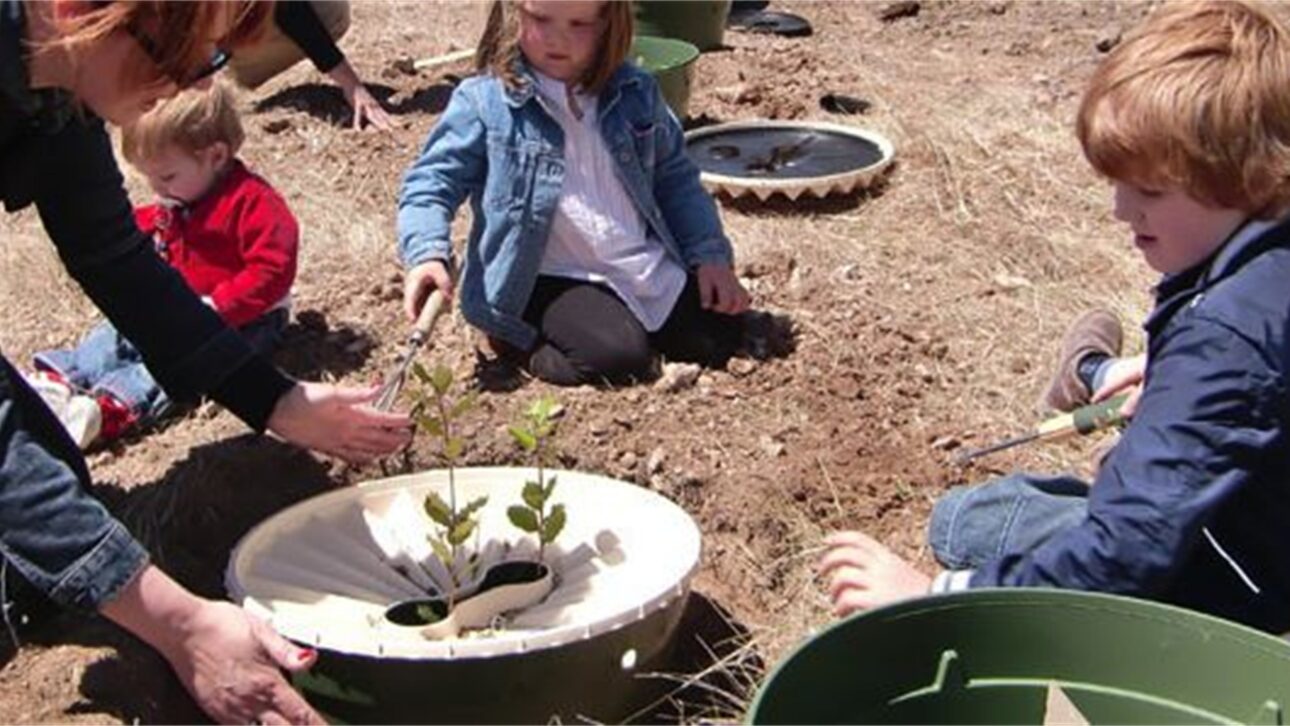
In practice, the Waterboxx looks like a plastic bucket with a hole in the middle, but every detail has a function. The seedling is planted in the center, in real ground, and the box is assembled around it. The top lid captures rain and, above all, night condensation, when air vapor turns into dew. This moisture flows into an internal reservoir, a natural battery.
From the reservoir, a wick releases very little water per day, a few dozen milliliters, directly into the soil next to the root. It’s intentionally little: the idea is not to soak, but to maintain a constant moisture that pulls the root downward. At the same time, the box provides shade, reduces evaporation, blocks competing weeds, and protects the seedling from winds and animals.
The set becomes an incubator. While a newly planted tree in an open desert cooks in the sun, the same sapling inside the Waterboxx lives in a stable microclimate, fed by the dew that the air gives for free. That’s why the system dispenses with electricity and supplementary irrigation: it simply makes better use of the little that exists.
The real secret is underground
If the box attracts attention from the outside, the decisive effect of the Waterboxx happens where no one sees. By receiving just a thread of moisture per day close to the root, the sapling does what it would do in a savanna: it sends the main root deeper and deeper, in search of more water. This root can descend half to one centimeter per day.
In about a year, many saplings already form roots two to four meters deep. When the root reaches the layers that retain moisture all year round, the plant crosses a point of no return and stops depending on external help. That’s when the box can be removed, because the tree starts to drink from the subsoil, even with the desert surface cracked.
It is the opposite of surface irrigation. When watering comes abundantly on top of the soil, the root becomes lazy and shallow, and just one failure is enough for the tree to wither. The Waterboxx, by rationing each drop, produces stronger and more independent trees by giving less, not more.
The desert tests: when 90% of the trees survived
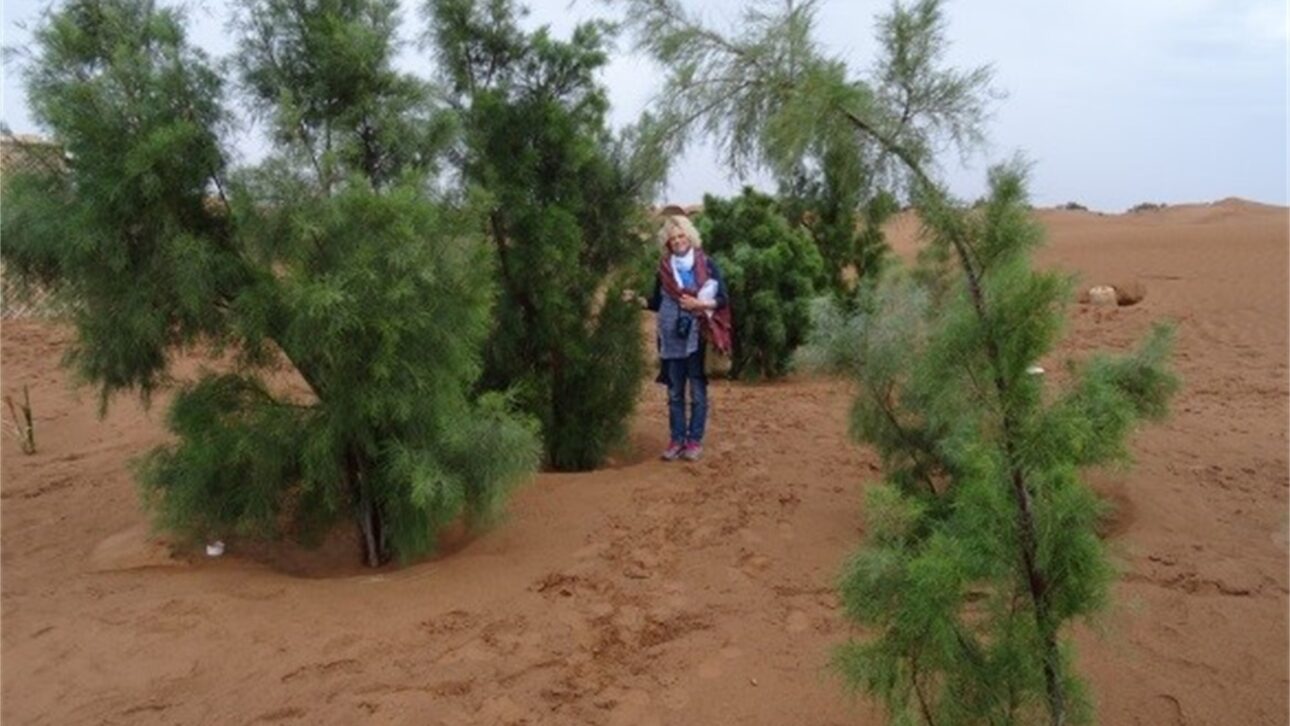
The numbers that made the Waterboxx famous came from comparative tests. In one of the most cited, researchers from Mohammed I University in Oujda, Morocco, monitored saplings on the edge of the Sahara over three years. Nearly 90% of the trees planted with the box survived, compared to about 10% of the group planted the traditional way.
A similar result appeared in Spain: the survival of the saplings inside the Waterboxx was close to 88%, compared to the same 10% of the common planting alongside. Instead of replanting the same area multiple times, most trees take root on the first attempt.
This high rate supports the economic promise of the invention. Each sapling that dies is money, time, and work wasted. By increasing survival from 10% to 90%, the Waterboxx makes it feasible to reforest areas previously considered lost, without the cost of irrigating for years in the middle of the desert.
From Morocco to California: the deserts the box has already faced
What started as a Dutch experiment turned into a tool used in the most arid corners of the world. Besides Morocco and Spain, the Waterboxx has already reached Ecuador, Mexico (in Baja California), Pakistan, Middle Eastern nations like Dubai, Jordan, and Kuwait, and even vineyards in California and abandoned mines in Pennsylvania.
Each project adjusts the technique to the location. On rocky slopes, the box holds the seedlings where it wouldn’t even be possible to dig an irrigation ditch. In lands ruined by mining or grazing, it restores the first layer of vegetation, which gradually secures the soil. The project history and technical data can be found on the official website of Groasis, the company founded by Pieter Hoff and now run by the family and partners.
The variety of locations becomes an involuntary argument. If the same box works in the heat of the Sahara, at the altitude of Ecuador, and in harsh winters, it indicates that the logic behind it, retaining moisture and forcing the root deep, has universal value and is not limited to just one desert.
Growboxx: the paper version that also plants food
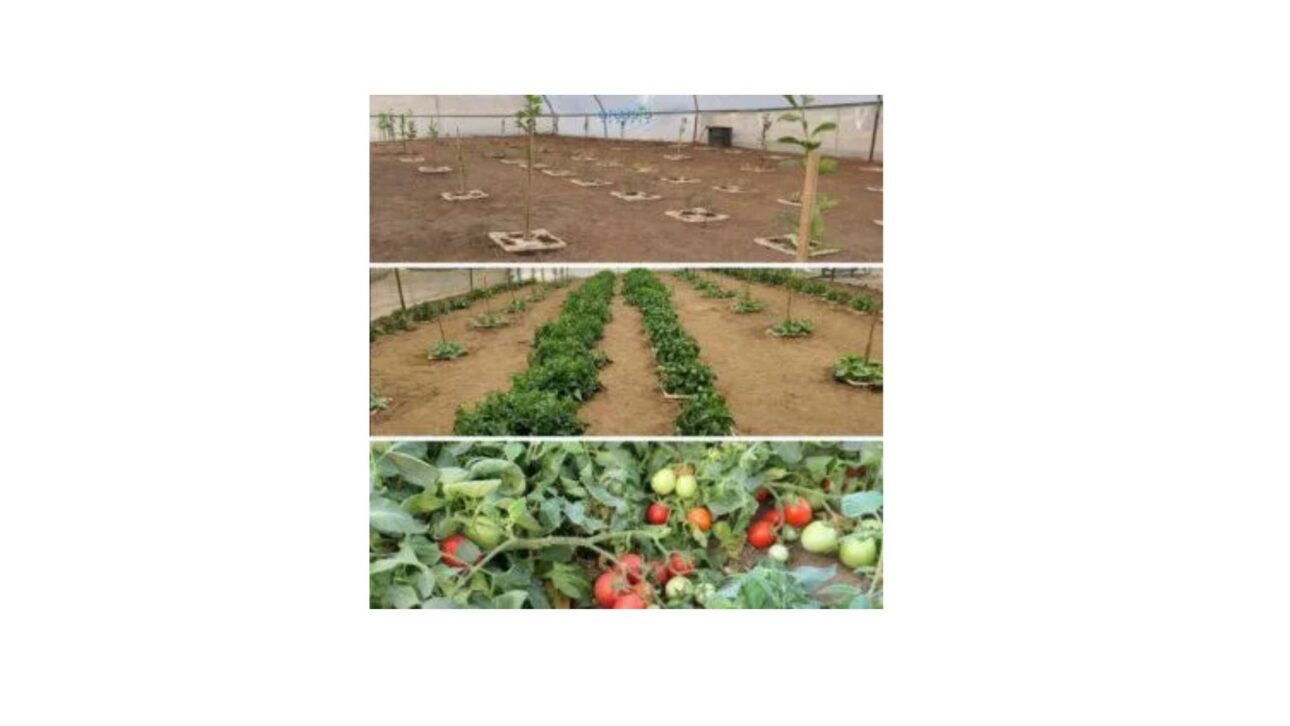
Over time, the invention gained a more ambitious sister: the Growboxx, or planting cocoon. Instead of reusable plastic, it is made of pressed and biodegradable recycled paper, which decomposes in the soil after fulfilling its function. The proposal is to go beyond the isolated tree and plant, in the same cocoon, a tree seedling in the center and food crops around it.
The combination has strong practical appeal in dry and poor regions. While the tree is still small and grows protected, the farmer harvests short-cycle vegetables in the same space, ensuring food and income in the first year. It combines reforestation and food security, two problems that go hand in hand on the desert edges.
The philosophy remains the same as Waterboxx: use little water, mimic nature, and let the plant learn early to sustain itself. Whether in reusable plastic for years or in paper that turns into compost, the goal is always to transform the minimum moisture into the maximum amount of plant life that the soil can support.
Why the Waterboxx is not irrigation (and why it matters)
It’s tempting to think that the Waterboxx is just a more economical way to water. It is not. Irrigation is a permanent service: pipes, energy, and watering year after year, or the plantation dries up. The box does the opposite: it is a temporary boost. After nine to twelve months, it steps aside and the tree continues on its own, without any more drops from human hands.


This changes the scale of what is possible. Reforesting millions of hectares of desert with irrigation would be unfeasible, as it would require a permanent network of pipes where it doesn’t even exist. However, a method that uses moisture from the air and rain, and then withdraws, can be repeated where plumbing would never reach. That’s why the Waterboxx is treated as a weapon against desertification, not as gardening.
There are, of course, limits and criticisms. The box has a cost per unit, requires labor to install and remove, and does not perform miracles in dead soil or without a water table within root reach. Still, by delivering independent trees with a fraction of what is spent on traditional methods, it has redefined what can be planted in dry areas.
The legacy of Pieter Hoff and the question that remains
Pieter Hoff died in 2021, at the age of 67, without seeing the world covered in trees as he dreamed, but leaving a mark difficult to erase. His invention was exhibited in design museums, awarded for green technology, and adopted in environmental projects on various continents. His son, Wout Hoff, took on the mission and continues planting seedlings where there were only cracks before.

Perhaps the most remarkable thing is not the engineering, but the shift in mindset that the Dutchman proposed. He showed that the answer to water scarcity is not always more water, but rather using the little that exists more effectively. That a simple piece of plastic, without a motor and without electricity, can outperform expensive irrigation systems when it comes to making a seedling take root in the sand.
And that reforesting doesn’t need to be a war against nature, but a partnership with it. While desertification advances over fertile lands and millions of people live with scarcity, simple inventions like this continue to challenge the idea that certain soils are lost forever.
If a cheap box can make trees sprout where there was only sand, how many of the deserts that today spread across the world would actually be just forests waiting for a bit of ingenuity and water?





