






 Portuguese
  Spanish




The melting of Arctic ice is transforming the region into one of the main focuses of world geopolitics, with disputes over maritime routes, military presence, and strategic influence.
For decades, the Arctic was primarily seen as a remote region, covered by ice and of limited importance to international trade. This scenario has changed rapidly. The reduction of sea ice coverage has opened up new navigation possibilities and transformed the planet’s far north into one of the most contested spaces in contemporary geopolitics.
According to an analysis published by the Atlantic Council, the Arctic has taken on a strategic position for global trade, international security, and competition among major powers, ceasing to be just an environmental issue to become a central theme of defense and foreign policy.
New maritime routes can change international trade
The main factor behind this transformation is the gradual melting of sea ice during increasingly longer periods of the year.
-
U.S. Dismisses Brazilian Foreign Ministry’s Military Risk Warning as “Absurd,” Cites Brazilian Criminal Gangs Operating in the U.S. Since May 2026

-
Ukraine War Impacts Brazilian Fuel Supply: Russian Diesel Imports Drop 65% in June, Brazil Turns to US and India Amid Market Concerns

-
Chinese Nuclear Submarine Launches Simulated Warhead Missile in Pacific, Heightening Regional Tensions Amid Naval Drills with Russia Near Qingdao; New Zealand and Papua New Guinea Warn of Persistent Chinese Military Presence
-
Ayatollah Ali Khamenei’s Funeral Draws 15 to 20 Million in Tehran, Calls for Revenge Against Trump After Joint Israel-U.S. Attack



As a result, routes like the Northern Sea Route, along the Russian coast, and the future Transpolar Route have attracted the interest of governments and shipping companies for significantly reducing the distance between Europe and Asia compared to the traditional route through the Suez Canal.
The Atlantic Council highlights that these passages could alter part of global logistics in the coming decades, although they still depend on weather conditions and infrastructure investments.
Russia currently has the largest military structure in the Arctic
Among all the countries involved, Russia maintains the most extensive military presence in the region. According to a survey by Reuters, and the British Parliament, Moscow has 30 of the 66 main military installations existing in the Arctic, including air bases, ports, radars, defense systems, airfields, and the Northern Fleet.
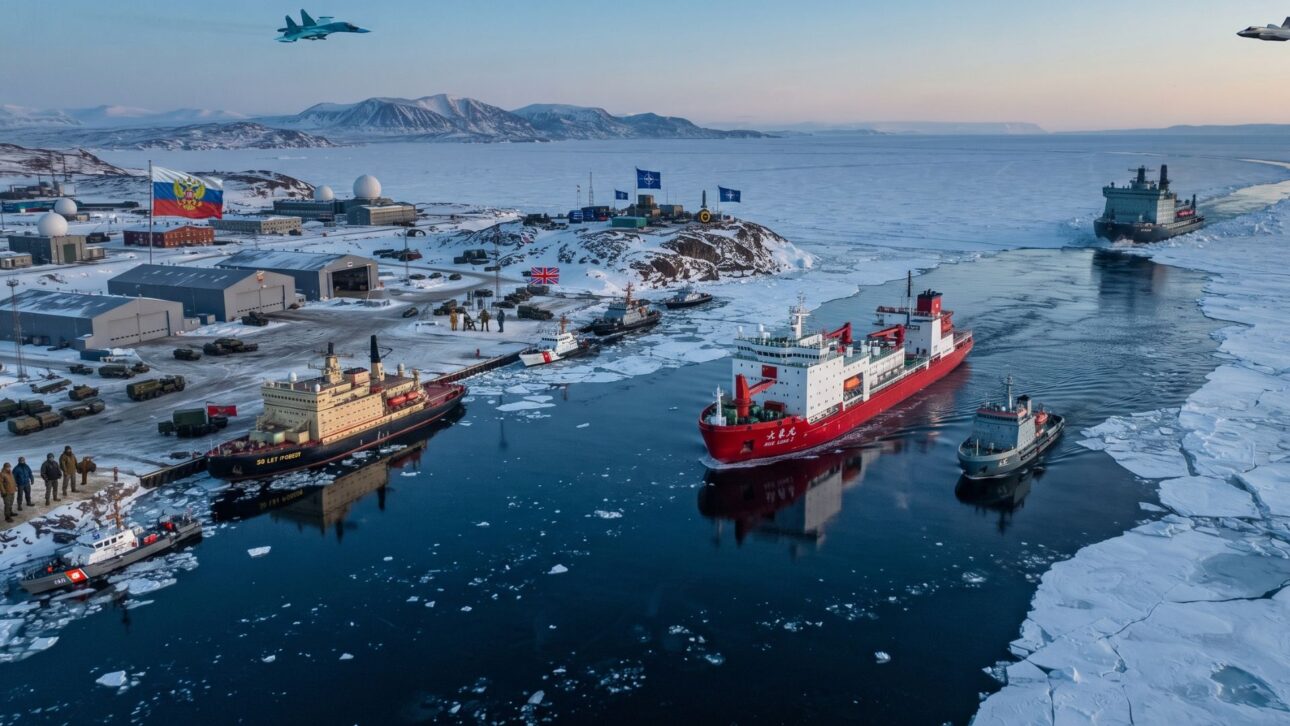
A large part of this structure is concentrated on the Kola Peninsula, considered one of Russia’s most important military areas for housing nuclear submarines and a significant portion of the country’s strategic capability.
NATO expands military presence after increased tensions
The strengthening of Russian military infrastructure has led NATO to expand its operations in the region. According to a report published by Reuters, the alliance launched the Arctic Sentry initiative in 2026, aimed at increasing surveillance operations, military exercises, and integration among member countries in the far north.
The agency reports that Norway, Finland, Sweden, Canada, and the United Kingdom have been increasing investments in patrolling, icebreakers, satellite monitoring, military infrastructure, and training for operations in polar environments.
Greenland gained strategic importance for the United States and allies
Besides maritime routes, Greenland has returned to the center of geopolitical discussions. Its position between the North Atlantic and the Arctic Ocean makes the island a strategic point for defense systems, space monitoring, and control of maritime routes.
The Atlantic Council emphasizes that Greenland’s location has become even more relevant in light of increased competition among major powers for presence in the Arctic.
The number of icebreakers has also become a strategic factor
Another important element in this dispute is the ability to operate in ice-covered regions. The lords library highlights that Russia currently has the largest icebreaker fleet in the world, including nuclear-powered vessels capable of keeping routes open for much of the year.

These ships are considered essential both for military operations and to ensure commercial navigation along the Arctic coast.
China expands presence even without having territory in the Arctic
Although it does not have territory in the region, China has also increased its interest in the Arctic. The country participates in scientific projects, invests in polar research, and advocates for the so-called Polar Silk Road, a strategy aimed at integrating future maritime routes into international trade.
According to the Atlantic Council, the Chinese presence has begun to be closely watched by Western governments, mainly due to the growth of Beijing’s influence in strategic infrastructure around the world.
Experts claim that the Arctic will be one of the main centers of geopolitics in the coming decades
Besides its military importance, the region concentrates interests related to maritime transport, international security, critical infrastructure, satellite monitoring, and scientific cooperation.
Reuters highlights that the strengthening of NATO operations demonstrates that the Arctic is no longer treated merely as a remote area and has become part of the strategic planning of the world’s main military alliances.
At the same time, studies by the Atlantic Council indicate that the combination of climate change, the opening of new navigation routes, and increased competition among major powers will keep the Arctic among the central themes of international geopolitics in the coming years.


