






 Portuguese
  Spanish
  5 min of reading
  0 comments


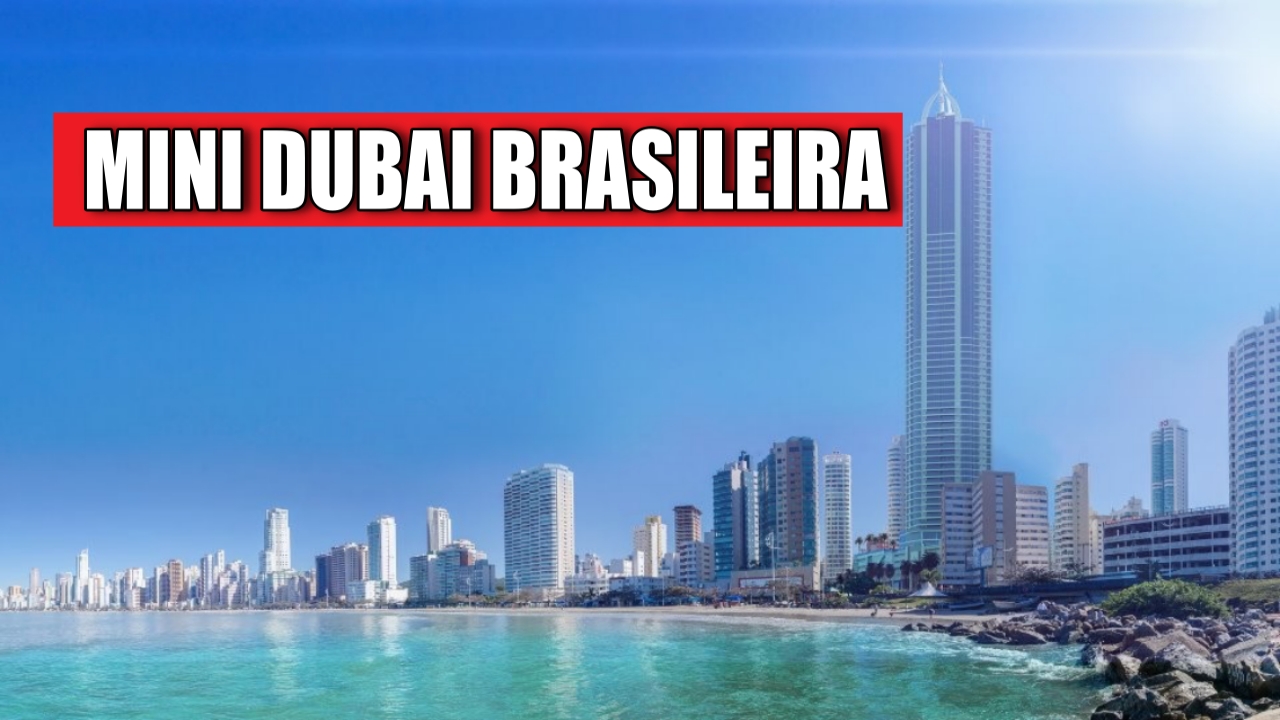
The Brazilian City That Decided to ‘Play Dubai’, Transformed the Coast and Reigns with Skyscrapers in South America
If someone told you that one of the most aggressive skylines in South America is not in Buenos Aires, Rio, or São Paulo, but in a coastal Brazilian city that until recently primarily relied on fishing, would you believe it?
Well, that is exactly what is happening. Balneário Camboriú, on the Santa Catarina coast, has become the site of an insane competition, a vertical battle that turned a quiet beach into the most extravagant showcase of luxury, height, and engineering in the region.
The more you understand what is happening there, the more it seems that the Brazilian city decided to play Dubai… only in a size that fits the Brazilian pocket.
-
Survivor of 1966 SS Daniel J. Morrell Shipwreck in Lake Huron Recounts 38-Hour Ordeal in Extreme Cold

-
The Greatest Hoax in World Cup History? The Film That Denied Brazil’s 1958 Victory and Exposed How Fake Evidence Can Seem Convincing on TV
-
Fake South Korean Online Stores Offer Shopping Thrill Without Spending Money or Receiving Products
-
The War of Jenkins’ Ear: How a Severed Ear Sparked One of the 18th Century’s Most Unusual Conflicts


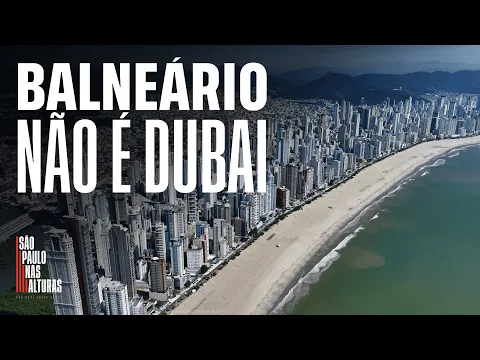

From Fishing Village to Radical Skyline
Until the 1970s, Camboriú was synonymous with wooden houses, sardine fishing, and a routine that seemed frozen in time. No skyscrapers, no congested traffic, no million-dollar vessels.
The turning point came in the 1990s when Fernando Henrique Cardoso’s government opened the economy, attracted foreign companies, boosted the middle class, and triggered a construction boom throughout the country.
Developers noticed a gap: while several coastal cities had strict height limits, Camboriú had virtually none.
The result? The market saw a limitless coastline in this incredible Brazilian city and jumped in headfirst.
Why Did Camboriú Become the ‘Capital of Skyscrapers’?
The explanation is almost unbelievable: the master plan from 1970 simply did not set a maximum height limit. In 1989, there were attempts to impose rules, but nothing that really curbed the appetite of construction companies.
The big push came in 2008, when the city hall created the possibility of selling building rights. In other words: if a company wanted to build something even taller, it just had to pay for it. And the taller the building, the more the city hall collected for public works.
Few places in the world do something similar. In Camboriú, this became fuel for a height race that never slowed down.
The Role of Those Who Call the Shots: The Graciola Family Controls About 80% of the Shoreline Land, Dominates Launches, Lights Up the Bay with Giant Logos
Behind the most radical changes is FG Empreendimentos. The Graciola family’s company controls about 80% of the shoreline land, dominates launches, lights up the bay with giant logos, and practically shapes the city’s outline.
Of course, the dominance provokes criticism. Long-time residents complain about real estate speculation; environmentalists warn about erosion and pollution; urban planners point out transportation flaws and risks of sanitation overload. Still, the pace doesn’t slow down.
The Skyscrapers That Revolutionized the Logic of the Brazilian Coast
The competition is so fierce that the list of iconic buildings seems like something out of a documentary about futuristic metropolises.
- One Tower – 290 m — was the tallest in Brazil in 2022.
- Yachthouse Twin Towers – 294 m — completed in 2023 and now at the national top
Source: Bruno Cassola - Boreal Tower – about 241 m — symbol of the new ultraluxury generation
Source: Myside - Senna Tower – the boldest project: projected height of 544 m, possibly reaching over 550 m, aiming for the title of world’s tallest residential building
Source: CNN Brasil
If anyone still has doubts, just look: Camboriú already hosts eight of the ten tallest towers in the country.
The Investment Game in This Incredible Brazilian City: Luxury for a Few, Impact for Many
The collateral effect of this vertical explosion is evident. The square meter reached R$ 14,500 in 2025, one of the highest in Brazil.
The new towers attract millionaires, investors, and celebrities, but at the same time push old residents away from the center. In the midst of all this, the city finds itself squeezed between giant buildings, increasingly pressured beaches, and traffic that has started to resemble major capitals — only concentrated in a few kilometers.
TV Brasil even debated the impact of this type of accelerated verticalization, highlighting urban and environmental risks.
There Are Those Who Love and Those Who Doubt This Model: Amid Doubts and Ambitions, the Dispute Continues
Despite the discussion about sustainability, infrastructure, and inequality, what is seen on the horizon is another wave of launches. The market sees the perfect combination: beach, glamour, rapid appreciation, and a municipal government favorable to expansion.
Other cities are trying to compete — São Paulo, for example, has started its own race — but still cannot match Camboriú’s extravagance.
In the end, Camboriú has become an urban laboratory where each new building tries to “outdo the previous one,” as if the entire coastline were living in a permanent competition.
Brazilian City Camboriú: Luxury Laboratory or Urban Time Bomb?
The logic of Camboriú is beginning to attract attention in other regions of the country. In Rio Grande do Sul, for instance, experts are discussing the possibility of some coastal municipalities adopting similar building rights models — although with stricter rules to avoid severe environmental impact.
There are no signs that a new “vertical race” will happen there, but urban planners and developers are closely watching the Santa Catarina experience to understand what works and what deserves caution.
Balneário Camboriú markets itself as a symbol of progress and architectural boldness, while critics see it as a portrait of inequality, environmental pressure, and an urban model disconnected from the reality of those who most need public policies.
Still, the city continues to grow upwards — and the world watches, curious, fascinated, and divided.
Now I want to know from you: Has Camboriú become an example of innovation or an amusement park for millionaires? Leave your comment below or share this article with someone who would love to debate this urban phenomenon.





-

-

-

-

7 people reacted to this.