Portuguese
  Spanish


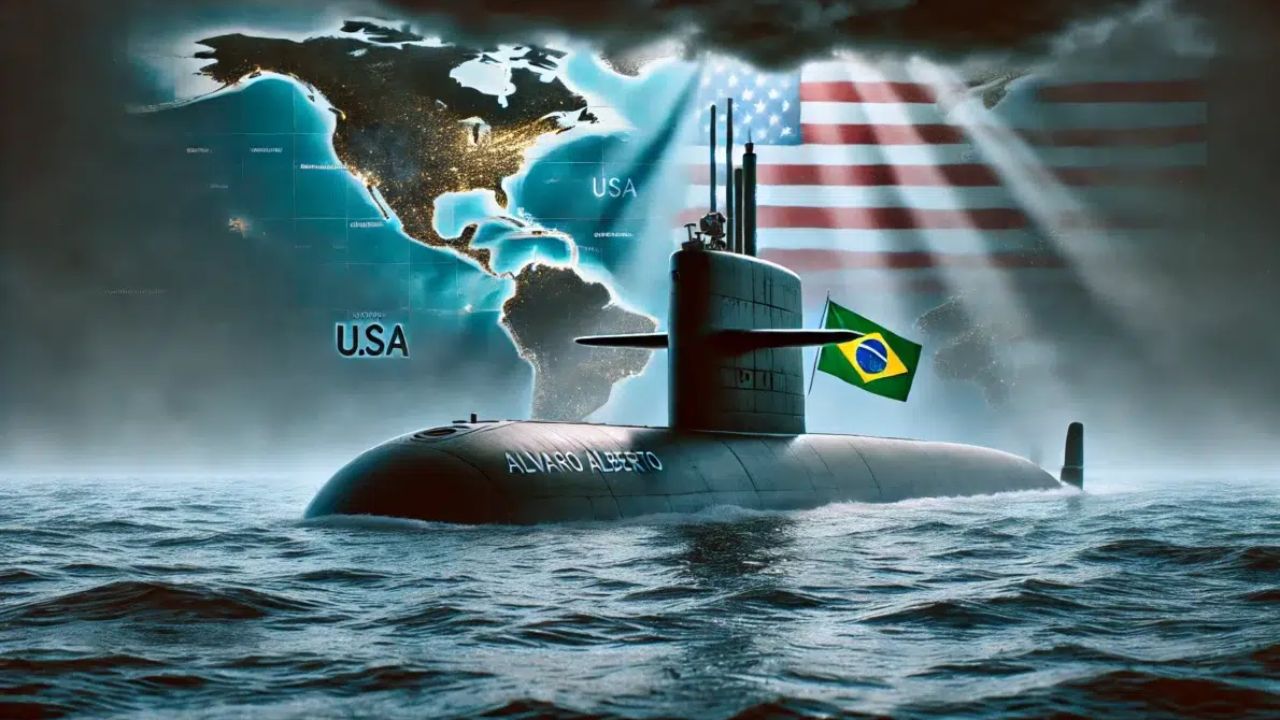


Article Published by Georgetown University, Located in the United States, Suggested That the Brazilian Project May Be a Front for Nuclear Weapon Development
Georgetown University, located in the United States, has recently become the center of a controversy related to the development of the Brazilian nuclear submarine. An article published on the institution’s website suggested that the Brazilian project may be a front for nuclear weapon development.
In this article, we will explore this controversy, examine the arguments presented, and discuss the implications of this development for Brazil and the international community.
Georgetown University Article Suggests That Brazil Has Hidden Intentions Behind Its Nuclear Submarine Project
The Georgetown University article raises questions about the development of the Brazilian nuclear submarine, Álvaro Alberto. It mentions the cutting of steel conducted by the Brazilian Navy, marking the beginning of the submarine’s construction, and highlights that this event went unnoticed by the international community. The article also compares the Brazilian project to Australia’s efforts in a similar project, suggesting that Brazil may be seeking nuclear capabilities beyond civilian purposes.
-
U.S. Establishes Permanent Embassy in Jerusalem, Reigniting International Debate Over Israel’s Capital

-
The world has nearly 12,000 nuclear warheads, with the majority held by the United States and Russia; see the figures for China, France, and the United Kingdom.

-
Venezuela Faces UN Alert for Hunger, Disease, and Service Collapse After Earthquakes Cause Nearly 2,000 Deaths and $6.7 Billion in Damages

-
Brazil Deploys Navy Field Hospital with ICU, Orthopedics, Pediatrics to Earthquake-Stricken Area in Venezuela, Offering 30 Beds and 150 Daily Consultations


But the most controversial sentence in the article indicates that Brazil has hidden intentions behind its nuclear submarine project, opening the door to numerous theories, such as the intention to manufacture nuclear bombs.
“The considerable cost of building Álvaro Alberto seems unjustified. This may indicate a hidden motive reflecting Brazil’s persistent ambitions in foreign policy and the nature of its civil-military affairs.”
The Arguments Presented
One of the main concerns raised by the article is that Brazil possesses an autonomous domestic nuclear fuel cycle, which places it in a unique position compared to other countries seeking nuclear capabilities. This raises questions about Brazil’s true intentions with the development of the nuclear submarine, especially considering its history during the military regime.
The article also highlights concerns about the power Brazil may acquire with the submarine, mentioning that this could lead to a power imbalance in South America. The change of presidency in Brazil does not seem to have affected the project, suggesting that the program has become a matter of state and not just of government.
Implications and Concerns from the United States
According to the university’s publication, the article raises several concerns for both Brazil and the international community. If Brazil is indeed seeking military nuclear capabilities under the guise of a civilian nuclear submarine, this could destabilize the region and heighten international tensions. For them, the lack of transparency surrounding the Brazilian program raises concerns about nuclear security and the proliferation of nuclear weapons.
The development of the Brazilian nuclear submarine is a complex issue involving national security, geopolitics, and nuclear proliferation concerns. It is crucial for the international community, particularly the International Atomic Energy Agency, to increase its attention to ensure that Brazil fulfills its obligations under the Nuclear Non-Proliferation Treaty and that the Brazilian program is transparent and peaceful in nature.
Source: Read the Original Article from Georgetown University HERE