Portuguese
  Spanish


AeroVironment’s 20 kW System Passes Joint Test with FAA and JIATF 401 on May 6, 2026
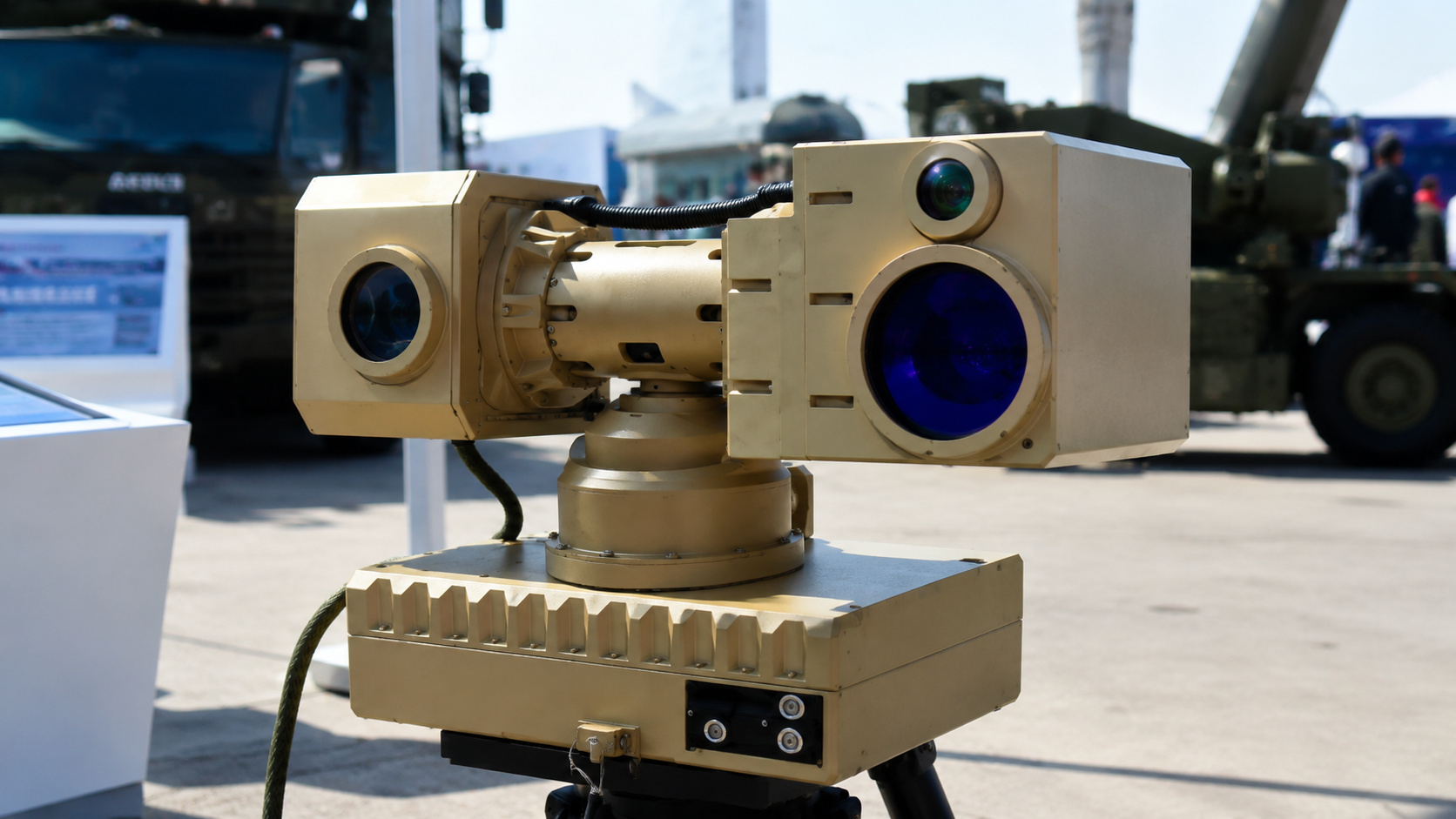
AeroVironment has passed the FAA test for the first time with its LOCUST laser anti-drone 20 kW system. The test took place on May 6, 2026, in White Sands, New Mexico.
According to Task & Purpose, the LOCUST managed to take down multiple drones without affecting civilian aircraft navigation in the area.
This certification is historic for the sector. As reported by DefenseScoop, it allows the LOCUST to operate in military bases near commercial airports.
-
China Unveils Laser Weapon Capable of Instantly Neutralizing Military Drones, Marking a Significant Advancement in Air Defense Technology

-
European Parliament Approves Digital Euro, Aiming to Challenge Visa and Mastercard’s Dominance and Transform Payments Across Europe by 2029
-
U.S. Navy’s Ticonderoga-class Cruiser Becomes a 9,800-Ton Missile Fortress with Advanced Aegis System Capable of Tracking Hundreds of Targets

-
France’s Charles de Gaulle: The Sole Nuclear-Powered Aircraft Carrier Outside the US, Weighing 42,500 Tons and Equipped with Two Atomic Reactors




Therefore, the system is authorized for use on the southern US border. According to the FAA, there is a formal agreement between the air agency and the Department of War.
In parallel, the Pentagon selected 5 military bases to receive the LOCUST. According to Defense News, Fort Bliss is one of the selected bases.
Indeed, the LOCUST enters real operation in 2026. After years as a prototype, it will finally shoot down drones in an operational environment.

What is the LOCUST laser anti-drone
The LOCUST laser anti-drone is a directed energy weapon system. It has 20 kW of power and uses a laser beam to damage drones in flight.
According to the official datasheet from BlueHalo, a project partner, the system has an effective range of up to 5 km.
Therefore, it is effective against small commercial and military drones. Types like the Iranian Shahed-136 (used by Russia in Ukraine) and DJI Mavic.
In parallel, the cost per shot is extremely low. About 1 dollar per engagement, compared to 100,000 dollars for a Stinger missile.
According to CBS News, this radically lower cost changes the economic equation of modern air defense.
Indeed, cheap drones forced the development of this counter-weapon. Otherwise, any mass attack quickly drains the stock of defensive missiles.

How the White Sands Test Worked
The LOCUST laser anti-drone test involved “stationary” and “airborne” scenarios. According to Army Recognition, both static and flying drones were targeted.
Therefore, the test covered multiple operational situations. Automatic shut-off demonstrations were also evaluated.
In parallel, positive identification criteria were crucial. The LOCUST needs to confirm that the target is hostile before firing.
According to the Las Vegas Sun, “the demonstration at White Sands was a historic milestone” (Las Vegas Sun). It was the first time this level of testing was conducted in shared civilian airspace.
Thus, FAA approval was critical. Other similar systems were barred in tests in civilian environments.
Indeed, the LOCUST now advances to real operation. American airspaces will now have laser-defense coverage against drones.

The 5 Bases to Receive LOCUST in the Pilot Program
The Pentagon selected 5 bases to receive the LOCUST laser anti-drone in the pilot program. Fort Bliss in Texas is one of them.
According to KVIA, the choice of Fort Bliss reflects the importance of the southern border. The region frequently records drone invasions.
Therefore, the LOCUST becomes the first line of anti-drone defense. It replaces systems based on missiles or electronic jamming.
In parallel, AeroVironment launched the LOCUST X3 version in March 2026. According to Breaking Defense, the new version has integrated AI for automatic identification.
Indeed, AI accelerates the decision cycle. Instead of a human operator confirming the target, the system validates in milliseconds.
According to analysis by Warrior Maven, the US Army accelerated the adoption schedule. The operational demand on the border is a political priority.
- System: AeroVironment LOCUST laser anti-drone (standard and X3 version)
- Power: 20 kW
- Effective range: up to 5 km
- Cost per shot: ~1 dollar
- FAA Test: May 6, 2026, White Sands
- Selected Bases: 5 (including Fort Bliss, Texas)
- Previous Operation: USS George H.W. Bush, October 2025
Global Impact and Adoption of LOCUST by Other Countries
The LOCUST laser anti-drone is not restricted to the US. Other nations are already showing interest in the technology.
According to the British Calibre Defence, the UK is evaluating the LOCUST X3 for royal base defense.
Therefore, the technology becomes a NATO pillar. The war in Ukraine showed how cheap drones can saturate traditional air defenses.
In parallel, Russia is developing similar systems. As reported by Raytheon, the laser-defense ecosystem grew 300% in 2025.
Indeed, Israel has been operating Iron Beam lasers in Gaza since 2024. The LOCUST is the American version adapted for shared civilian environments.
Thus, the air defense sector undergoes a structural change. Lasers will partially replace missile-based systems in the coming decades.

Implications for Critical Infrastructure and Oil
The LOCUST laser anti-drone has direct application in protecting energy infrastructure. Refineries, pipelines, and offshore platforms are potential targets.
Therefore, operators like Petrobras, Aramco, and Shell are monitoring the technology. According to analysis by Mugin UAV, drones are already used in attacks against refineries in the Middle East.
In parallel, Petrobras has already joined a global incident forum. The issue of hostile drones is on the formal agenda.
Indeed, Brazilian refineries and ports may adopt similar systems in the future. The cost of 1 dollar per shot makes anti-drone defense economically viable for the private sector.
According to analysis by PwC Brazil, the Brazilian energy sector is increasingly investing in critical security.
For more about the modern military sector, it’s worth reading the Click Petróleo e Gás coverage on advanced military technologies.
For another case of industrial technology, check out Click Petróleo e Gás coverage on industrial innovations.
It is worth noting that the LOCUST has limitations. It works in clear visibility conditions — heavy rain or fog dramatically reduce the range.
Despite this, the sector consolidates the transition. By 2030, laser-defense systems are expected to protect the majority of American military bases and critical facilities.