





 Portuguese
  English
  Spanish
  4 min of reading
  1 comment


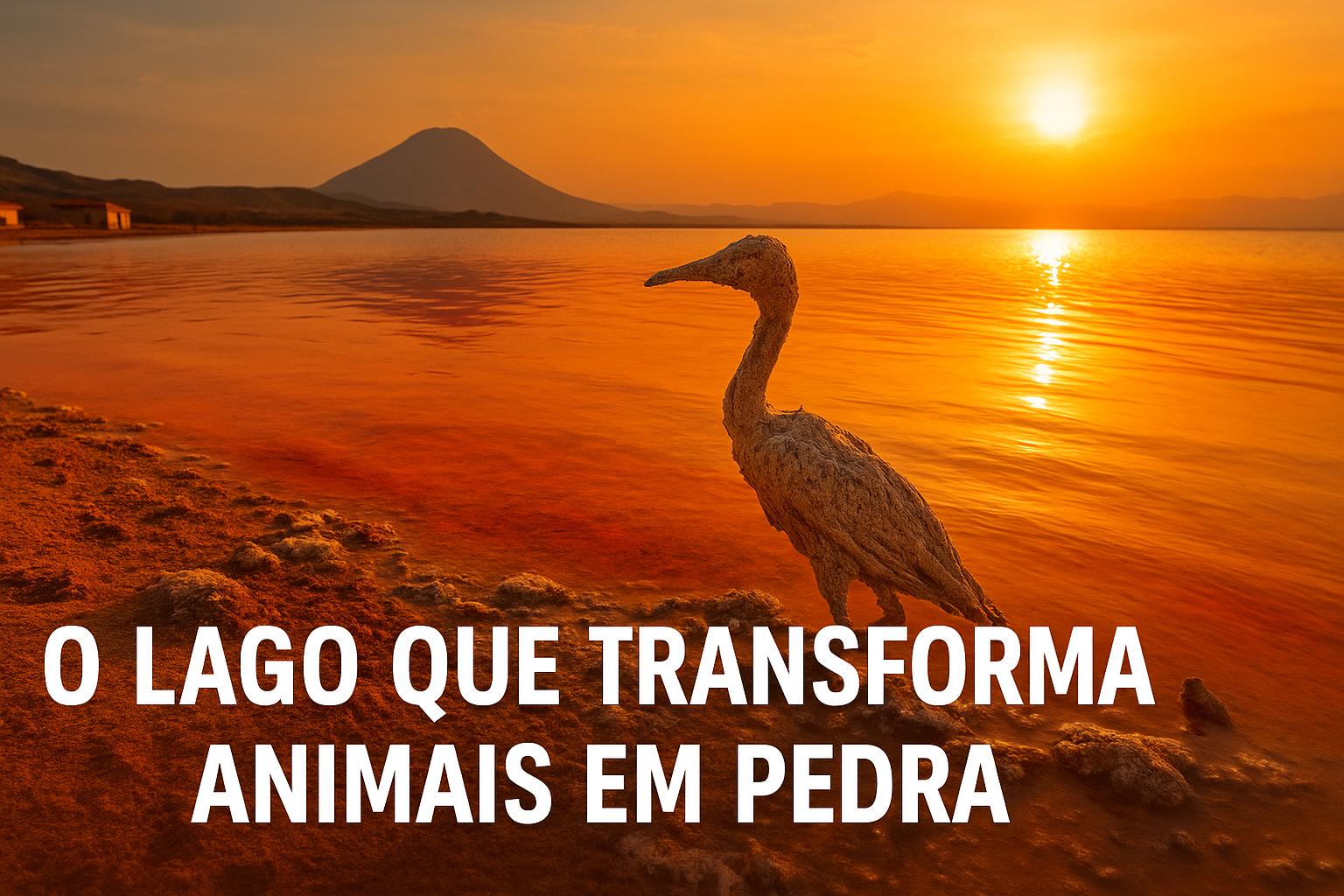

At 60 °C and pH Above 10, Lake Natron in Africa Can Calcify Animals and Preserve Their Bodies Like Stone. One of the Most Extreme Environments on Earth.
Hidden in northern Tanzania, near the border with Kenya, Lake Natron is one of the most beautiful and deadly places on the planet. From a distance, its reddish, reflective waters appear as a tranquil mirror under the African sun. But this surreal scenery hides a lethal chemistry: the lake reaches temperatures close to 60 °C, has a pH above 10, and concentrates extreme levels of mineral salts that can calcify entire animals in just a few minutes, creating natural sculptures that look like they are made of stone.
Lake Natron: The Most Alkaline Environment on Earth
Lake Natron is one of the most alkaline bodies of water in the world. Its composition consists of sodium carbonate, natron, and volcanic salts from the neighboring Ol Doinyo Lengai volcano, considered sacred by the Maasai people.
During the dry season, intense evaporation causes the shores to be covered in crystalline crusts, and the water takes on shades of red, pink, and orange, giving it an almost extraterrestrial appearance.
-
NASA has just tested a “giant” the size of a car that could change everything in the lunar race: a fuel cell that turns water into energy and then recharges itself, without any refueling from Earth. See how it works.

-
Researchers from the National Institute of Anthropology of Mexico mapped an entire site called El Jefeciño along the route of the Maya Train, with 80 stone buildings, a C-shaped plaza, and 250 acres inhabited between 250 and 900 A.D.

-
While SpaceX and Boeing compete for billion-dollar NASA contracts, Turkey has begun constructing a spaceport in Somalia to launch rockets near the equator and transform the Horn of Africa’s coastline into a strategic shortcut to reach space by 2028.
-
Archaeologists find a vase hidden for 1,200 years on a pilgrimage route with more than 100 jewels of gold, silver, and precious stones.




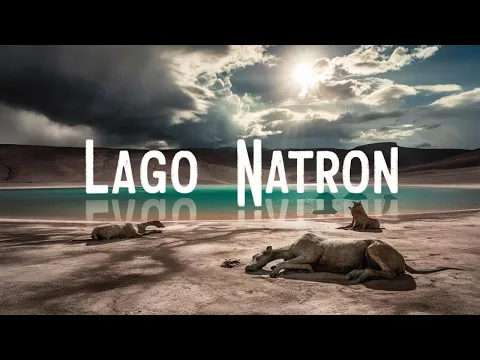

These extreme chemical conditions make it difficult for most organisms to survive there. The waters are lethal to most species, but the lake still hosts microscopic life forms and lesser flamingo colonies, which use the crystalized shores as a safe refuge for breeding.
When Beauty Turns into Danger
The nickname “stone-transforming lake” emerged after photographs by British Nick Brandt, published in 2013. He found dead birds and bats on the shores of the lake and noticed that their bodies had been covered in mineral salts, resulting in a natural calcification.
This process does not happen instantly, but it occurs rapidly due to the heat and high alkalinity of the water.
The result is a disturbing and hypnotizing landscape: animals preserved like statues in a setting that blends life and death. For scientists, the phenomenon is an extreme example of how nature can create beauty through destruction.
Life That Resists Death
Even in conditions that verge on the impossible, Lake Natron harbors life. The lesser flamingo (Phoeniconaias minor) is the greatest symbol of this resilience. Every year, thousands of birds migrate to the lake and build their nests on the saline crusts, protected from predators.
Studies conducted by National Geographic and NASA Earth Observatory show that Lake Natron is the only regular breeding site for the lesser flamingo in East Africa. Without this toxic environment, the species could disappear.
Natural Laboratory and Window to Other Worlds
Besides being an environmental phenomenon, Lake Natron is also a natural laboratory for research on life in extreme conditions. NASA uses the site as a reference to study environments similar to those on Mars and the moons of Jupiter and Saturn, where it is believed there may be subterranean water.
Scientists analyze microorganisms known as extremophiles, capable of surviving in alkaline, toxic, and hot environments. The discovery of these beings paves the way to understanding how life could exist beyond Earth — and how it could withstand future climate disasters right here.
Beauty That Demands Protection
Lake Natron, despite its apparent hostility, is a delicate ecosystem. The United Nations Environment Program (UNEP) warns that climate change and unchecked exploitation threaten its chemical balance and reduce the breeding area for flamingos.
In recent years, tourism and sodium carbonate mining projects have been suspended due to environmental risks.
Tanzania and international organizations keep the lake under constant surveillance, considering it a natural and scientific heritage of humanity.
Lake Natron reflects how nature can be simultaneously beautiful, deadly, and essential. Its scarlet waters and saline crusts display the limits of survival — a place where life exists only because death is a constant.
The stone-transforming lake is not a metaphor: it is a physical reminder that, in certain places, Earth creates art from destruction.


Great article! I really appreciate the clear insights you shared – it shows true expertise. As someone working in this field, I see the importance of strong web presence every day. That’s exactly what I do at https://webdesignfreelancerhamburg.de/ where I help businesses in Hamburg with modern, conversion-focused web design. Thanks for the valuable content!