






 Portuguese
  Spanish
  5 min of reading
  0 comments


Brazil rises to an unprecedented level on the global stage, capturing an impressive 10.9% of all Chinese investment outside China between 2025 and 2026. This volume, totaling US$ 6.1 billion in 52 confirmed projects, solidifies the country as the number one destination for Beijing, boosting everything from strategic mining to crucial logistics infrastructure.
Brazil’s rise as the main hub of Chinese capital is not mere chance, but rather the result of a convergence of strategic interests and a growing demand for commodities and infrastructure globally.
Data from a joint survey by the CEBC (Brazil-China Business Council) and the consultancy BCG reveal the magnitude and speed of this change in the flow of foreign direct investments.
The country stood out remarkably, concentrating a significant share of 10.9% of the total Chinese investments made outside its borders in the biennium 2025-2026, an unprecedented achievement.
-
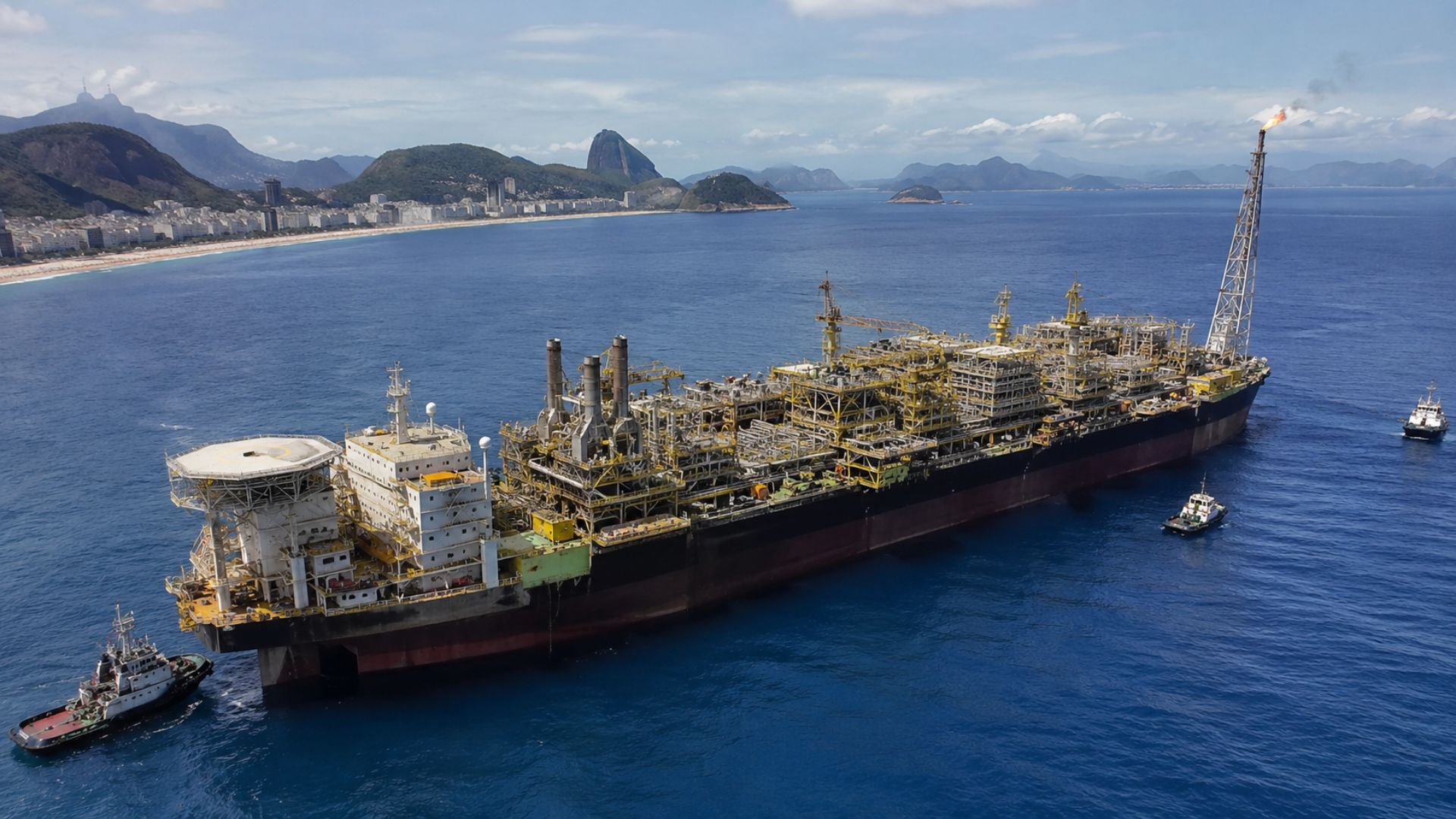
FIRJAN’s mega plan of R$ 526.3 billion for Rio de Janeiro aims to revive Brazil’s largest industry, with two-thirds of the investments going to oil and gas.

-
China signals an increase in beef imports, Brazil has already consumed 70% of the 1.106 million ton quota and seeks to renegotiate the tariff that jumps from 12% to 55%, while demand from the US also skyrockets.
-
Food inflation rose 302% in 20 years in Brazil, but the supermarket changed: purchasing power yielded 87% more mortadella and 31% less fruit, and ultra-processed foods took over the cart.
-
Petrobras sells the first batch of 3,800 m³ of aviation fuel made with certified soy, capable of reducing emissions by up to 70%, in an unprecedented project that anticipates the aviation sector’s requirements expected for 2027.


This volume translates into a concrete US$ 6.1 billion allocated in 52 confirmed projects, spread across various Brazilian regions and covering vital sectors of the national economy.
Beijing’s move towards Brazil reflects a global strategy of diversification and supply security, especially in critical raw materials for its continuous industrial development.
This Chinese approach aims to ensure access to essential resources, minimizing geopolitical risks and strengthening its value chains in an increasingly competitive global scenario.
For Brazil, the arrival of this foreign capital promises a significant boost in job creation, technology transfer, and modernization of essential sectors long lacking investment.
However, this robust partnership also raises profound questions about potential economic dependence and foreign control over assets and logistics corridors of national importance.
The Chinese Investment Strategy in Brazil: Focus on Mining and Logistics
The 52 confirmed projects demonstrate a clear prioritization in sectors that are bottlenecks or sources of strategic resources for both Brazil’s development and China’s economy.
In the mining sector, investments focus on high-value resources such as lithium, essential for electric vehicle batteries and next-generation electronics.
Besides lithium, rare earths are also of great interest, being vital components for the high-tech industry, from smartphones to advanced defense equipment.
This gives Brazil an increasingly crucial role in the global supply chain of strategic minerals, altering relevant commercial and geopolitical dynamics.
Logistics infrastructure also figures as an indisputable priority, with capital injection in railways that promise to connect important production regions to export ports.
Projects like the railway linking Pará to Rio Grande do Sul and initiatives in Pernambuco aim to optimize the transportation of grains, minerals, and other agricultural and industrial products more efficiently.
In ports, Chinese capital is present in strategic terminals such as TCP Paranaguá in Paraná and the Port of Itapoá in Santa Catarina, both crucial for the outflow of national production.
Additionally, the renewable energy sector receives attention, with emphasis on the construction of wind farms in Bahia, aligning with the global energy transition and sustainability goals.
These investments are not just financial but bring with them advanced technical expertise and technologies that can significantly accelerate the development of complex projects in the country.
The Delicate Balance: Economic Development versus Strategic Sovereignty
Brazil’s position as the number one destination for Chinese capital places the country in a prominent global position, surpassing other nations that traditionally attracted substantial volumes.
Historically, African and Asian countries fiercely competed for this position, but the recent Brazilian concentration of 10.9% drastically reconfigures the global map of Beijing’s investments.
This scenario is a direct reflection of China’s quest for food and energy security, as well as guaranteed access to essential raw materials for its robust and growing industrial base.
On one hand, the investment of US$ 6.1 billion in 52 projects means the creation of thousands of new direct and indirect jobs, as well as the modernization of infrastructures that would be difficult to finance internally.
The construction of railways and the expansion of ports, for example, not only reduce logistical costs but also increase the competitiveness of Brazilian products in the international market.
On the other hand, the growing foreign participation in strategic corridors and the extraction of crucial minerals raises legitimate concerns about the country’s autonomy and national security.
The eventual dependence on a single major investor for the financing and operation of key infrastructures may limit Brazil’s future options in commercial and geopolitical matters.
The experience of other countries that received large volumes of foreign investment, especially in infrastructure sectors, serves as a warning for the need for safeguards and balanced agreements.
It is essential that Brazil develops robust governance and regulatory mechanisms to ensure that these foreign investments serve the nation’s long-term interests.
The Future of Chinese Investment in Brazil: Challenges and Opportunities
The dynamics of Chinese investment in Brazil mirror the complex global economic relations, where the urgent need for capital meets the quest for influence and strategic resources.
For the team at Click Petróleo e Gás, a detailed analysis of these capital flows is essential to understand the structural transformations the country is experiencing and the future implications.
We observe an unprecedented acceleration, where Brazil positions itself as a central player in the supply and logistics strategy of the world’s second-largest economy, China.
I confess that the scale of these projects and the volume of capital involved make me reflect deeply on the future of our infrastructure and our productive capacity.
I imagine the long-term impact of this concentration of capital and technology in vital sectors, and how it will shape our economy, our society, and our position on the international stage.
It is a complex global chess game, where each investment move, each infrastructure project, has reverberations that go far beyond mere immediate financial calculation.
How can Brazil balance attracting foreign capital with preserving its economic and logistical sovereignty?







Be the first to react!