Portuguese
  Spanish


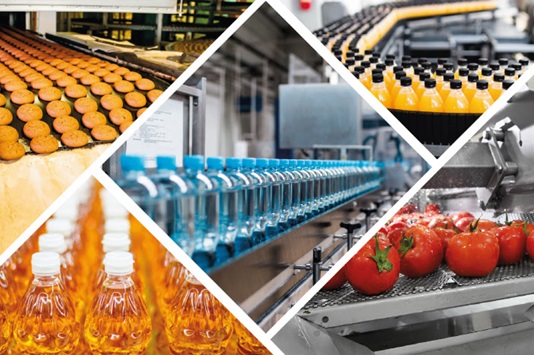

During The COVID-19 Pandemic, Large Multinationals In The Food And Beverage Sector Were Able To Quickly Adapt Their Manufacturing Environments To Deliver New Products
Safety is a central issue for any sector, but in few is it as crucial as in the food and beverage industry, since consumers only adopt a new brand or variety when they feel completely safe to consume it. And amidst the rising demand in Brazil, whether for new products or larger quantities, this issue cannot be overlooked.
According to the Brazilian Food Industry Association (Abia), the sector recorded a nearly 1% increase in revenue and 2.7% in production volume in the first half of 2020, compared to the same period last year. This is an industry responsible for 20% of jobs in the national manufacturing sector, which means a significant impact on the country’s economy.
To gain a competitive advantage in this market, companies need to strive to meet legal and sanitary standards – and invest in technology to enhance their productivity and maintain quality and safety standards.
-
28-meter, 156-ton titans traveled 20,000 km from China to the port of Santa Catarina: Portonave received 7 fully electric megacranes, part of a R$ 210 million package, to double container handling.

-
They exchanged the idea of a large house for a 35 m² warehouse, spent US$ 12,000 on the structure, and created a tiny house in Colorado with space to live and work.

-
A newly opened terminal in the middle of the Amazon has begun transporting soy and corn through Amapá, eyeing the queue of ships that is congesting the ports in the South.

-
Goodbye to old tiles: renovation technique without construction transforms bathrooms in a few hours, eliminates debris, and reduces costs with coverings using special paints, high-resistance adhesives, and modern finishes that completely renew the space.


When compared to the automotive industry, it is common to see the launch of a new car followed by a recall shortly after. This happens because there are changes happening all the time – but also because there were issues that need to be corrected. In the food industry, a quality issue has much greater repercussions and does not allow for recalls.
In addition to complete safety and zero contamination, there is a pursuit of innovation to allow for increased productivity and thus meet society’s growing demand with quality, within all regulatory and legislative requirements.
It is true that robots are increasingly being used in modern manufacturing lines that do not require tracks to move. Integrated vision systems – with cameras, lighting, filters, and software, which constantly compare the product to its standards – enable the detection of any particles in a liquid medium, for instance.
In the context of Industry 4.0, all of this is standard procedure. But how can we connect all this equipment economically while ensuring product traceability? An innovative solution in the market to promote total control and keep all components of a production line operational is the Conexo System, based on radiofrequency (RFID). The product emerged after extensive research aimed at managing validation and maintenance in sensitive industries like pharmaceuticals and food, but it can also be used in heavy industries such as steelmaking, fertilizer manufacturing, automotive parts, energy systems, among others.
Through a reading “pen,” chips to be attached to equipment, and a license to use the cloud-based management software, the system allows controlling preventive maintenance processes, which is possible due to the installation of chips in different parts of the valves (body, sealing diaphragm, and actuator) that contain all the information about the equipment.
The time spent on documentation drastically decreases, allowing for both legal and technical traceability, as well as the quick identification of plant equipment. The information is stored in the cloud with security protocols, containing the entire maintenance history and documentation of the product, as well as its licenses.
In addition to the use of robots and equipment control via radiofrequency, there are expansions in other areas of Industry 4.0 as well: such as e-commerce and sales through social media, which enhance post-sale opportunities. This trend will continue to strengthen, with its adoption by large companies.
During the COVID-19 pandemic, we saw that large multinationals in the food and beverage sector were able to quickly adapt their manufacturing environments to deliver new products, but none of this would be possible without investments in connected equipment and control systems.
*Péricles Costa is an engineer at GEMÜ Valves and Measurement and Control Systems for the pharmaceutical, food, and biotechnology sectors.
About GEMÜ – The subsidiary of the German multinational founded by Fritz Müller in the 1960s provides the Brazilian market with highly efficient and quality valves. The plant located in São José dos Pinhais (PR), which has 100 employees and will celebrate its 40th anniversary in 2021, produces valves and accessories for water and effluent treatment in industries across all sectors, such as steelmaking, fertilizers, and the automotive sector, as well as for integrating energy generation systems. In the area of PFB (pharmaceuticals, food, and biotechnology), GEMÜ is a world leader and sells high-precision products throughout Latin America, with local service, as well as consulting from professionals capable of advising on the best valve solutions for each application. More information: https://www.gemu-group.com/pt_BR/