





 Portuguese
  English
  Spanish
  3 min of reading
  3 comments


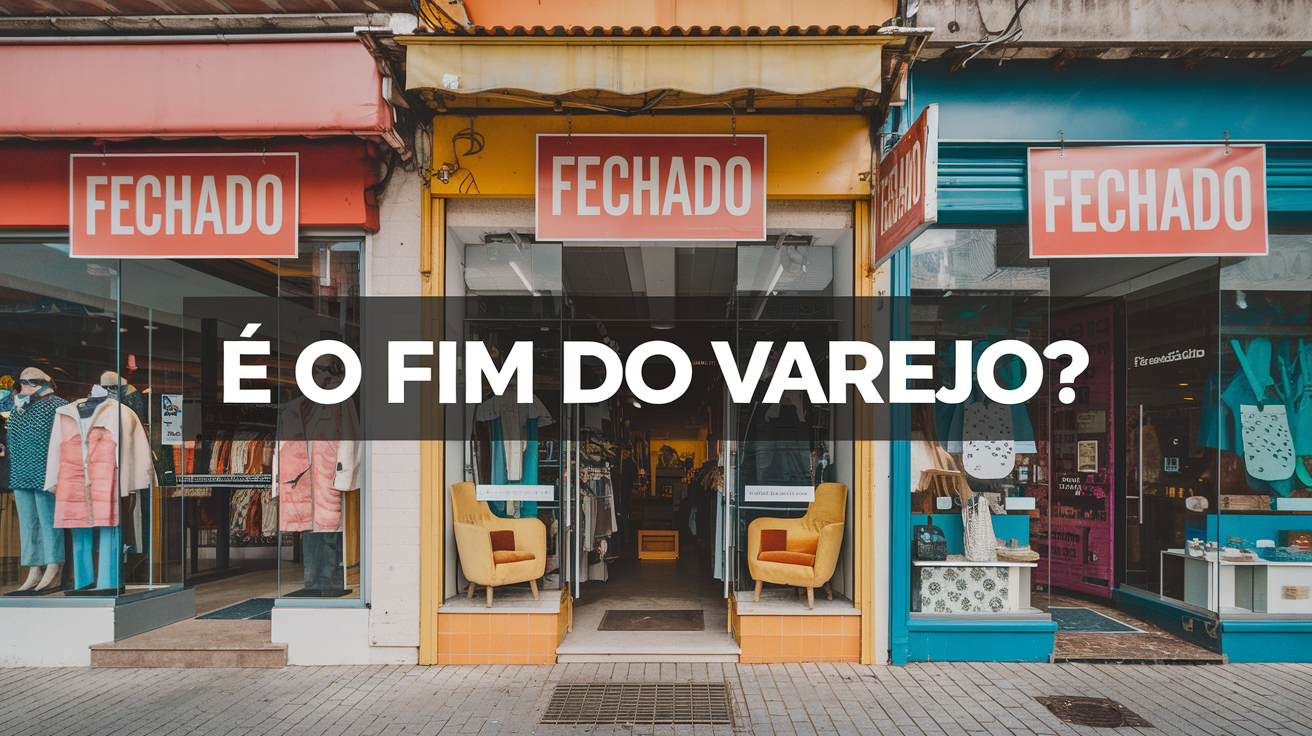

With a Retraction of 2.4% in September 2024, the Retail Sector Raises an Alert for the Economy. Understand Why This Drop is Worrying and How It Can Affect Your Pocket.
September 2024 brought a shock to the Brazilian retail sector: a decline of 2.4% in sales compared to the previous month. This is the largest retraction of the sector this year, raising a red alert for the entire economy. But why is retail so important? And are we seeing the beginning of the end for traditional retail in Brazil? Let’s explore these questions and understand how this crisis can impact our pockets.
What is the Role of Retail in the Brazilian Economy?
Retail is one of the pillars of the Brazilian economy. It not only generates billions of reais in sales but is also responsible for employing millions of people. More than that, the sector acts as a crucial bridge between industrial production and the final consumer. When retail struggles, the effects ripple through the entire production chain.
This recent decline of 2.4% in sales, according to the Stone Index, is not just a cold number. It reflects consumer behavior and the difficulties many families are facing. With less money in their pockets, people buy less, directly affecting retail revenue and, consequently, other sectors like industry and services.
-
A Brazilian would need almost five minimum wages combined to support a family with dignity, according to the calculation by Dieese, which indicates R$ 7,612.49 as necessary for a family of four, while the official minimum wage does not exceed R$ 1,621.

-
Inspectors seize 43,000 tons of soybeans valued at R$ 86.1 million in Pará and impose R$ 30 million in taxes and fines.

-
SC invests R$ 300,000 in a new Samu base in São José, targeting 1.1 million people in Greater Florianópolis and promises to reduce emergency travel with a structure that will receive R$ 4.4 million per year to save lives.

-
Renewing a driver’s license may trigger an alert at the INSS, but it does not automatically cut benefits; understand when the license can lead to a review for those receiving disability benefits.


End of Traditional Retail? A Worrying Scenario
There are those who question whether we are heading towards the end of traditional retail. The truth is that the sector faces a perfect storm: high inflation, high-interest rates, and a worrying level of household debt. Just in September, more than 67 million Brazilians were in debt, according to the National Confederation of Shopkeepers (CNDL) and SPC Brasil.
This scenario reduces people’s purchasing power and makes them prioritize essential spending, such as food and basic bills, neglecting other items that used to drive retail, such as clothing, appliances, and furniture. And the result? Fuller shelves and less busy cash registers.


Who is Feeling the Crisis?
Some retail segments are suffering more than others. In September, the furniture and appliance sectors, clothing, and footwear recorded declines of over 3%. These numbers reflect a change in consumer behavior, which is more cautious and focused on reducing spending.
Another point that deserves attention is the slowdown in consumption even during promotions and sales, which used to be a tactic to reverse crisis scenarios. It seems that even discounts are not managing to draw consumers back to stores.
What is Behind the Situation?
Two main factors help explain this complicated moment for retail: high household debt and elevated living costs. When basic bills, such as energy, water, and rent, consume an increasingly larger portion of the budget, little or nothing is left for retail consumption.
Another villain is the credit card, which has become a snowball effect for many people. The rise in delinquency is directly linked to excessive credit use, which, combined with high-interest rates, causes debts to grow rapidly. This ends up pushing more Brazilians to SPC and Serasa, further limiting consumption.
Inflation has also been a thorn in the side. Although the IPCA indicates an annual inflation of about 5%, many consumers feel that prices are rising much faster. Food, energy, and fuels are examples of items that practically weigh more and more on the budget.
Is There Hope for Retail?
Despite the challenging scenario, Brazilian retail has overcome crises in the past. The difference now is that recovery depends not only on economic measures but also on structural changes. Reducing interest rates, controlling inflation, and promoting conscious consumption are fundamental steps.
Another important point is the adaptation of retail to new consumption realities. Physical stores need to offer differentiated experiences to attract customers, while e-commerce remains a viable alternative to navigate the crisis. The question is: will traditional retail manage to reinvent itself before it is too late?





Acredito sim que crise contribua muito, mas vejo também a questão do ecomerce dominando as compras. A pandemia trouxe para as compras online um grande número de consumidores que antes não davam atenção ou tinham medo desse tipo de compra. Eu mesmo fabrico acessórios e estamos fechando o negócio apartir de janeiro. Se esse governo das taxas não tomar uma atitude muitas empresas principalmente pequenas sumirão do mercado
Com novos impostos, ajustes fiscais só nas costas do povo e uma inflação oficial que mascara os aumentos semanais absurdos nos itens de alimentação à população só resta ficar insegura e gastar no básico.
No mínimo necessario