






 Portuguese
  Spanish
  4 min of reading
  1 comment


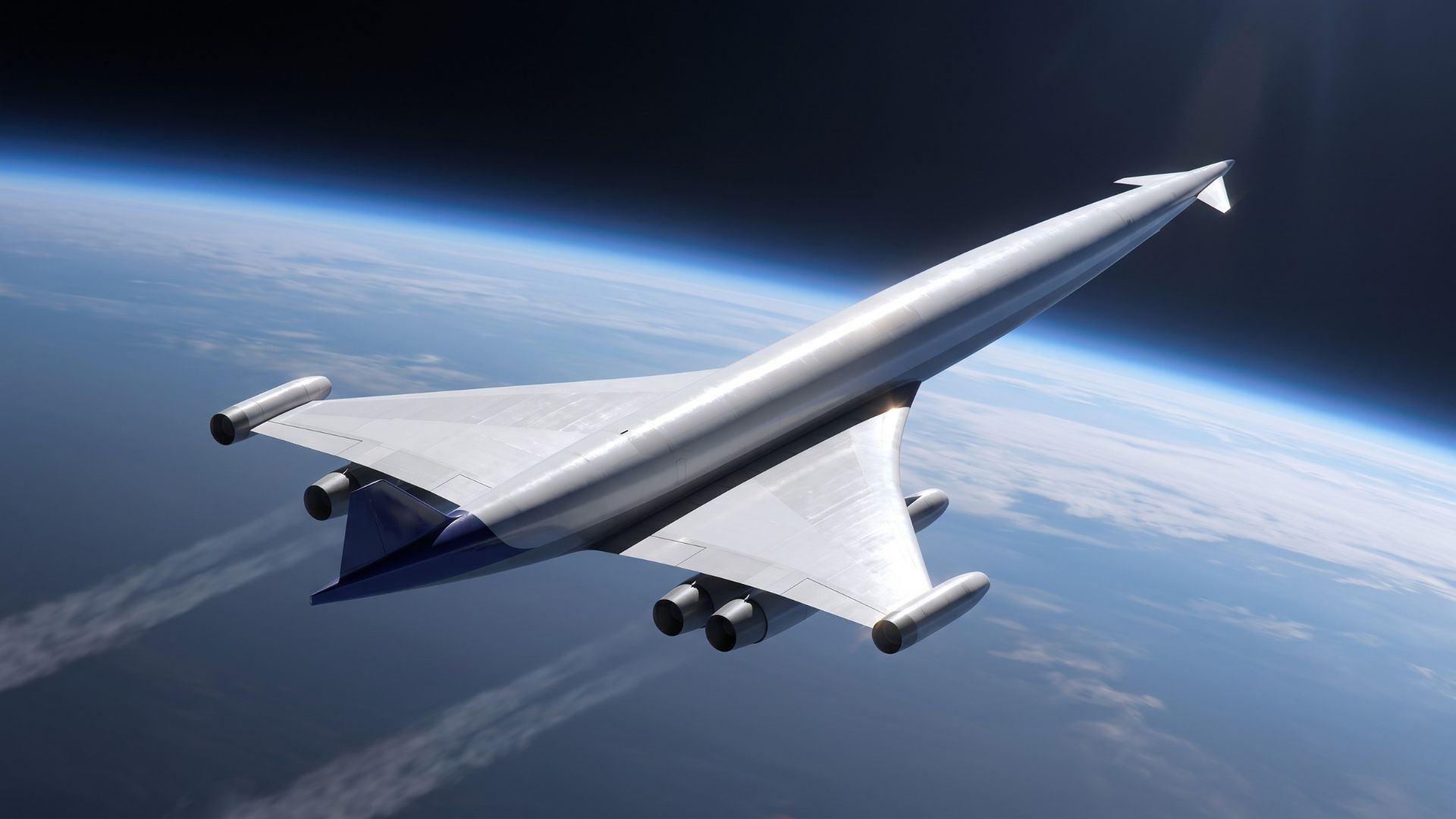


Studied in Europe, the LAPCAT A2 aimed to carry 300 passengers at Mach 5 with liquid hydrogen and trips between Europe and Australia in a few hours.
For decades, commercial aviation has tried to surpass the legacy of the Concorde without repeating its problems. Among the most ambitious projects ever studied is the LAPCAT A2, a hypersonic aircraft developed within a program funded by the European Union that intended to transport hundreds of passengers at speeds close to Mach 5, equivalent to about 6,100 km/h.
The concept attracted attention because it combined gigantic dimensions, experimental engines powered by liquid hydrogen and a range capable of connecting continents in a few hours. In some project simulations, a trip between Brussels and Sydney could be completed in approximately four to five hours, something that would drastically reduce current flight times.
LAPCAT A2 was born as one of the largest European studies to create a hypersonic successor to the Concorde
The project was part of the LAPCAT (Long-Term Advanced Propulsion Concepts and Technologies) program, funded by the European Commission to study aircraft capable of flying between Mach 4 and Mach 8. The goal was to evaluate technologies that would allow long-distance hypersonic civil transport.
-
Brazilian family creates machine that transforms seawater into fresh water, produces up to 130 liters per hour, facilitates routine on vessels, and boosts family business along the country’s coast.

-
A doctor from Minas Gerais warns that sleeping with the fan pointed at the body all night is not as harmless as you think; it dries out the respiratory tract, causes mucus buildup, spreads dust mites, and can even irritate the cornea of the eyes.

-
Ecuadorian volcano at 6,268 meters is more than 2,000 meters closer to space than Everest, which is 8,848 meters, because the Earth is wider at the equator.
-
Public school students in the hinterlands of Maranhão create a bioinsecticide with neem and castor to protect corn crops, transform rural waste into biogas and biofertilizer, and bring sustainable technology to producers at ExpoSertão.



Among the various concepts analyzed, the A2 model, developed by the British company Reaction Engines, became one of the most well-known proposals. The plane was designed to fly sustainably at Mach 5, a speed approximately twice that of the Concorde, which operated around Mach 2.04.
The studies also showed that the concept could theoretically achieve antipodal range, allowing connection of extremely distant regions of the planet without intermediate stops.
At almost 140 meters long, the LAPCAT A2 was much larger than the Concorde, Boeing 747, and even some modern commercial planes
The project’s numbers were impressive even by large aviation standards. According to the European program studies, the LAPCAT A2 would be approximately 139 meters long, making it much longer than the Concorde, which was about 62 meters, and significantly larger than an Airbus A380.
The aircraft was designed to carry about 300 passengers on two levels, using an extremely elongated fuselage to accommodate enormous liquid hydrogen tanks. Unlike conventional airplanes, the fuel could not be stored in the wings because the required volume was gigantic.
The maximum takeoff weight studied reached approximately 400 tons, placing the concept among the largest civil hypersonic vehicles ever analyzed in European research programs.
Scimitar engine aimed to transform liquid hydrogen into fuel for a Mach 5 commercial flight
The technological heart of the project was the Scimitar engine, an evolution of Reaction Engines’ research with high-speed pre-cooled systems. The concept used liquid hydrogen both as fuel and as a fundamental part of the aircraft’s thermal system.
At speeds close to Mach 5, the air entering the intake experiences extreme heating due to aerodynamic compression. To prevent this heat from destroying the engine, the system would use advanced heat exchangers capable of quickly cooling the airflow before combustion.

The technology was derived from concepts used in the development of the SABRE space engine, also created by Reaction Engines for space access projects and reusable spaceplanes.
The hypersonic plane was designed to fly almost always over oceans and reduce the problem that helped limit the Concorde
One of the biggest obstacles faced by the Concorde was the sonic boom produced during supersonic flight over populated areas. Several countries restricted this type of operation due to the acoustic impact on cities.

The LAPCAT A2 studies attempted to circumvent this problem by planning trajectories that remained almost continuously over the ocean. According to project reports, optimizing the routes would allow avoiding most of the impacts of sonic booms over inhabited areas.
This feature made sense especially for extremely long intercontinental missions, such as Europe-Australia or high-speed transoceanic connections.
Faster than the SR-71, the LAPCAT A2 would operate in a speed range rarely explored by manned aviation
The legendary Lockheed SR-71 Blackbird, considered one of the fastest manned aircraft in history, operated above Mach 3. The LAPCAT A2 was designed for sustained cruising close to Mach 5, entering a range normally associated with experimental hypersonic programs.
At this speed, thermal, structural, and aerodynamic challenges increase drastically. The heating of the fuselage begins to influence practically every aspect of the design, from structural materials to control systems and passenger comfort.

Due to these extreme conditions, researchers had to study specific structural solutions to deal with deformations caused by heat and aerodynamic loads of hypersonic flight.
The “giant Concorde” never left the drawing board, but remains one of the boldest concepts in European aviation
Despite the results considered promising by the researchers involved in the program, the LAPCAT A2 remained a conceptual study. No full-scale prototype was built, and several technological challenges remain without a viable commercial solution.
Even so, the project became one of the best-known references when it comes to civil hypersonic transport. Its colossal size, liquid hydrogen-powered engines, and the promise of crossing half the planet in a few hours transformed the A2 into a kind of futuristic successor to the Concorde.
More than fifteen years after the original studies, the LAPCAT A2 still seems like something out of science fiction: an aircraft nearly 140 meters long, carrying 300 passengers at five times the speed of sound while crossing oceans to prevent entire cities from hearing its passage.


Europe wake up! Use your potential!