Portuguese
  Spanish


New fossil from China reveals a 120-million-year-old microraptor that could glide between trees and perhaps attack primitive birds. The discovery expands the puzzle about the evolution of birds.
A new fossil found in northwest China revealed a relative of the Velociraptor with the appearance of a “four-winged dragon” and arboreal hunter behavior. Named Jian changmaensis, the animal lived about 120 million years ago and may have attacked primitive birds that occupied the region.
The discovery was described this Thursday, June 4, in a study published on livescience.com. Even though it is known only from part of the shoulder and the left forelimb, the fossil was enough to identify a new species and reinforce the image of a small, feather-covered group of dinosaurs much closer to birds than the large “raptors” popular in cinema.
What stands out the most is the combination of size, anatomy, and probable way of life. According to researchers, Jian had long feathers on its arms and legs, giving it the appearance of a winged dinosaur with four “wings.” It is estimated that the animal had a wingspan of about 1.2 meters, similar in size to a barn owl.
-
Salvador’s Acarajé Vendors Turn Used Frying Oil into Income by Selling it for Biodiesel Production

-
Volunteer Revives Dead Lake in Bengaluru Overnight, Doubling Water Capacity and Attracting Kingfishers and Herons
-
1909 Train Car Once Destined for Abandonment Transformed into Luxury Accommodation in the U.S. After $3,000 Restoration

-
86-Year-Old Brazilian Man Starts Homemade Bread Business After Learning from TV Recipe


A small predator, but with a great advantage in the forest
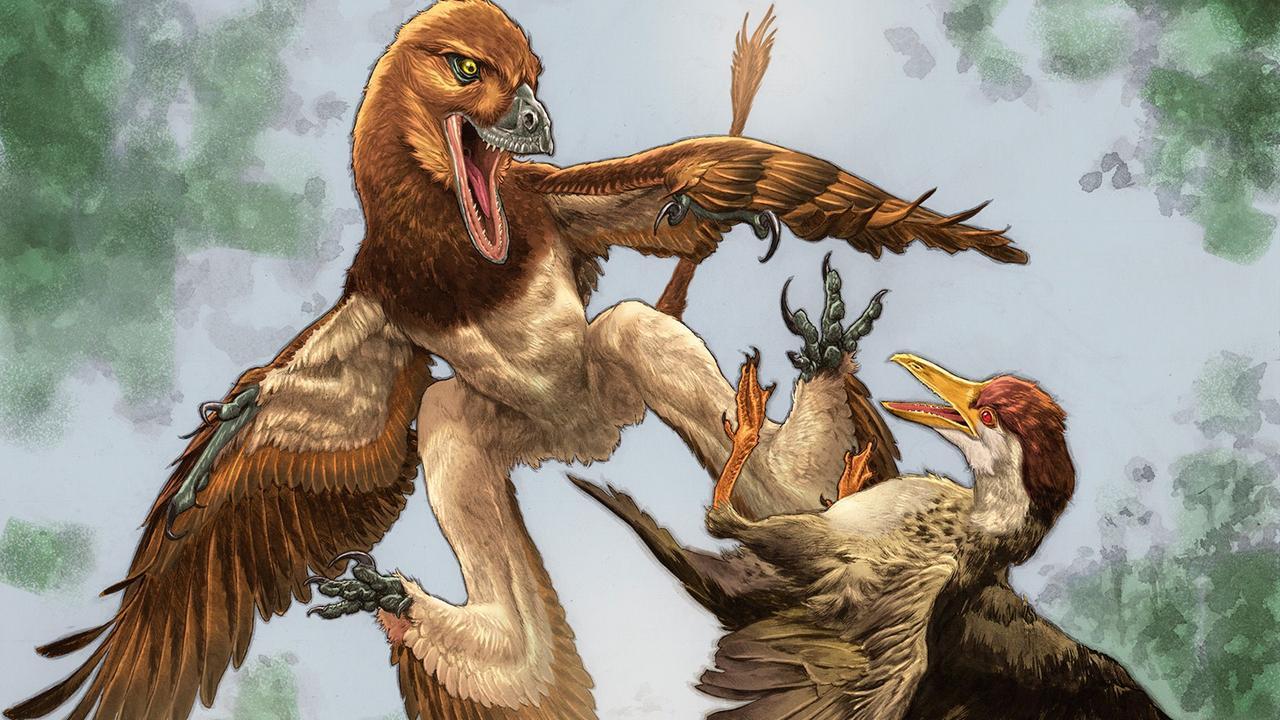
Jian changmaensis belongs to the group of microraptors, dinosaurs that were not birds but were very close to the lineage that gave rise to them. These animals had claws, sickle-shaped feet, and plumage, as well as the ability to glide between trees.
In practice, this suggests a light and agile predator, capable of moving through the treetops and surprising smaller prey. The authors of the study hypothesize that it could use the wooded environment as a natural ambush, attacking from branches or crossing the tree canopy like a small glider.
The fossil appeared in an area rich in ancient birds
The specimen was found in the Xiagou formation, near the village of Changma, in Gansu province, in rocks from the early Cretaceous, between 124 million and 120 million years ago. At the time, the region had a large lake surrounded by birds, fish, turtles, and other ancient animals.
Changma was already famous for bird fossils, especially of Gansus yumenesis, one of the earliest Mesozoic birds discovered in China. Since 2002, researchers have extracted more than 100 partial bird skeletons from there, some with preserved soft tissues, such as feathers, skin, and even claw sheaths.
This is precisely what made Jian so unusual: until now, no non-avian dinosaur fossil had been found at the site. Instead, the new animal appeared among the fragments, preserved in three dimensions, which is rare compared to many microraptors from the same area, which often appear flattened in the rocks.
What ancient birds might have on the menu of the new microraptor
Scientists cannot prove that Jian was responsible for the owl pellet-like remains found at the fossil site, but the hypothesis gained strength because the dinosaur was carnivorous and larger than the birds preserved in the region.
These pellets, formed by fragmented bones, draw attention because the site is dominated by primitive birds. For the authors, this may indicate that the environment was a feast for a predator that hunted among the trees and took advantage of easy prey in the canopy.
Other microraptor fossils have already shown a varied menu, with fish, lizards, mammals, and birds. This suggests that the group was not specialized in a single prey but rather consisted of opportunistic hunters capable of exploiting different food sources.
An important piece in the puzzle of the origin of birds
For paleontologists, this type of discovery helps to better understand what the closest relatives of the first birds were like. In a statement cited in the study, researcher Matthew Lamanna noted that microraptors function as a window into the closest ancestors of the lineage that led to birds.
The case also reinforces the image of a group of dinosaurs that stood on the border between two worlds: still with typical theropod traits, but already with feathers and adaptations reminiscent of animals capable of flying or gliding. For Steve Brusatte, from the University of Edinburgh, it is a new dinosaur fossil “on the cusp of becoming true birds.”
With only a few bones in hand, researchers still have more questions than answers about Jian changmaensis. But the discovery already repositions Changma as one of the most important points for studying the transition between dinosaurs and birds — and makes it clear that, in the Cretaceous, the Asian forest hid hunters far stranger than imagined. If you enjoy this type of discovery, it’s worth following the upcoming revelations about fossils that may still change the history of evolution.