





 Portuguese
  English
  Spanish
  4 min of reading
  0 comments


France Tests Road With Inductive Coils That Recharge Electric Cars And Trucks In Motion, Inaugurating A New Era For Sustainable Transportation
France has begun testing the world’s first highway capable of recharging electric vehicles in motion. The 1.5 km stretch of the A10, near Paris, uses coils beneath the asphalt that transmit up to 300 kW of power wirelessly.
In a historic milestone for sustainable transportation, France initiated tests of the world’s first highway equipped with a dynamic wireless charging system. The technology allows electric vehicles to recharge while in motion, transforming the way energy is supplied to road transportation.
The A10 highway, located about 40 kilometers southwest of Paris, was chosen as the site for the “Charge As You Drive” project. The consortium responsible for the initiative includes VINCI Autoroutes, Electreon, VINCI Construction, Gustave Eiffel University, and Hutchinson. After a long phase of laboratory tests involving durability checks and integration with the pavement, the system began to be used in real traffic.
-
Researchers from the National Institute of Anthropology of Mexico mapped an entire site called El Jefeciño along the route of the Maya Train, with 80 stone buildings, a C-shaped plaza, and 250 acres inhabited between 250 and 900 A.D.

-
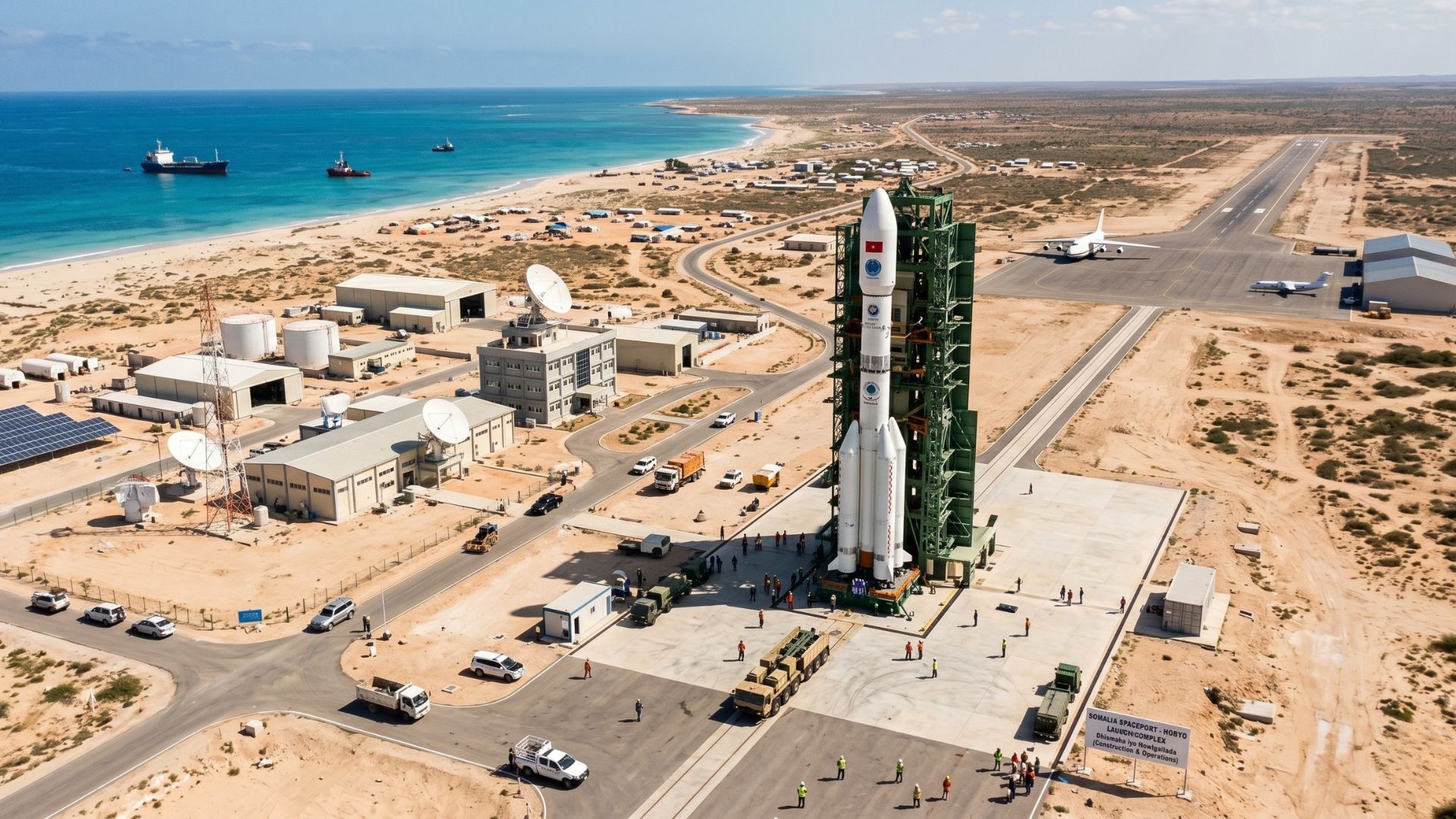
While SpaceX and Boeing compete for billion-dollar NASA contracts, Turkey has begun constructing a spaceport in Somalia to launch rockets near the equator and transform the Horn of Africa’s coastline into a strategic shortcut to reach space by 2028.

-
Archaeologists find a vase hidden for 1,200 years on a pilgrimage route with more than 100 jewels of gold, silver, and precious stones.

-
Almost half a century after the Kola Superdeep stopped at 12,262 meters, China announces that it will drill up to 15 kilometers and wants to be the first country to surpass the Soviet mark that has terrified geologists for 47 years.



On the experimental stretch of approximately 1.5 km, prototype vehicles circulate, including a heavy truck, an SUV, a passenger car, and a bus.
According to initial results, peak power exceeded 300 kW, while average power surpassed 200 kW under ideal conditions. These data were confirmed by measurements conducted by Gustave Eiffel University, which oversees the technical assessment.
The CEO of VINCI Autoroutes, Nicolas Notebaert, stated that the technology could accelerate the electrification of heavy fleets in France. He emphasized that freight transportation accounts for over 16% of the country’s total emissions, and that the new highway could significantly contribute to reducing this impact.
Meanwhile, the CEO of Electreon, Oren Ezer, highlighted the unprecedented nature of the innovation. He stated, “Our technology is the only one capable of providing dynamic charging with such power and reliability, with no competitor approaching this standard.”
How The Technology Works
Dynamic induction charging occurs through coils installed beneath the asphalt. They generate a magnetic field that is captured by receiver coils located at the bottom of the vehicles. This interaction induces an electric current, which can be directed to power the motor or recharge the battery while the vehicle continues its journey.
Unlike conventional charging, there is no need for stopping or physical connection. The process happens in motion, reducing downtime and allowing the use of smaller and lighter batteries. In trucks and buses, this represents an increase in payload capacity and savings in raw materials.
The system requires precise alignment between transmission and reception coils, as well as continuous monitoring of the energy transfer by embedded sensors and software.
The infrastructure was designed to withstand decades of intense use, undergoing tests equivalent to 25 years of heavy truck traffic.
This technology also represents an alternative to the reliance on large batteries and ultra-high-power chargers, which can reach 1 megawatt.
With dynamic charging, long-distance transportation becomes more efficient and sustainable, reducing costs and the consumption of metals like lithium and cobalt.
Other Countries Advance With Electric Highway Pilots
Although the French project is the first to achieve real testing on open highways, several nations are already developing similar initiatives. In Germany, a one-kilometer stretch of the A6 highway, near Bavaria, will be equipped with Electreon technology. Construction is expected to begin in the summer of 2025 and is part of the national E|MPOWER program.
In Italy, the “Arena del Futuro” project in Lombardy tests the same concept of dynamic recharging for buses and trucks on a toll highway. In Sweden, studies conducted by the national transport authority have evaluated the technology’s performance for years. However, a report released in December 2024 discouraged the creation of a complete national network due to high costs, although specific corridors may be maintained.
Other countries, such as the United States, China, South Korea, and Israel, are also developing dynamic charging systems — some through induction, others through conductive rails or overhead cables. These international experiences are helping to define technical standards, cost models, and scalability for future electric highways.
Why The French Implementation Is Important
The A10 highway represents the first global experiment in real traffic conditions. Until now, dynamic charging demonstrations had only occurred on controlled tracks or urban environments. This time, trucks, buses, and cars are using an active highway, with the system operating full-time.
In addition to its technological relevance, the project has strategic importance for France and Europe. The possibility of using smaller and lighter batteries reduces dependence on imported materials and enhances industrial competitiveness. At the same time, local development and manufacturing of electrical infrastructure components strengthen technological sovereignty and job creation.
The consortium will continue to monitor the highway’s performance in the coming months, focusing on reliability, energy efficiency, maintenance, and operating costs. The analysis of this data will determine the feasibility of expansion to longer stretches.
The current 1.5-kilometer segment is just the first step of an ambitious project. If the results remain positive, the technology could be replicated across thousands of kilometers of roads in France and other European countries.
More than a scientific experiment, the A10 has become a real-scale mobility laboratory. By combining engineering, innovation, and sustainability, it inaugurates a new era for electric transportation — one in which the road becomes an active part of the energy network, turning the simple act of driving into a continuous process of clean and efficient recharging.





Be the first to react!