Portuguese
  Spanish


Geophysicists identified about 6,000 km³ of magma beneath geothermal areas of Tuscany, especially Larderello and Monte Amiata, in a study published in April 2026, with no immediate threat to the population of the Italian region.
The study was released in April 2026 by geophysicists from the University of Geneva, in collaboration with CNR-IGG, Florence, and INGV, Italy, and revealed the presence of a massive reservoir of magma hidden beneath Tuscany. The research, published in the journal Communications Earth & Environment, identified an approximate volume of 6,000 cubic kilometers of partially melted material, comparable to some of the largest volcanic systems on the planet.
What is surprising is the absence of any volcanic signs on the surface. The Tuscan region, known for its thermal landscapes and tranquil hills, does not display active craters or visible smoke. Yet, between 8 and 15 kilometers deep, lies a magmatic structure of colossal proportions, detected by a technique that harnesses the Earth’s natural vibrations.
Why this hidden reservoir surprises geology

Normally, large magmatic reservoirs are associated with visible volcanoes, with a history of eruptions, ash deposits, and characteristic relief. In Tuscany, none of this appears in the landscape, despite the volume identified by researchers.
-
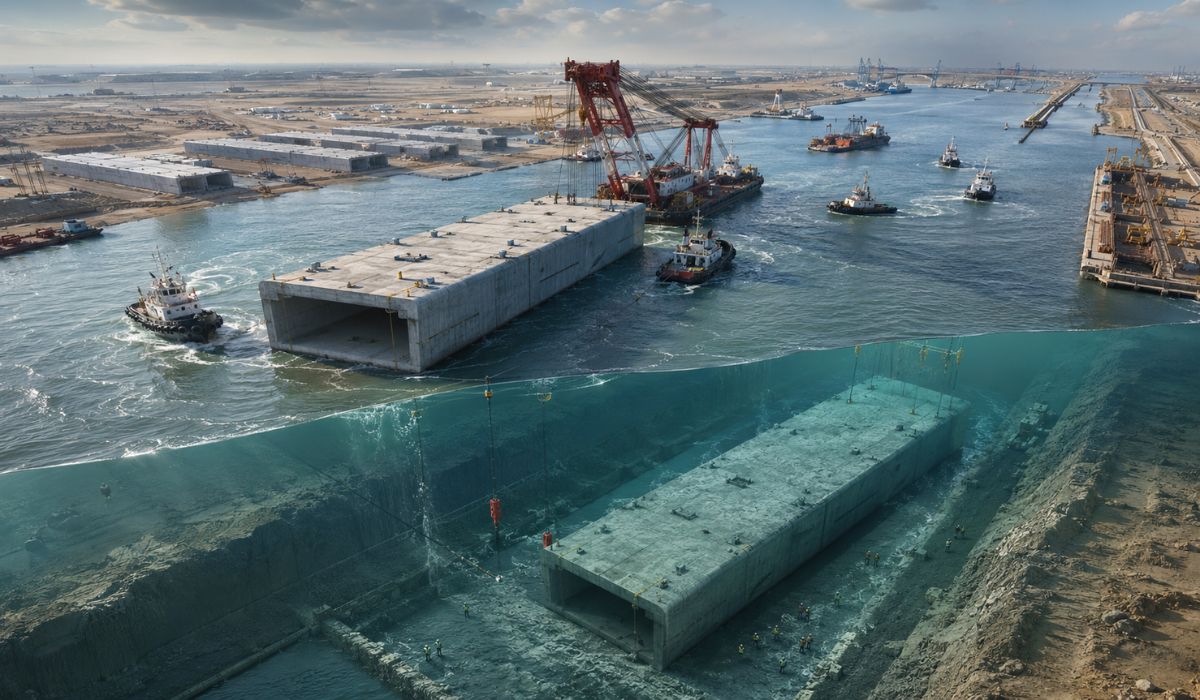
Iraq floats and sinks under an arm of the Euphrates 10 giant concrete boxes of 46,000 tons and 125 meters each to assemble a 2.4 km submerged tunnel and open a new land route between Asia and Europe.

-
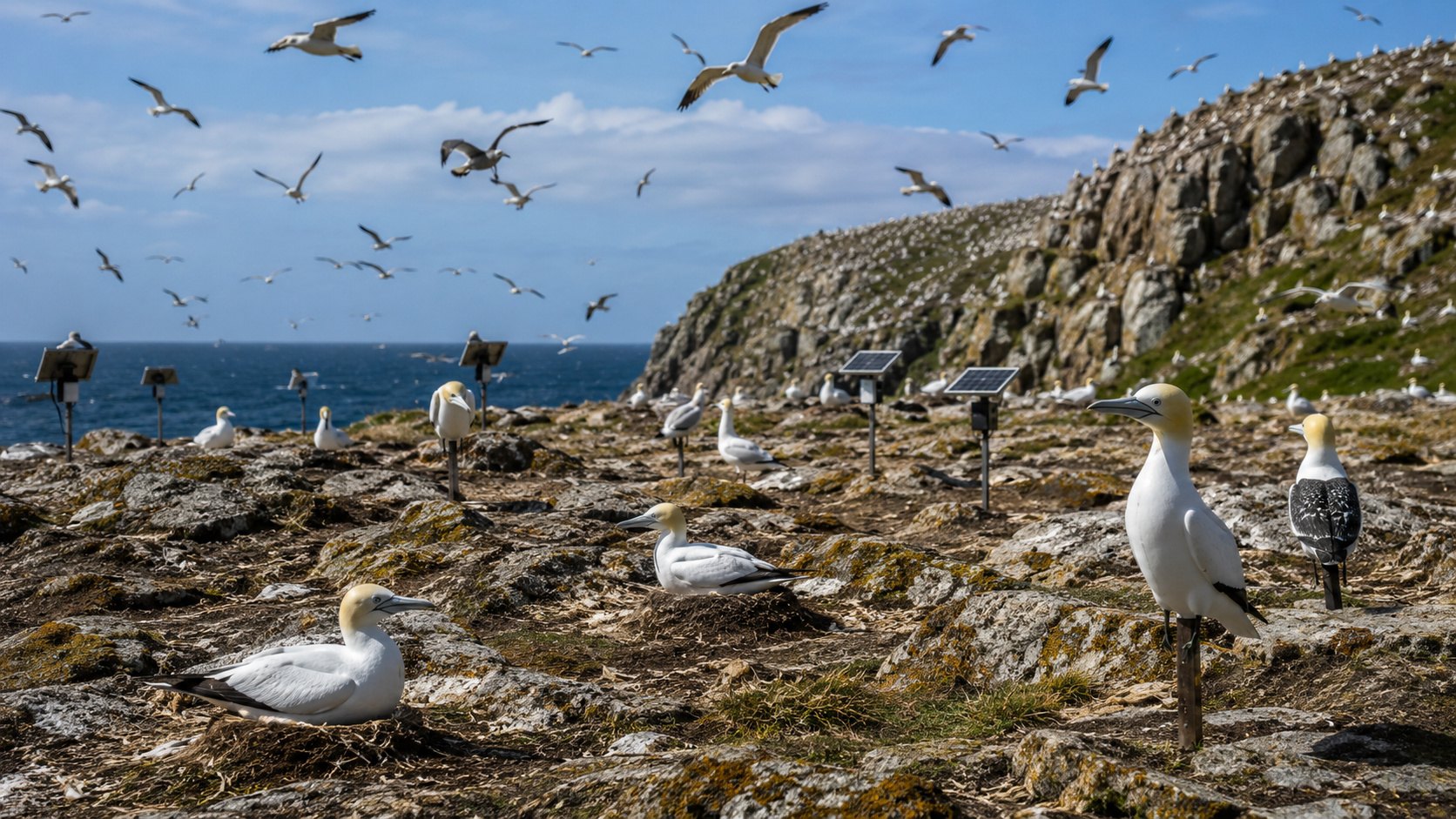
Scientists use more than 20,000 artificial birds and solar speakers to “trick” seabirds, reactivate nesting routes, and revive a colony on an island that seemed abandoned.

-
She spent 73 years breathing inside an iron lung, survived the aftereffects of polio, and became the last woman in the United States dependent on the equipment before dying at 78 years old.
-
Brazilian students created a $1 filter using pine bark, cotton, and 3D-printed parts to clean cassava wastewater, reduce the toxicity of a hazardous waste, and transform contaminated water into biofertilizer.


The comparison with Yellowstone, in the United States, and with Lake Taupo, in New Zealand, reinforces the significance of the finding. These are some of the largest known volcanic systems, and finding something of similar magnitude beneath an apparently calm region repositions Tuscany on the map of deep geological studies.
How magma without volcanic signs was detected
To uncover what was hidden beneath the crust, the team resorted to ambient noise tomography, known by the acronym ANT. The technique uses natural vibrations generated by ocean waves, wind, and human activity, transforming these discrete signals into three-dimensional images of the subsurface.
The principle is straightforward: seismic waves travel through molten material at abnormally low speeds, which allows identifying the signature of magma. The central elements of the analysis included about 60 seismic sensors installed on the Tuscan surface, constructing an image of the crust up to approximately 15 kilometers deep, and reading the low seismic velocity as an indicator of partially molten material.
What exists between 8 and 15 kilometers deep
The reservoir does not correspond to a homogeneous chamber filled with molten rock. Researchers describe a structure with a hotter core and an outer partially molten zone, rich in crystals, distributed along the continental crust. This configuration helps explain why geothermal heat has been exploited in the region for over a century.
The central part is around 8 to 10 kilometers deep and concentrates predominantly molten material. The outer envelope extends approximately between 10 and 15 kilometers, forming a broad system. This division between core and periphery reveals a more complex arrangement than the simplified image of a large uniform magma pocket.
Does the reservoir pose an immediate risk to the population
The existence of such a large reservoir raises an inevitable question about safety, but researchers are cautious and do not point to an immediate threat to residents. The formation of a supervolcanic system would theoretically be possible only on geological scales, far removed from a predictable human scale.
The current scenario is considered distant from a surface reactivation because some expected signs simply do not appear. There are no recent eruptive deposits comparable to systems like Yellowstone or Lake Toba, there is no intense ground deformation associated with a magmatic crisis, nor are there constant gas emissions typical of evident volcanic activity.
How the discovery can transform energy and mining
Beyond the risk discussion, the detailed mapping opens practical pathways. More precise knowledge about the heat and geometry of the reservoir can guide new sources of high enthalpy geothermal energy, especially in areas historically explored in Tuscany, such as Larderello.
Deep magmatic reservoirs can also be associated with the formation of lithium and rare earth deposits, strategic materials for batteries and energy transition technologies. Furthermore, the ANT technique can be applied in other regions of the world to investigate hidden structures with less environmental impact, expanding the scientific reach of the method.
What this discovery changes in the reading of Tuscany
Tuscany ceases to be just a region famous for thermal landscapes and vineyards to occupy a prominent place in the study of deep magmatic reservoirs. The case demonstrates that a system without recent craters can hold immense volumes of molten material just below the surface, without any of this being apparent in the landscape.
For geology, the discovery reinforces an important lesson: not every volcanic process announces itself visibly. Often, the most relevant clue is precisely in the silence of the surface and the discreet vibrations that traverse the Earth’s crust, waiting to be interpreted by science.
Imagining a volume of magma comparable to that of Yellowstone hidden under tranquil hills is the kind of news that stirs anyone’s curiosity. Could regions considered calm in Brazil also hold geological surprises underground? Leave your comment, share your opinion, and tell us what surprised you most about this discovery.