






 Portuguese
  Spanish
  5 min of reading
  0 comments


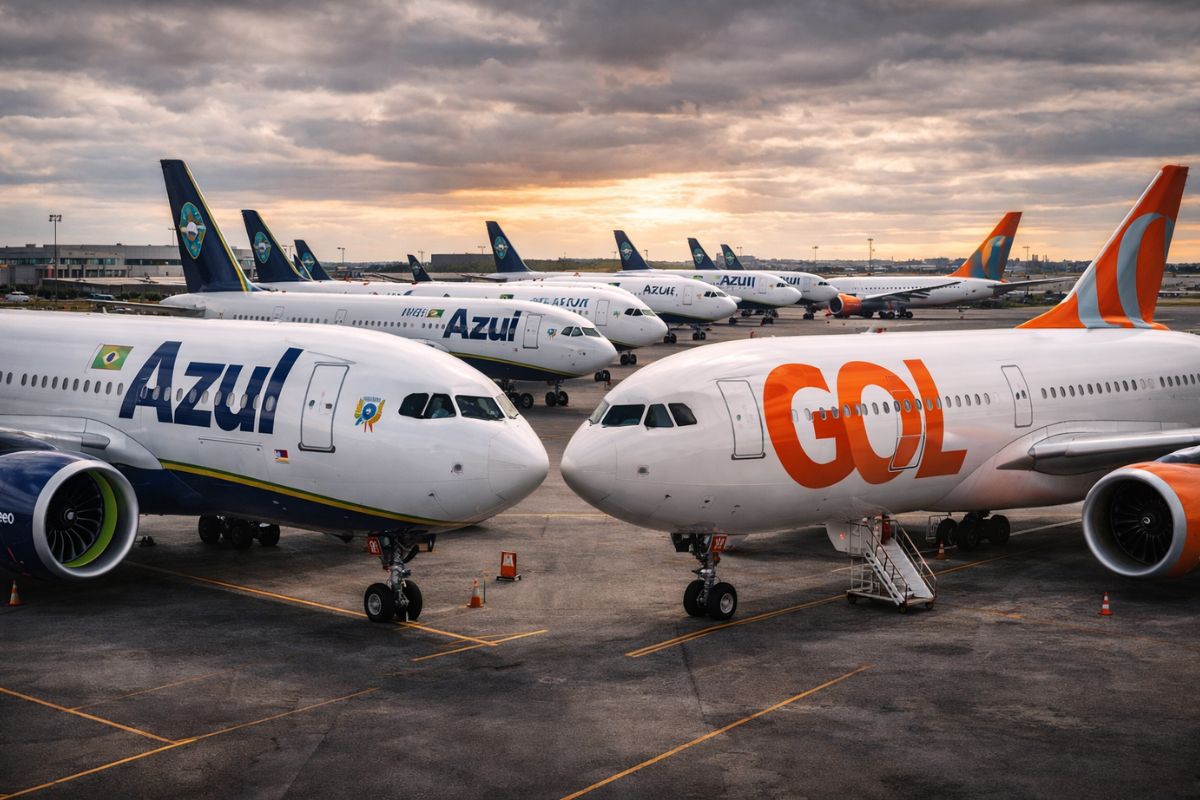
The Fleet Of Giant Airplanes From Azul, Composed Of Seven Airbus A330neo Tied To Contract With Avolon, May Be Gradually Returned In Up To Six Months Without Interrupting International Flights, While The Aviation Market In Brazil Speculates That Gol Will Take Over Part Of These Aircraft In New Movement Between Companies.
The fleet of giant airplanes from Azul has become the center of discussions in the sector following reports that the company plans to return all Airbus A330 900neo aircraft used on international flights to Europe and the United States over the next six months. This topic gained significance because it involves not only fleet renewal but also the possible transfer of these jets to another Brazilian company, Gol.
According to published reports, the operation would involve seven aircraft, including two already out of service, under contract with Avolon. There is still no official confirmation regarding the transfer to Gol, but the combination of scheduled returns, reserved registrations, and crossover of serial numbers in Anac systems has raised the perception that the market is facing a significant movement.
What Is At Stake In The Return Of The A330neo
The return of the fleet of giant airplanes from Azul does not appear, based on the released material, as an abrupt cut in international capacity. The interpretation presented is one of a gradual transition, with the planes being returned as other aircraft of the same model are incorporated into the company’s operation throughout the year, including units coming straight from the factory.
-
The neighboring country of Brazil that reduced the working hours and increased the minimum wage by 23.7% had to hire 787,000 extra workers to cover the reduced hours, and even so, it records unemployment at a historic low.

-
A resident of Guangzhou infiltrated the village where the 500 factories that make Shein’s clothes are located, disguised, and filmed everything: shifts from 8 am to 10 pm, factories operating at night, and owners who accept any conditions to avoid losing the contract.
-
Traffic jammed between BH and Nova Lima may get significant relief with the Viaduto Ferradura, a R$ 48 million project that promises to connect MG-30 and MGC-356 without passing through the Belvedere junction.

-
After Russia turned off the tap, Europe looks to Africa as a new energy salvation: two giant pipelines of up to 7,000 km may cross the Sahara and the Atlantic, costing $25 billion and transforming Nigerian gas into a geopolitical weapon.





This changes the initial interpretation for those who only look at the headline. Instead of a pure and simple withdrawal from long-haul flights, the suggested picture is one of contractual and operational reorganization. The central word here is replacement, not necessarily a structural reduction in presence on international routes.
Data also indicates that Azul has asserted that the gradual return of the A330s would not disrupt flights to the United States and Europe. This point is important because the market tends to react more strongly when there is a signal of immediate loss of supply on strategic routes, especially during periods of high demand.
At the same time, the discussion remains sensitive. Even when the company maintains operations, changing aircraft, adjusting the reception schedule, and reallocating the fleet requires fine coordination of the network, maintenance, crew, and availability. In aviation, poorly synchronized transitions are costly.
Why Gol Entered The Radar Of This Operation
The hypothesis that Gol may receive aircraft from this fleet has gained traction due to a chain of signals rather than a formal announcement. According to the cited content, the website Melhores Destinos had already revealed that Gol reserved a series of registrations for Airbus A330 900neo jets, which raised suspicion of a planned movement.
The point that heightened market interest was the cross-referencing of these registrations with serial numbers in Anac systems. From this cross-referencing, active or inactive aircraft from the fleet of giant airplanes from Azul had reportedly been identified, reinforcing the thesis that the returned jets could indeed migrate to the competitor’s operation.
This type of reading draws attention because it unites public information, operational timing, and company behavior. When registration, serial number, and return window begin to align, the sector tends to treat the rumor with more seriousness, even without official confirmation.
Still, the scenario remains in the realm of probability. The very formulation used was that the most likely response would be positive, not that the transfer is already closed. For an impartial analysis, this detail matters because it avoids turning market signals into established facts prematurely.
The Immediate Impact On Azul’s International Network
One of the most closely watched points is whether the return of the fleet of giant airplanes from Azul could affect the company’s presence on relevant international routes. The material indicates that the company has already redirected part of its fleet to the United States and that this need was used to explain the reduction of flights between Campinas, São Paulo, and Paris.
This data helps to understand the background of the decision. It is not just about large aircraft exiting a contract, but about a network that has already been adjusted according to demand, aircraft availability, and commercial priorities. On long-haul routes, each airplane carries much more weight than on domestic segments, because the replacement is less straightforward.
The context of a World Cup year also appears, used as an argument to support that the transition would not interrupt operations. In a high-demand international environment, the company needs to maintain regularity and occupancy at the same time, without leaving room for consecutive cancellations due to lack of equipment.
Therefore, the return in up to six months holds strategic value. A staggered timeframe offers room for receiving new aircraft, redistributing capacity, and planning adjustments. The risk does not disappear, but becomes more manageable than in a concentrated withdrawal over a few weeks.
What This Movement Says About The Aviation Market In Brazil
The discussion about the fleet of giant airplanes from Azul stirred the sector because it involves something rare in the public’s imagination: long-haul jets changing hands between Brazilian companies in a short window. Even when part of the process involves leasing and contracts with lessors, the market perception is one of competitive repositioning.
This also shows how fleet decisions are not confined to technical backstage. They affect route readings, international capacity, expansion image, and even passenger expectations regarding destinations and frequency. A contractual change may seem administrative, but quickly turns into a discussion about strategy.
In this specific case, there are three elements keeping the topic alive. First, the volume: seven aircraft. Second, the nature of the planes: A330neo used on international flights. Third, the possible connection with Gol, which amplifies the repercussions by involving two major national brands in the same movement.
Also for this reason, the market watches each signal closely. Executive statements, reception schedules, status of aircraft already out of operation, and regulatory records are interpreted together. When the window is six months, each stage becomes a directional indicator.
The potential return of the fleet of giant airplanes from Azul and the hypothesis that some of these A330neo may go to Gol form one of the most closely observed movements in Brazilian aviation at this moment, precisely because it combines international fleet, leasing, operational timing, and market repositioning in a short timeframe.
If this transfer is confirmed, do you think the strongest effect will appear first in the supply of international flights, in the commercial strategy between the companies, or in passengers’ perceptions of who is gaining space in long-haul operations? And which route would you closely monitor to observe this change in practice?








-

1 person reacted to this.