






 Portuguese
  Spanish


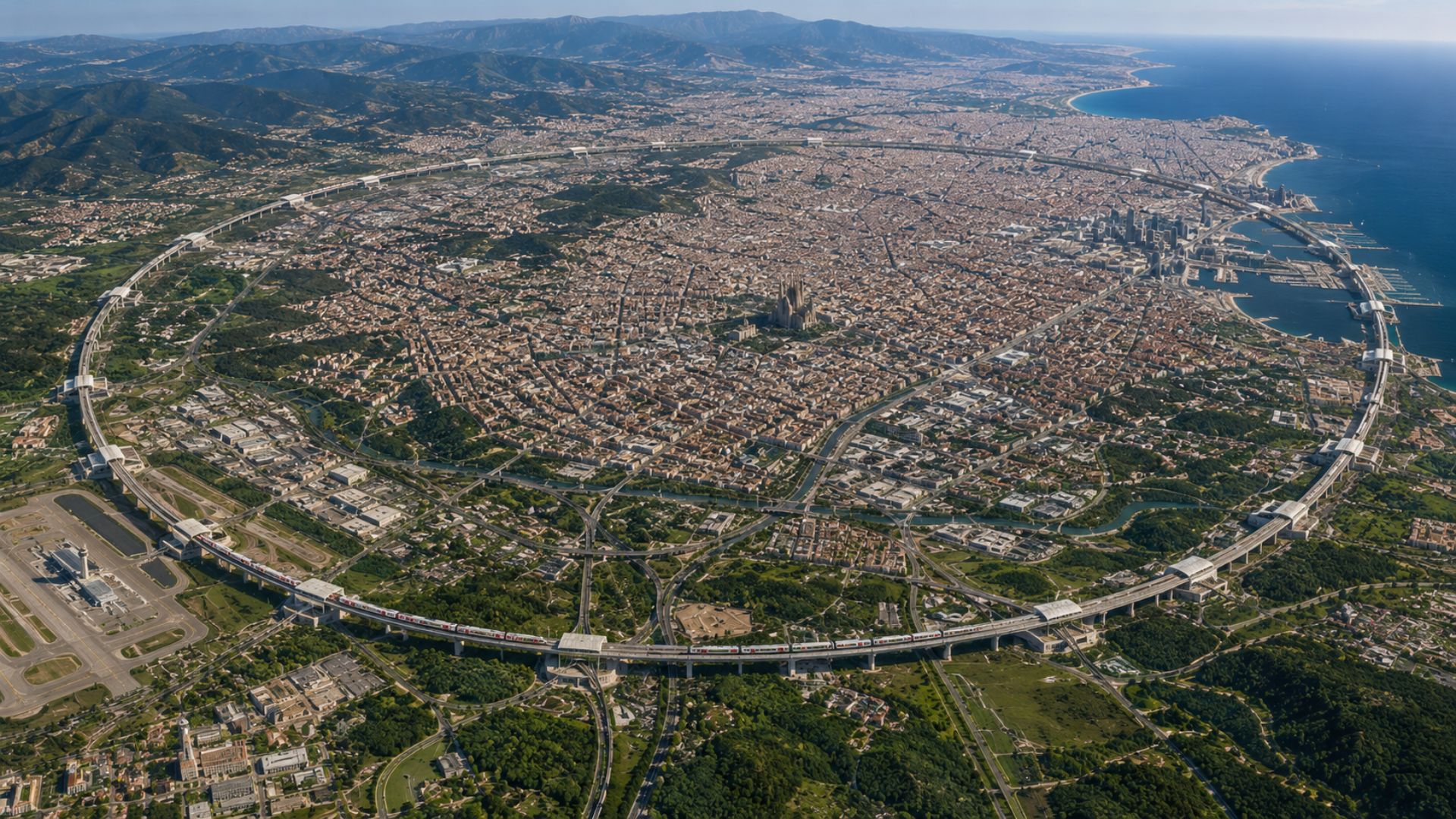


Catalonia included in the Regional Railway Strategy, approved in November 2025, the project of the railway ring that will encircle Barcelona with 119 kilometers of tracks, 39 stations, and 12 connection points with existing Renfe and FGC networks. The Línia Orbital Ferroviària, as it is officially called, will connect Vilanova i la Geltrú to Mataró without passing through the center of Barcelona, covering cities like Vilafranca del Penedès, Martorell, Terrassa, Sabadell, and Granollers. The most optimistic forecast points to completion by 2041, with an estimated investment of 5.2 billion euros.
Catalonia is planning the most ambitious railway ring in the history of the Barcelona metropolitan region. With 119 kilometers in length, 39 stations, and 68 kilometers of new tracks, the Línia Orbital Ferroviària will connect cities of the second metropolitan ring without passengers needing to enter the center of Barcelona. The project breaks the radial logic that has dominated the Catalan railway system since the 19th century, where all lines converge to the capital, and creates for the first time a perimeter route that allows travel from Vilanova i la Geltrú, on the southern coast, to Mataró, on the northern coast, passing through the interior.
The railway ring was included in the Catalonia Railway Strategy, approved in November 2025 by the Generalitat to organize the future of the train in the region until 2050. The technical sheet prepared by Ifercat, the Catalan railway infrastructure authority, describes a line with a commercial speed of 60 kilometers per hour, 12 interchanges with Renfe and FGC, and an estimated annual demand of 20 million passengers. The most optimistic forecast places completion in 2041, with an investment of 5.2 billion euros, but the project is still in the study phase and no works are underway.
The route of the railway ring that encircles Barcelona

The railway ring will be divided into four major sections that together will form a complete arc around the metropolitan area of Barcelona. The first section connects Vilanova i la Geltrú to Vilafranca del Penedès, passing through the Alt Penedès region. The second connects Martorell to Terrassa, crossing the Baix Llobregat. The third goes from Sabadell to Granollers, crossing the Vallès Occidental and Oriental. The fourth closes the arc between Granollers and Mataró, reaching the Maresme coast.
-
180-Year-Old Bridge Disappears from Brazilian Farm, Found 180km Away, Sparks Investigation into Illegal Sale of Historical Heritage

-
Brazil’s Defunct Railway Network Leaves Over 100,000 Properties Abandoned for Nearly 30 Years, Facing Neglect and Safety Risks as Government Struggles to Regulate Assets Amid Degraded Stations and Unlawful Use

-
Belo Horizonte’s Beltway Project Risks Losing $5 Billion to Metro Expansion if Court Doesn’t Act Soon; State Government Plans New Lines with IDB Support

-
Brazil to Auction 9,000 km of New Railways, Aiming to Attract $28 Billion by 2026

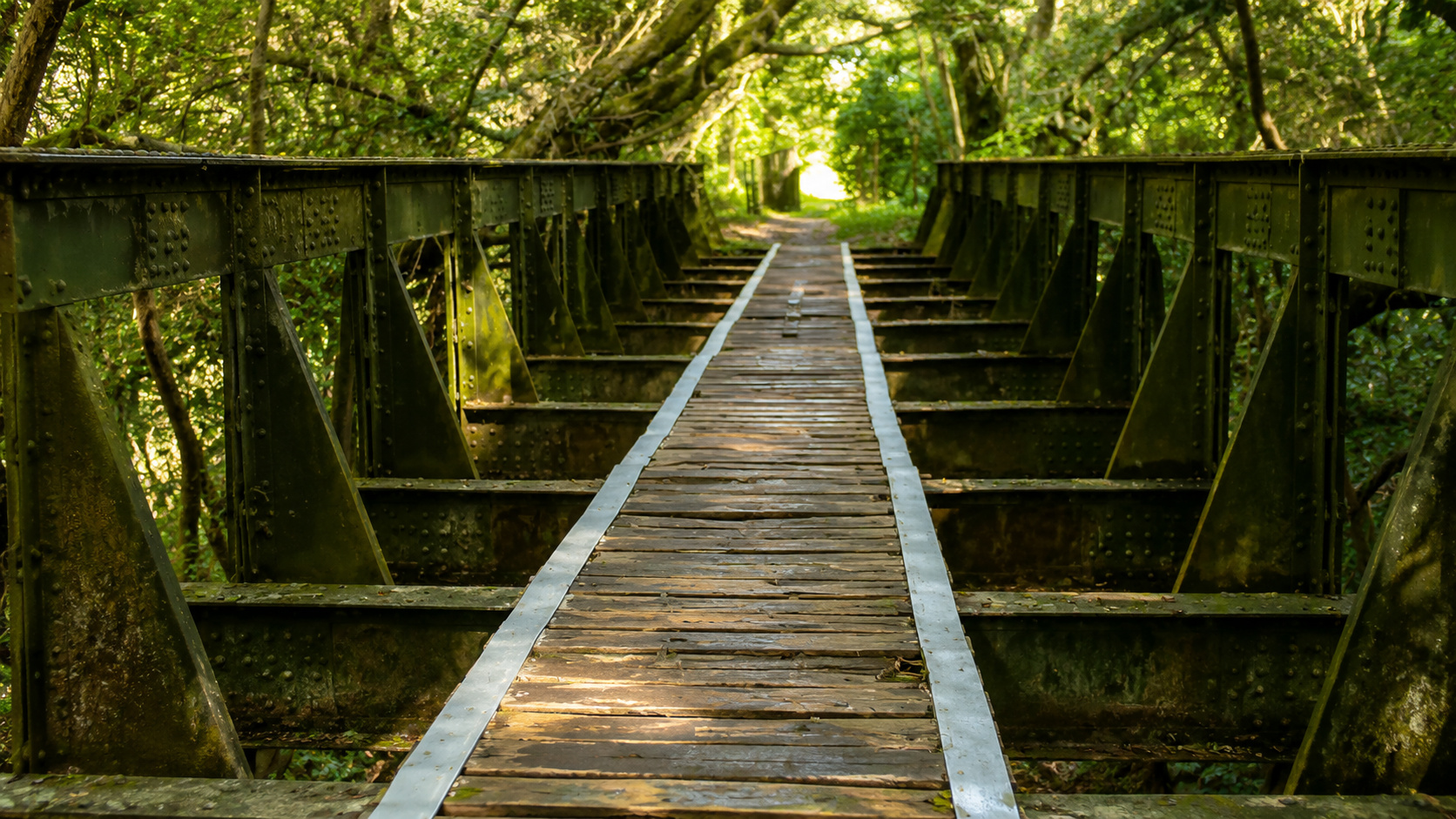


Of the total 119 kilometers of the railway ring, 68 will be entirely new tracks and 46 kilometers will pass through tunnels, representing 60% of the new route. The option for underground aims to minimize the impact on dense urban areas and overcome the geographical obstacles of the Catalan terrain. The 39 stations of the railway ring include 23 completely new ones, and the system will utilize sections of existing lines operated by Renfe and FGC in segments where the current infrastructure can handle the additional traffic.
The problem the railway ring solves

Currently, those living in Sabadell and working in Terrassa, neighboring cities separated by a few kilometers, need to take a train to Barcelona and then another back in the opposite direction. The radial system forces thousands of passengers to pass through the capital’s center to make trips that, in a straight line, are short, overloading central stations and increasing travel time.
The railway ring eliminates this problem by creating direct connections between the municipalities of the second metropolitan crown. The Generalitat estimates that 30% of the passengers of the new system will be drawn from individual motorized transport, which would mean fewer cars on peripheral highways, less congestion, and fewer emissions. With 96,000 daily passengers expected and 20 to 27 million annually, the impact on regional mobility would be transformative.
The 46 kilometers of tunnels and engineering challenges
The decision to place 60% of the new route in a tunnel is not just aesthetic, it is functional. The topography of the metropolitan region of Barcelona, with hills, valleys, and consolidated urban centers, makes it unfeasible to build surface tracks for much of the railway ring’s route. The tunnels allow the line to pass under residential neighborhoods, industrial zones, and natural areas without demolishing or expropriating.
The engineering of the interchanges is another challenge. The 12 connection points with the Renfe and FGC networks require renovations at existing stations, construction of accessible walkways, and installation of digital railway signaling systems. The goal is for the exchange between lines to be quick and barrier-free, so that the railway ring functions as an integrated part of the system, not as an appendage.
The timeline that no one guarantees
The Barcelona railway ring is a project that has existed on paper for almost two decades. Different versions have been included in Catalonia’s infrastructure plans since the early 2000s, but none have advanced to the construction phase. The novelty is that the 2025 Railway Strategy has brought the project back to the center of regional planning, with an updated technical sheet and priority status.
Even so, the path to inauguration is long. Informative studies, environmental licensing, budget approval, tenders, and execution of works in tunnels along the 119 kilometers add up to a timeline that will hardly be less than 15 years. The 2041 estimate is considered optimistic by industry experts. Political decisions and budget adjustments in Catalonia will be decisive in determining whether the 119-kilometer railway ring will come off the paper this time. The project is the most ambitious in Catalonia in transport infrastructure.
Would you live in a city where you can cross the entire metropolis by train without having to go through the center? Do you think the Barcelona railway ring will materialize, or is it just another megaproject that will remain on paper for decades? Tell us in the comments.


