






 Portuguese
  Spanish
  4 min of reading
  1 comment


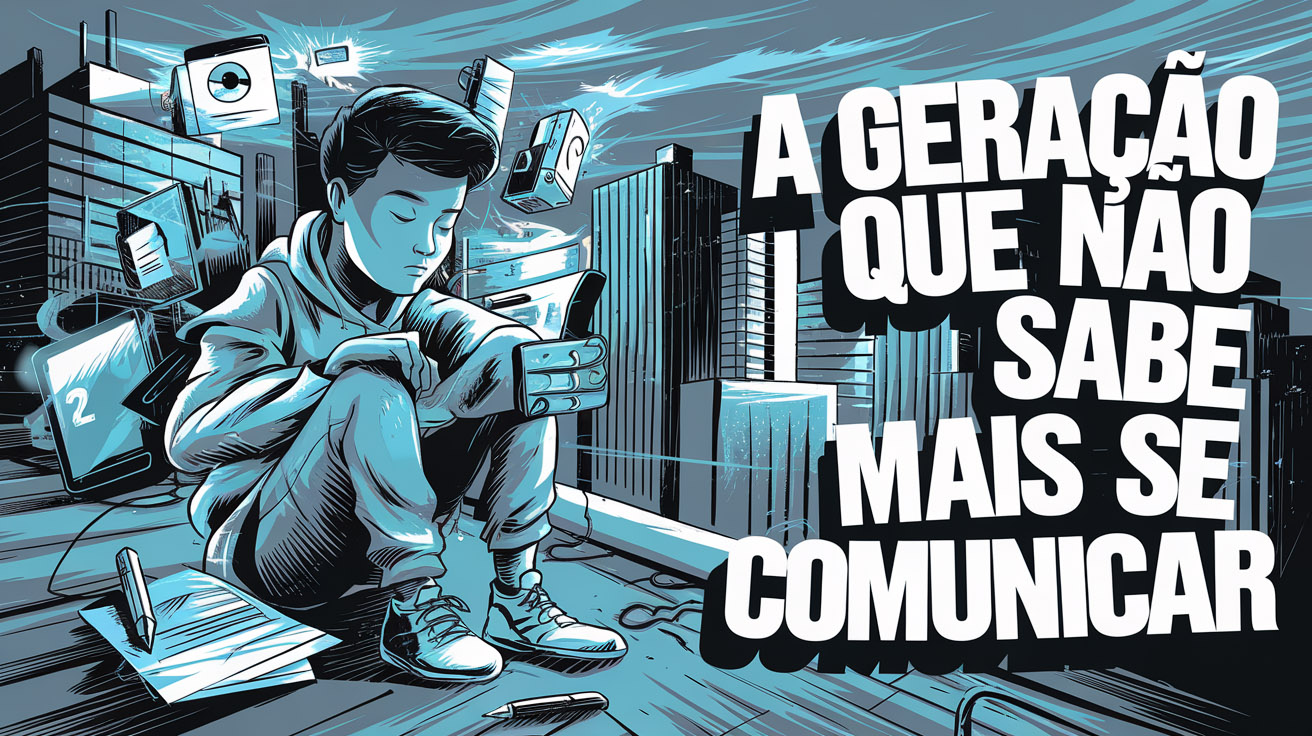


In The Digital Age, Generation Z Is Losing Millennium-Old Writing And Communication Skills. Studies Reveal That 40% Of Young People No Longer Have Fluency In Handwriting, And The Influence Of Social Media Compromises The Ability To Compose Cohesive Texts. What Will Be The Consequences Of This Transformation For The Future Of Human Communication?
In an increasingly connected world, where communication is instantaneous and simplified, an essential skill, developed by humanity over more than five millennia, is being gradually abandoned.
Among younger generations, especially the so-called Generation Z, a worrying phenomenon has caught the attention of specialists: the loss of handwriting and the difficulty of expression through cohesive texts. But how did we get to this point?
Recent studies and reports indicate that the transition to digital is the main factor behind this trend.
-
Survivor of 1966 SS Daniel J. Morrell Shipwreck in Lake Huron Recounts 38-Hour Ordeal in Extreme Cold

-
The Greatest Hoax in World Cup History? The Film That Denied Brazil’s 1958 Victory and Exposed How Fake Evidence Can Seem Convincing on TV
-
Fake South Korean Online Stores Offer Shopping Thrill Without Spending Money or Receiving Products
-
The War of Jenkins’ Ear: How a Severed Ear Sparked One of the 18th Century’s Most Unusual Conflicts


Researchers from the University of Stavanger in Norway found that, after just one year of exclusive digital writing, 40% of students lost fluency in handwriting.
According to the newspaper Türkiye Today, young people accustomed to using keyboards experience a true “collision” when forced to write by hand, often presenting illegible handwriting and disconnection from their own thoughts.
The Transition From Handwriting To Digital
The advent of technology has brought convenience to everyday life, but it has also profoundly transformed communication methods.
Handwriting, once essential, has become secondary for many young people of Generation Z, born between 1995 and 2010.
These individuals, who have grown up surrounded by smartphones, tablets, and laptops, develop less fine motor skill associated with handwriting.
According to Türkiye Today, the direct consequence is sloppy handwriting, as well as a broader disconnection from the creative writing process.
Impacts On Communication Ability
The impact goes beyond handwriting. Social media, with its dynamic of short messages and quick responses, has reconfigured how Generation Z expresses itself.
Young people tend to avoid long or well-crafted sentences, resulting in difficulties in creating structured paragraphs and cohesive texts.
Although the ability to synthesize has improved, delving into complex topics is becoming an increasing challenge.
A study from the University of Stavanger highlighted that, even when using keyboards, Generation Z struggles to draft clear and organized texts.
Spelling errors are increasing, as well as the number of fragmented paragraphs.
For specialists, this is not just an academic problem, but also a reflection of how technology is influencing the cognitive development of young people.
Consequences For The Future
The loss of writing skills can have a lasting impact on both the academic life and future professional careers of young people.
One of the main challenges is the difficulty in communicating clearly and effectively, a fundamental competency in almost every field of work.
Without this skill, the generation that should be the most connected in history risks facing significant barriers in an increasingly competitive job market.
Moreover, the lack of practice in handwriting is associated with the loss of important cognitive functions, such as memory and organization of ideas.
According to experts, handwriting activates areas of the brain that are not stimulated during typing, contributing to a deeper and more lasting learning process.
Possible Solutions And Adaptations
Various specialists suggest a balanced return to handwriting, especially in the educational sphere.
Teachers and parents can encourage young people to adopt practices that include the use of paper and pen, not only for notes but also to stimulate creativity and organization of ideas.
The introduction of academic tasks that value handwriting could be an important step in this process.
Additionally, it is essential to rethink how technology is utilized. Digital platforms can be adapted to encourage the creation of more elaborate and less fragmented texts.
Apps that simulate notebooks and encourage handwriting on tablets, for example, can serve as a bridge between the traditional and the modern.
The Role Of Educational Institutions
Schools and universities play a crucial role in developing young people’s communication skills.
Recognizing the challenges posed by the digital age is essential to adapt teaching methods.
The combination of technological tools with traditional writing practices is a promising path to preserve fundamental skills.
The Importance Of Effective Communication In The Job Market
In the professional environment, the ability to communicate clearly and cohesively is an essential competency.
Companies are increasingly concerned about the lack of clarity and structure in reports and presentations made by young people.
Investing in training and education that develop these competencies can be crucial to ensure the success of Generation Z in the job market.
Final Reflections
The digital revolution has brought numerous conveniences, but also challenges. Preserving writing and communication skills is essential for Generation Z to successfully face future challenges.
Finding a balance between technology and traditional practices may be the key to ensuring that this generation does not lose fundamental skills.
Do You Think Digital Communication Can Really Compromise Young People’s Expression Ability? Leave Your Opinion In The Comments!





Insano! Primeiro infestam a sociedade com uma diversidade imensa de aparelhos digitais, com facilidade de acesso,depois vem essas pesquisas dizendo estar sendo prejudicial a sociedade.